The Death of Nelson at the Battle of Trafalgar
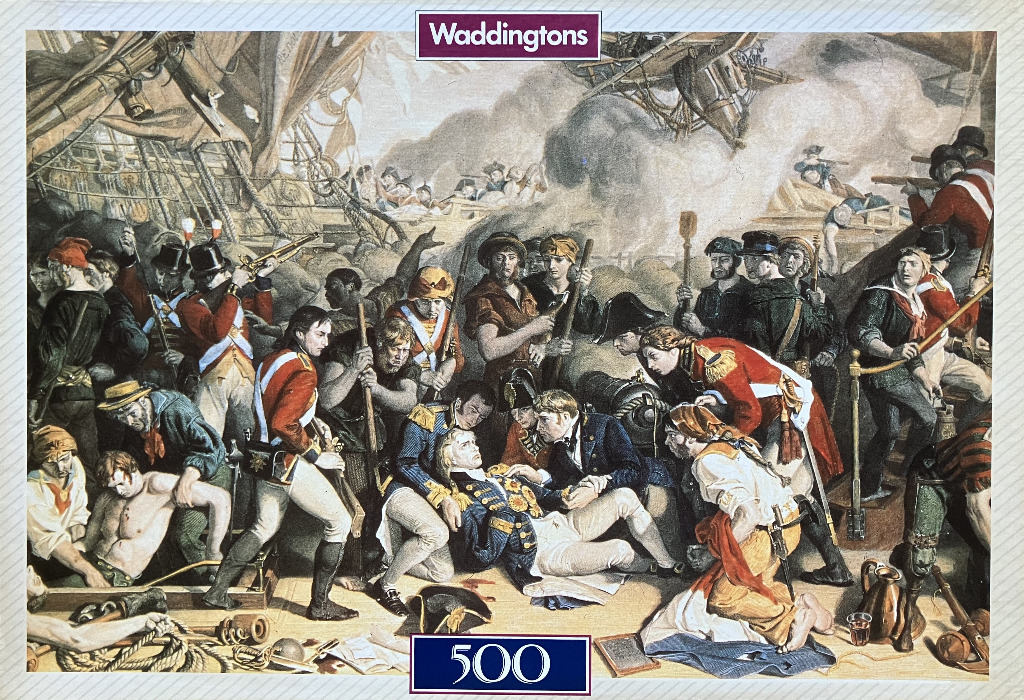
This historical scene depicts the dramatic final moments of a naval commander, likely Admiral Lord Nelson, on the bloodied deck of a warship during the Battle of Trafalgar. At the center, the wounded officer is supported by his men, his uniform adorned with gold braid and medals. Around him, a chaotic assembly of sailors and marines in period attire react with expressions of sorrow, concern, and intense focus. To the left, another injured sailor is being tended to by a comrade, while further back, figures are engaged in combat amidst the haze of thick, grey cannon smoke.
The composition is densely packed, creating a sense of urgency and claustrophobia typical of 19th-century history paintings. The vertical lines of ship rigging and masts contrast with the horizontal mass of figures, leading the eye toward the fallen commander. In the background, the ship's architecture, including wooden beams and ropes, is obscured by the swirling, dark smoke that fills the air, suggesting the violence of an ongoing naval engagement.
The colour palette is dominated by earthy tones, deep blues, and the stark, bright reds of the marines' uniforms, which add a jarring contrast to the grim reality of the battlefield. Subtle highlights emphasize the faces and hands of the men, conveying deep emotion. The lighting is dramatic and diffused, likely emanating from the smoky environment, which gives the scene a somber, cinematic quality. The artwork appears to be a detailed lithograph or engraved painting, characterized by intricate line work and a classic, illustrative


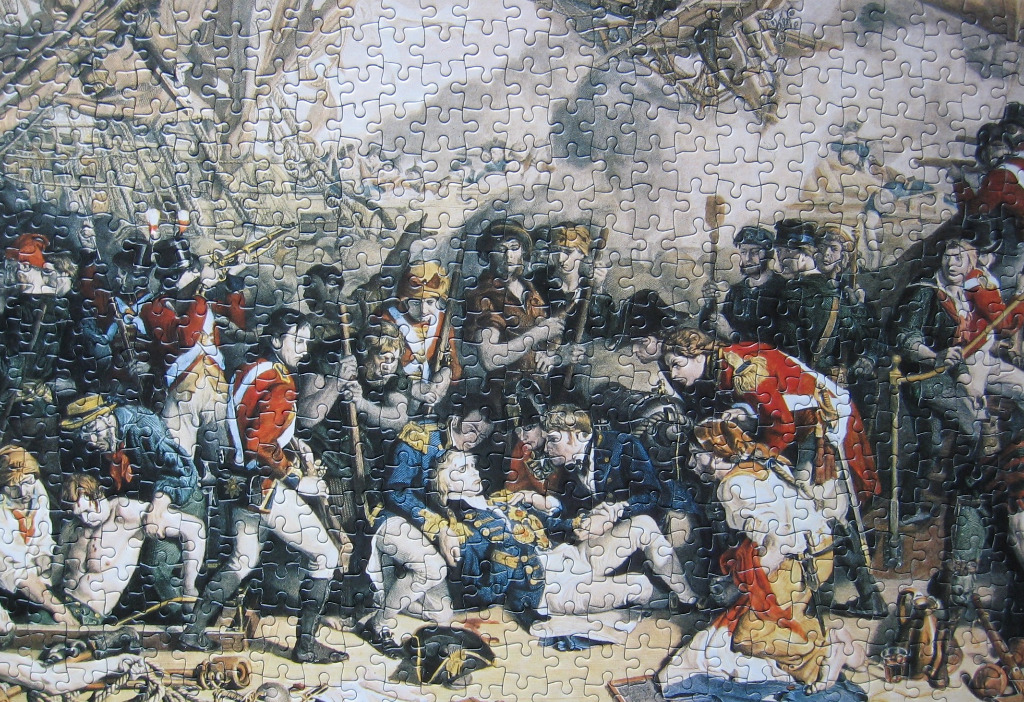
This historical illustration depicts the dramatic scene of a mortally wounded naval officer, historically identified as Admiral Horatio Nelson, being attended to by his men amidst the chaotic environment of a battlefield. The central figure reclines on the deck, supported by fellow officers, while a wounded soldier sits nearby, his chest bare and marked with injury. Surrounding them is a dense group of soldiers and sailors dressed in mid-19th-century military uniforms, including iconic bright red tunics, dark blue coats, and various military hats.
The composition is crowded and intense, capturing a moment of profound gravity during a naval engagement. The background is filled with the hazy suggestion of smoke and debris, hinting at a larger conflict occurring on a ship, with masts and rigging visible in the upper sections. The figures are positioned in a tight, layered arrangement that emphasizes the urgency of the medical attention being provided in the center.
The colour palette is muted, dominated by earthy tones of brown, tan, and grey, which serve to highlight the splashes of vibrant red and deep navy blue found on the officers' uniforms. The light is diffused, creating a somber, cinematic quality typical of 19th-century history paintings. The style is classical and representational, focusing on intricate detail in the clothing, facial expressions of concern, and the tragic physical posture of the fallen leader.