Affectionate Thoughts
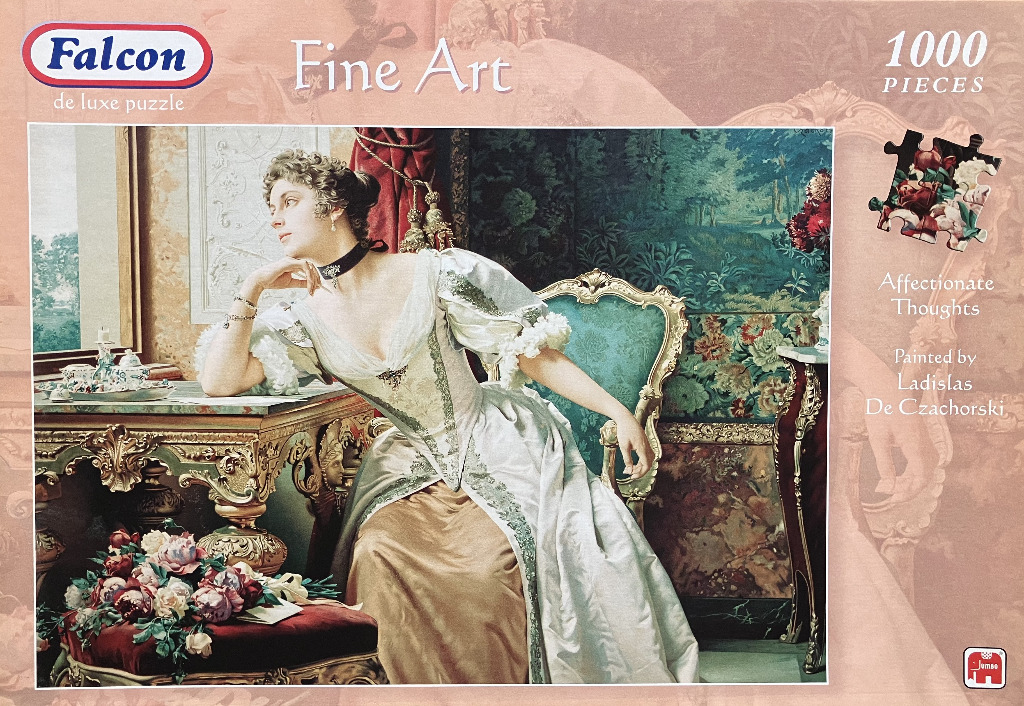
The central subject is a woman from the Victorian era, captured in a moment of contemplative repose. She is seated on an ornate, light-blue cushioned chair, her body angled away from the viewer as she gazes toward a window on the left. She wears an elaborate gown featuring puffy sleeves and a flowing skirt, paired with a dark velvet choker. Her posture is relaxed, with one arm resting on an intricately carved wooden table.
She is positioned within a lavishly decorated interior that suggests a high-society setting. Behind her, deep-green patterned tapestries cover the walls, contrasting with the warm, golden light filtering through the window. To the foreground, a plush, dark-red velvet footstool holds an abundant bouquet of roses in varying shades of pink, cream, and red. The room is filled with opulent details, including gilded wood carvings on the furniture and a delicate tea service resting on the table.
The artwork is a realistic oil painting characterized by fine textures and rich colours. The artist, Ladislas de Czachorski, employs a soft, naturalistic lighting scheme that highlights the sheen of the woman's fabric and the intricate textures of the surrounding decor. The overall mood is quiet, elegant, and romantic, emphasizing a sense of refined nostalgia through the carefully rendered floral elements and classical interior architecture.

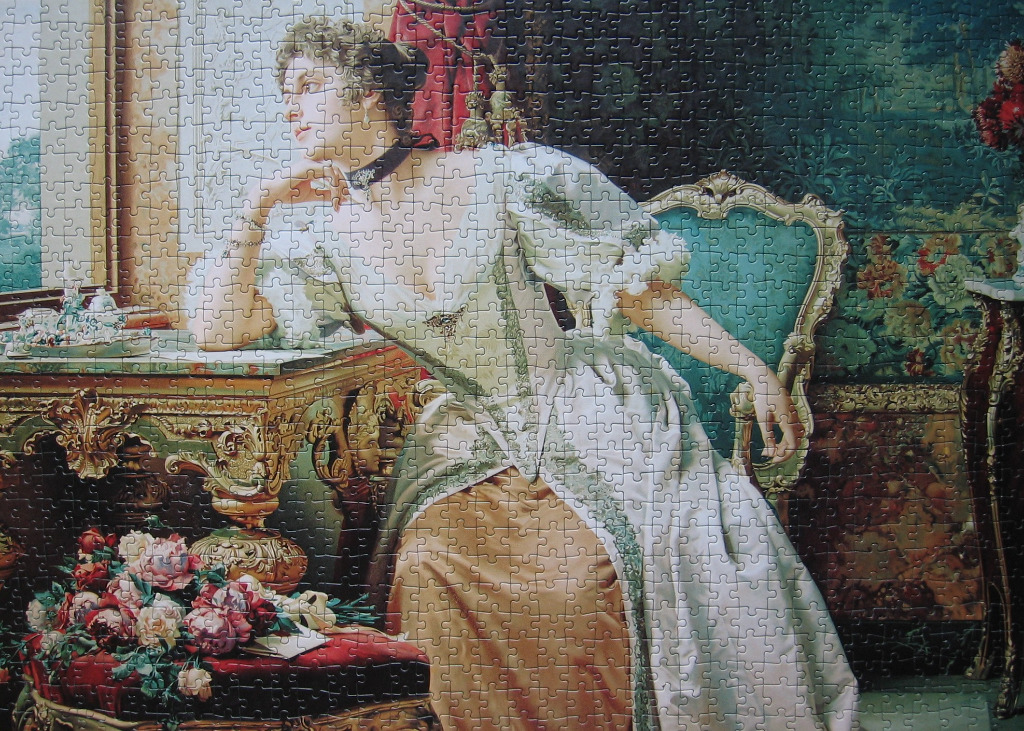
The central figure is an elegant woman captured in profile, looking wistfully through a large window. She wears a voluminous white gown with pale green detailing and a dark choker, her hair styled in an elaborate updo. Her posture is relaxed, with one elbow resting on a highly ornate, gilded writing desk, while her other hand rests gracefully against a tufted, teal-upholstered armchair behind her.
The setting is a rich, opulent interior typical of the Rococo period. The room features dark, moody wall coverings with intricate floral tapestry patterns. A small, decorative table with a bouquet of lush pink and white roses sits in the lower foreground, resting on a deep red velvet stool. Beside the roses, a small letter or piece of paper lies on the edge of the furniture, suggesting a romantic or personal narrative.
The colour palette is a sophisticated blend of deep forest greens, regal reds, and metallic golds, contrasted against the bright white of the woman's dress. The lighting is soft, suggesting a diffused daylight coming through the window, which highlights the sheen of the fabrics and the intricate carvings on the furniture. The artwork is executed in a classical, illustrative style, emphasizing texture and luxurious detail to create an atmosphere of quiet reflection and historical refinement.