Jazz
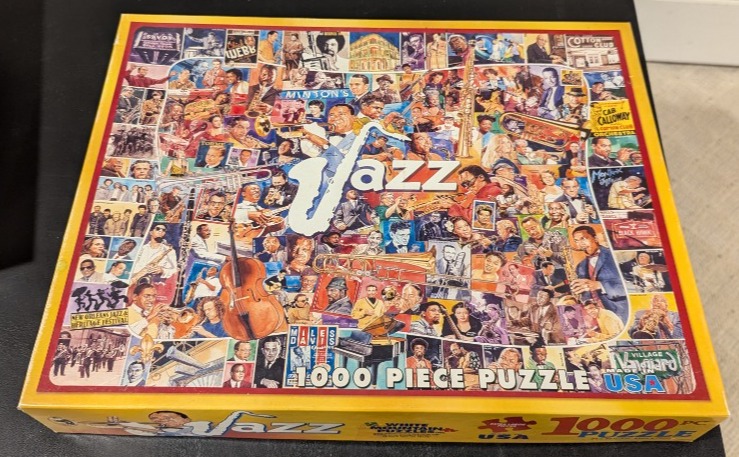
This collage is a vibrant tribute to the history of jazz music, composed of dozens of smaller photographic portraits, scenes, and illustrations. The imagery captures legendary jazz performers, iconic musical instruments like upright basses, trumpets, and trombones, and historic music venues such as the Cotton Club and the Village Vanguard. The central focal point is the large, stylized white word "Jazz" that overlays the center of the image, unifying the scattered portraits.
The composition is dense and overlapping, utilizing a mosaic-like arrangement that fills every available space. The layout is chaotic yet rhythmic, mirroring the improvisational spirit of the musical genre itself. Some images are framed in distinct rectangles, while others blend into the background, creating a layered visual experience that invites the viewer to identify individual figures and settings within the montage.
The colour palette is varied, featuring a mix of nostalgic sepia-toned historical photography, rich warm browns of wooden instruments, and occasional splashes of primary colours from vintage posters or promotional artwork. The lighting is diverse, shifting from the high-contrast black-and-white aesthetic of 1940s club photography to more modern, saturated promotional imagery. The overall mood is one of celebration, history, and musical legacy, rendered in a scrapbook or montage style that honours the legends of jazz.
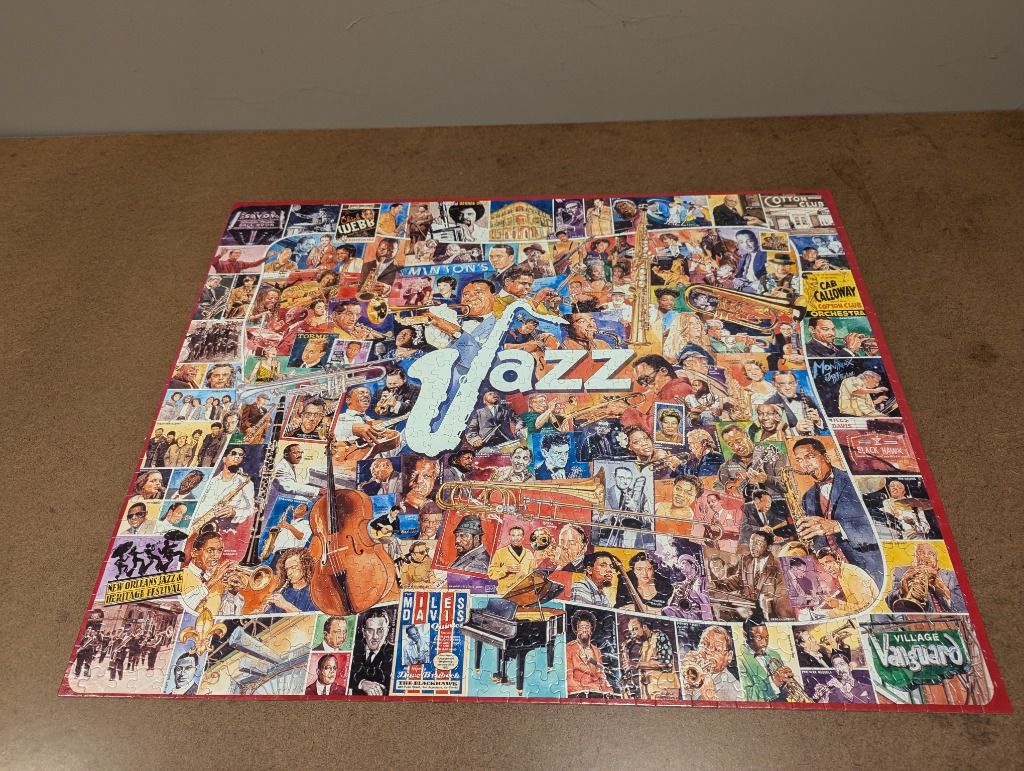
This vibrant collage celebrates the history of jazz music by layering numerous individual scenes, portraits, and iconic signage. At the center, the word "Jazz" is written in large, textured white letters that overlap a busy collection of musicians performing on various instruments including trumpets, trombones, and a prominent double bass in the foreground. Surrounding this central focal point are smaller, individual vignettes depicting legendary artists, band photos, and promotional materials from famous venues like the Cotton Club, Savoy, and Village Vanguard.
The composition is densely packed, resembling a scrapbook or a montage of historical photographs and illustrations. The layout uses a chaotic yet harmonious overlapping style, blending sepia-toned vintage images with more colourful, modern artistic renderings. The spatial arrangement guides the eye across different eras of jazz history, from intimate club settings to large-scale performances.
The colour palette is a rich tapestry of warm tones, including deep browns, golds, and burnt oranges, contrasted by flashes of bright blue, red, and the crisp white of the central typography. The lighting varies across each individual segment, ranging from the dramatic spotlights of stage photography to the softer, diffused tones of classic publicity headshots and illustrative graphics, creating an overall energetic and nostalgic mood that honors the enduring legacy of the genre.