Wellington at the Inn of Waterloo Village
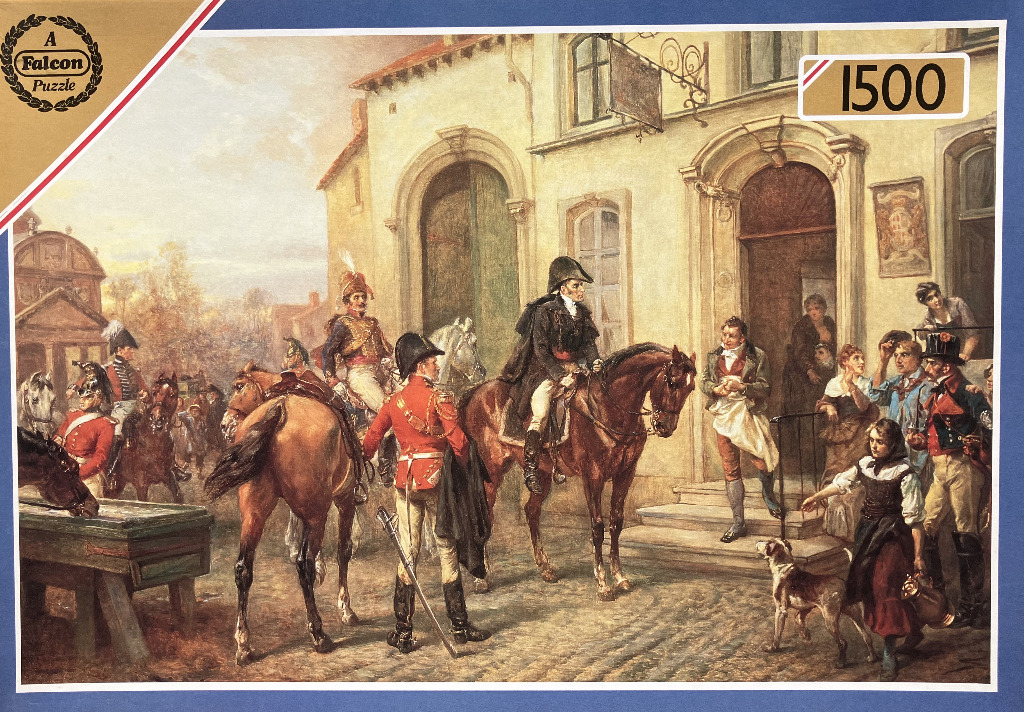
This historical genre painting depicts a scene from the Napoleonic era, featuring a central figure identified as Napoleon Bonaparte mounted on a brown horse. He is dressed in his iconic dark bicorne hat and long coat, engaging with a man standing on the stone steps of a light-colored, classical-style building. The composition is bustling with activity, as various military personnel in red and blue uniforms are gathered around on horseback and on foot, creating a sense of a military encampment or a pause in travel near an inn or estate.
To the right, a small group of civilians—including a woman and a young girl holding a small jug—observe the proceedings, accompanied by a dog standing in the foreground. The architecture features ornate arched doorways and weathered stone facades, suggesting a rural European village setting. The atmosphere is warm and illuminated by soft, natural light, typical of late afternoon or early morning.
The painting style is classical realism with visible brushstrokes, evoking the romanticized military art of the 19th century. The palette is dominated by earth tones, ochres, and muted creams, accented by the vibrant reds and deep blues of the soldiers' uniforms. The background fades into a soft, golden-hued landscape with trees, enhancing the depth and historical narrative of the scene.
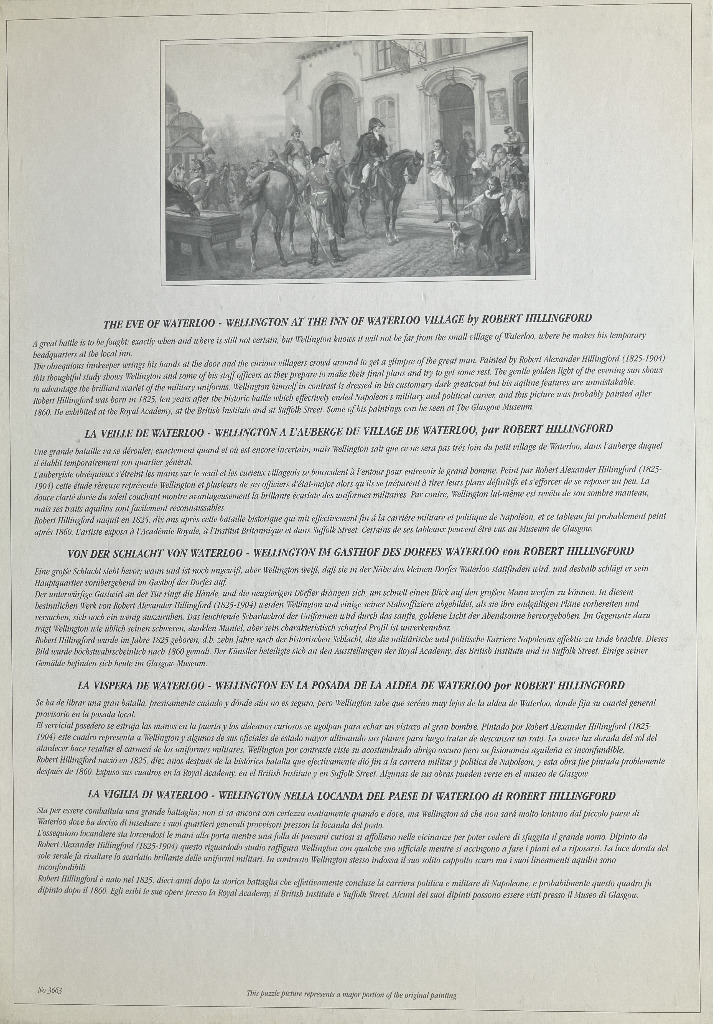

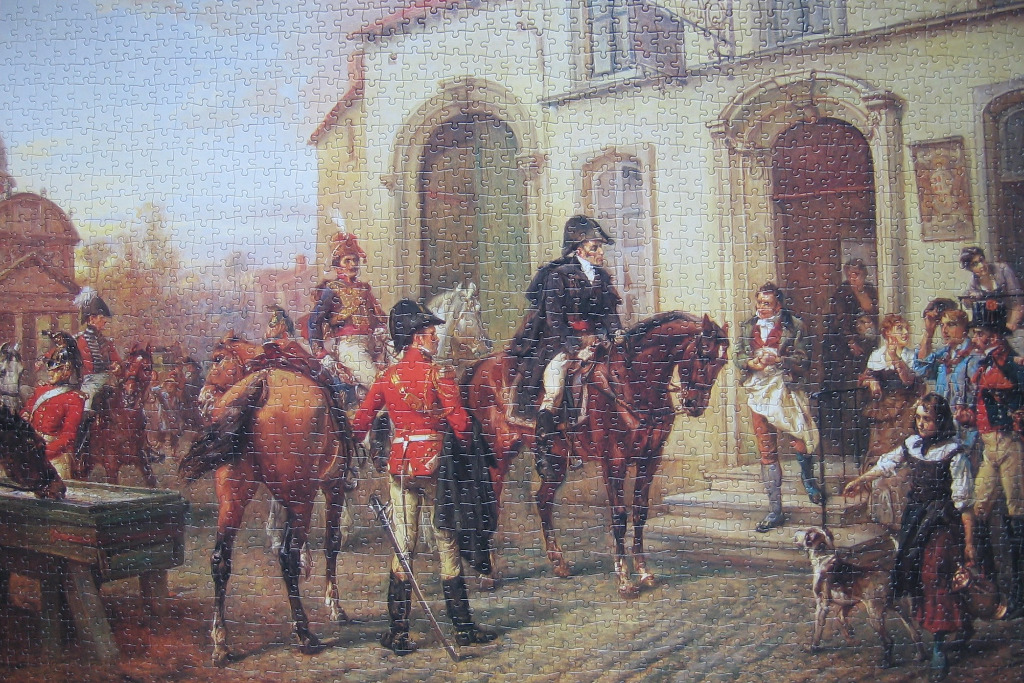
This historical scene depicts a central military figure on horseback, dressed in a dark coat and bicorne hat, seemingly observing or conversing with people gathered outside a classical stone building. Several soldiers in vibrant red military uniforms with white breeches and tall shakos or helmets stand nearby, some mounted on brown horses. One soldier in the foreground stands with his back to the viewer, his hand resting on the hilt of a sword hanging at his side.
To the right, a small group of civilians, including a young girl in a dark dress and a man with a white apron, stand on the steps of the building. A small dog trots near the bottom of the steps. The scene is set in an outdoor courtyard or street, characterized by its warm, earthy tones and soft, dappled light. The architecture in the background features large arched doorways and windows, typical of 19th-century European town buildings.
The painting style is classical and highly detailed, rendered with rich textures that emphasize the fine wool of the uniforms, the musculature of the horses, and the masonry of the building facade. The overall colour palette is dominated by deep browns, creams, and the striking red of the military tunics, creating a cohesive and evocative representation of a bygone era.