Interior of St. Peters, Rome, Italy
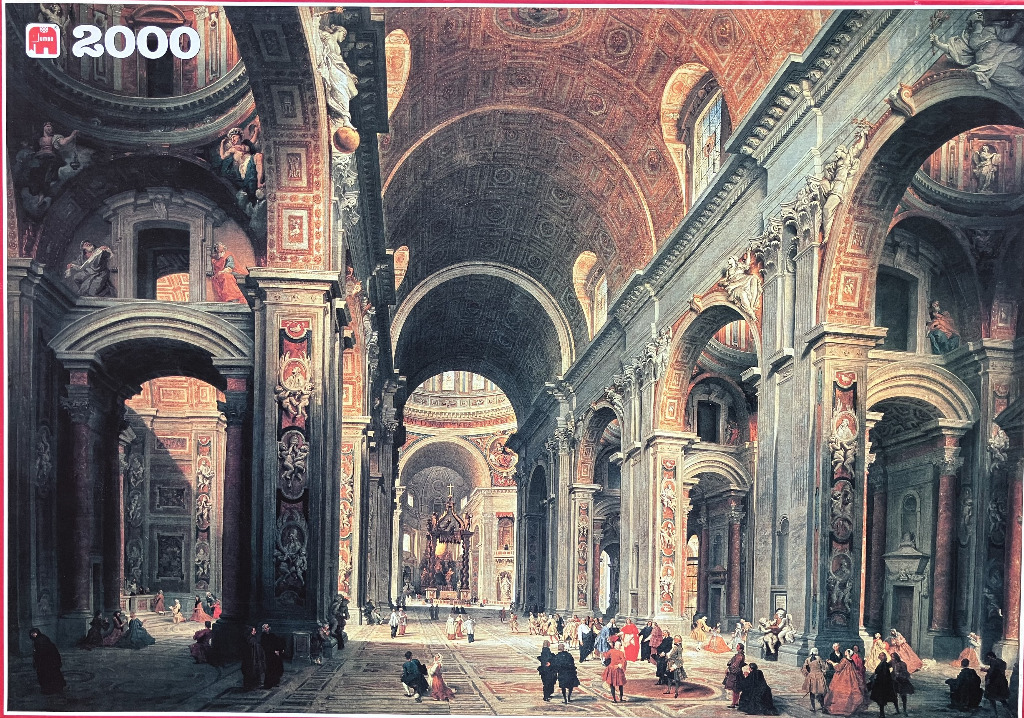
This artwork presents a grand, atmospheric view of the interior of St. Peter's Basilica, captured in the style of 18th-century veduta painting. The composition centers on a long, deep nave flanked by towering, ornate pillars and massive barrel-vaulted arches that draw the eye toward the distant altar and the hazy glow of the central dome. The vastness of the architecture is emphasized by the scale of the small, silhouetted human figures scattered across the mosaic floor, suggesting the imposing height and depth of the basilica.
Technically, the painting is rendered with meticulous detail, focusing on the complex geometry of the renaissance-style columns and the elaborate sculptural reliefs adorning the walls. The palette is dominated by warm ochres, deep reds, and soft, dusty earth tones, contrasted against the cool gray shadows that define the structural depths of the nave. The light is diffused, filtering in from unseen windows to create a soft, ethereal atmosphere that enhances the majestic sense of space.
The artwork is a highly detailed, realistic oil painting, likely from the late 18th century, reminiscent of the works of Giovanni Paolo Panini. Every element, from the intricate patterns of the marble floor to the tiny figures dressed in period clothing, is executed with precision. The architectural perspective is the primary focus, celebrating the monumentality and decorative richness of the historic cathedral interior.


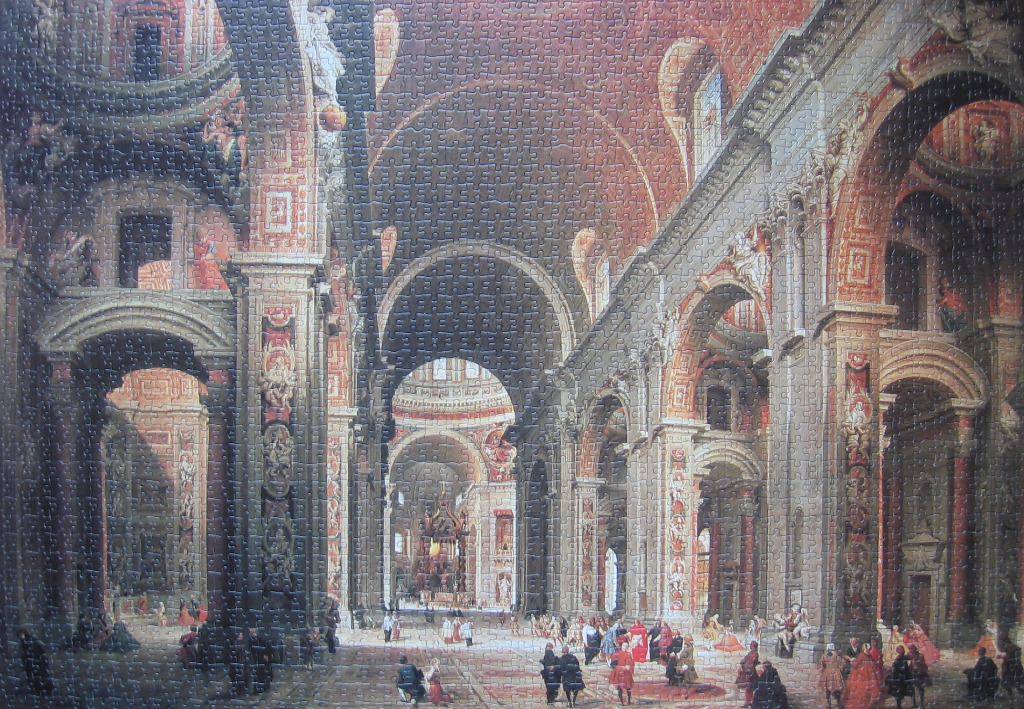
This classical oil painting captures the vast and ornate interior of St. Peter's Basilica. The perspective is centered, drawing the eye through a series of towering, dark-grey monumental arches and massive square pillars that lead toward the distant, light-filled apse. The architecture is defined by deep shadows and grand proportions, creating a sense of overwhelming scale and historical grandeur.
Warm tones of terracotta, dusty red, and golden ochre dominate the vaulted ceilings and decorative wall panels, contrasting sharply with the deep, cool charcoal tones of the stone columns. The lighting is dramatic, with subtle highlights catching the edges of the carved stone ornamentation and the figures below. The overall mood is solemn, quiet, and reverent, capturing the heavy atmosphere of a vast stone interior.
Small, scattered figures in historical dress dot the marble floor in the foreground and middle ground, providing a human scale to the immense architectural setting. These tiny individuals gather in small groups, suggesting a bustling yet orderly scene within the sacred space. The style is that of an Old Master, likely an architectural caprice or veduta, characterized by precise detail, masterful handling of perspective, and an appreciation for the interplay between light and architectural mass.
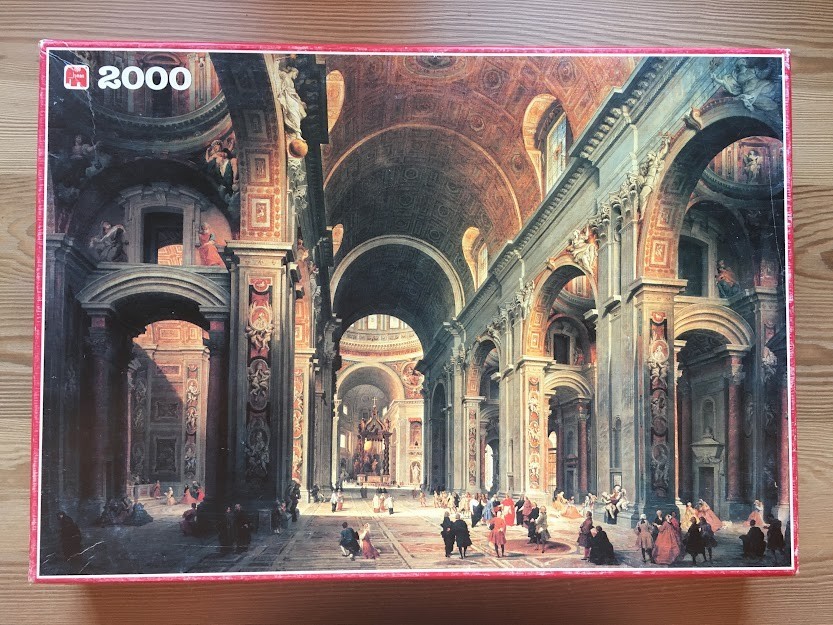
This classicist oil painting depicts the grand, cavernous interior of St. Peter's Basilica. The composition is centered on a deep, linear perspective looking down the main nave toward the distant altar. Massive, towering stone columns and heavy arches define the space, creating a sense of overwhelming architectural scale. The ceiling is characterized by deep, coffered barrel vaults that lead the viewer's eye into the bright, light-filled distance where the altar area is situated.
The colour palette is dominated by warm, earthy tones, including deep browns, ochres, rich terracottas, and golden highlights. Light filters into the vast space from unseen windows, casting dramatic shadows that accentuate the relief work on the columns and the depth of the alcoves. The lighting creates a serene, solemn mood consistent with the sacred setting.
Throughout the foreground and middle ground, numerous small figures dressed in historical, vibrant attire are scattered, giving scale to the immense structure. Some appear to be congregants or clergy, while others seem to be visitors admiring the space. The architectural details are rendered with precise realism, showcasing intricate relief sculptures and classical motifs on the pilasters. The work evokes the grandeur of the Italian Renaissance and Baroque periods, emphasizing harmony, proportion, and the majesty of monumental religious architecture.