The Farmer's Market in Vienna (1894)
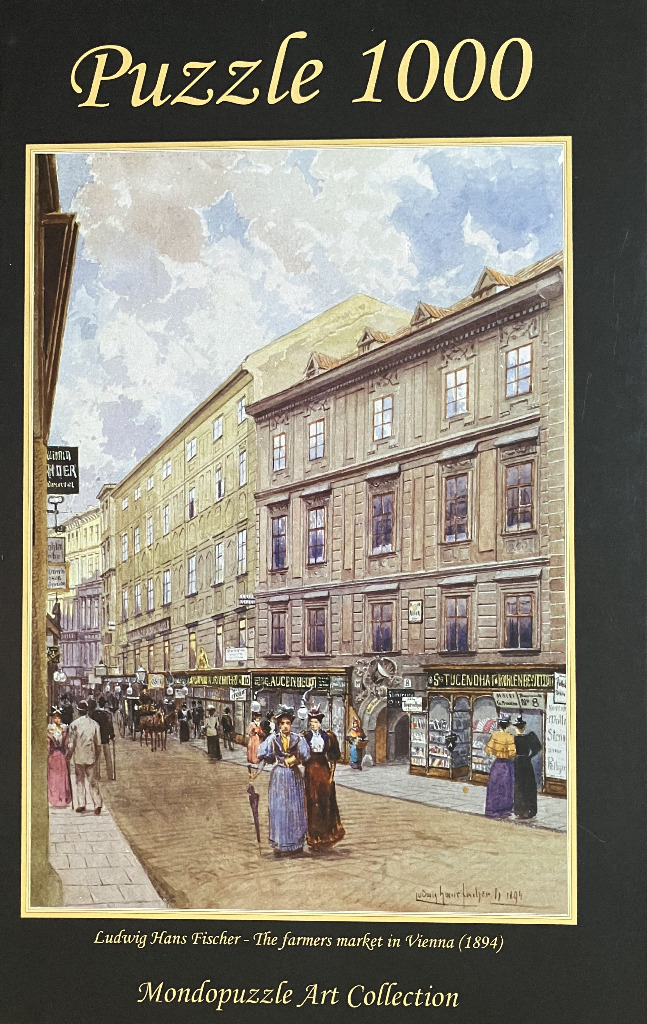
This detailed watercolor painting depicts a bustling city street in late 19th-century Vienna. The composition focuses on a wide, cobblestone thoroughfare lined with tall, multi-story buildings that feature traditional European architectural details, including symmetrical windows and ornate stonework. In the foreground, several pedestrians dressed in Victorian-era attire stroll along the pavement, including two women prominently in the center, one carrying an umbrella. Horses and carriages are visible further down the street, suggesting the lively atmosphere of a historic urban market area.
The artwork is rendered in a soft, atmospheric style typical of 1890s watercolor illustrations. The colour palette is dominated by earthy browns, muted greys, and light ochre tones on the building facades, contrasting against a pale, expansive sky filled with gentle, wispy clouds. The light appears to be diffused and midday, casting soft shadows that give depth to the street level while maintaining a calm, historical aesthetic.
Small details bring the scene to life, such as storefront signs with gothic-style lettering, display windows filled with merchandise, and various citizens navigating the promenade. The artist's signature and the year '1894' are visible in the lower right corner, anchoring the piece as a period-accurate depiction of a specific cultural moment. The overall mood is one of nostalgic observation, capturing the architectural grandeur and daily social interactions of a bygone era in the heart of Austria.

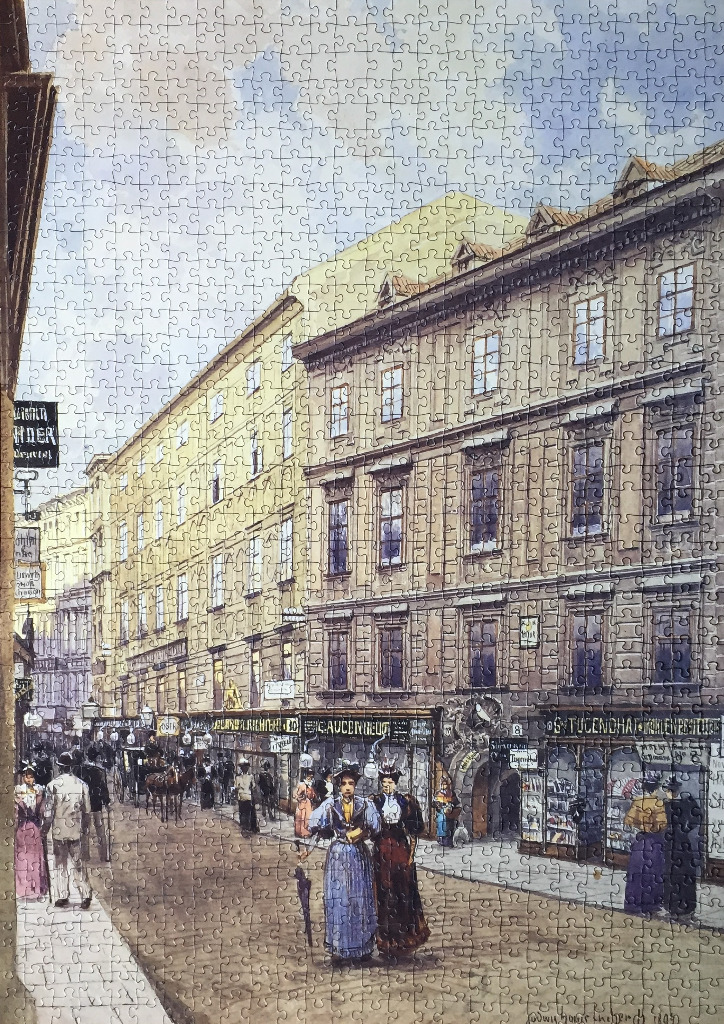
This historical urban scene depicts a bustling 19th-century street in Vienna. The focal point is a wide, cobblestone thoroughfare lined with elegant multi-story buildings featuring classical architectural details. The perspective follows the length of the street, drawing the eye toward a distant, crowded intersection. Along the sidewalk, several pedestrians are captured in period attire, including women in long dresses and men in suits and hats, while a horse-drawn carriage waits near the street level.
The setting is rendered in a soft, illustrative style that suggests a watercolor or gouache medium. The color palette is dominated by muted, earthy tones: sandy yellows, weathered grays, and warm browns, reflecting the stone and plaster facades of the buildings. These neutral colors are accented by the deeper tones of the clothing and the dark, recessed storefronts at ground level. A pale, cloudy sky provides a bright backdrop, softening the overall mood.
The artwork captures a specific moment in history with fine attention to detail, including ornate window frames, decorative building cornices, and signage on the shop fronts. The composition effectively balances the vertical lines of the architecture with the horizontal movement of the figures in the foreground. Small details, such as the umbrellas carried by pedestrians and the rhythmic pattern of windows, enhance the sense of depth and realism in this charming historical portrayal.