What’s on TV?
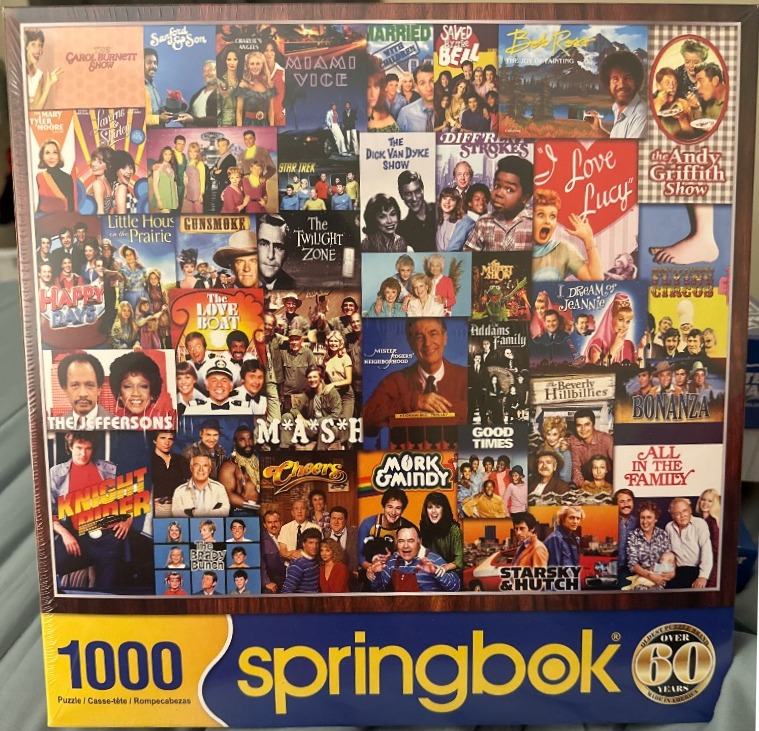
The central artwork is a vibrant, densely packed collage of classic television show imagery. It features a wide variety of iconic series from the mid-20th century, including images from programs like The Carol Burnett Show, Miami Vice, The Joy of Painting, I Love Lucy, The Muppet Show, The Jeffersons, and M*A*S*H. Each segment represents a distinct show through promotional cast photos, illustrative title cards, or recognizable scene captures, creating a nostalgic survey of broadcast television history.
Compositionally, the images are layered in a jigsaw-like arrangement that covers the entire surface area. Some scenes are rectangular, while others are squares of varying sizes, resulting in a busy, non-linear layout. The style of the imagery varies significantly between segments, reflecting the different production eras, film stocks, and graphic design trends of the featured shows, ranging from black-and-white portraits to saturated, colourful set photography.
The colour palette is exceptionally diverse, shifting abruptly from the sepia tones of older classics to the bright neon aesthetics of 1980s productions. Lighting varies wildly from segment to segment, transitioning from high-contrast studio portraiture to outdoor location photography. The overall effect is a highly textured mosaic that serves as a tribute to pop culture, unified by the shared theme of legendary television entertainment.
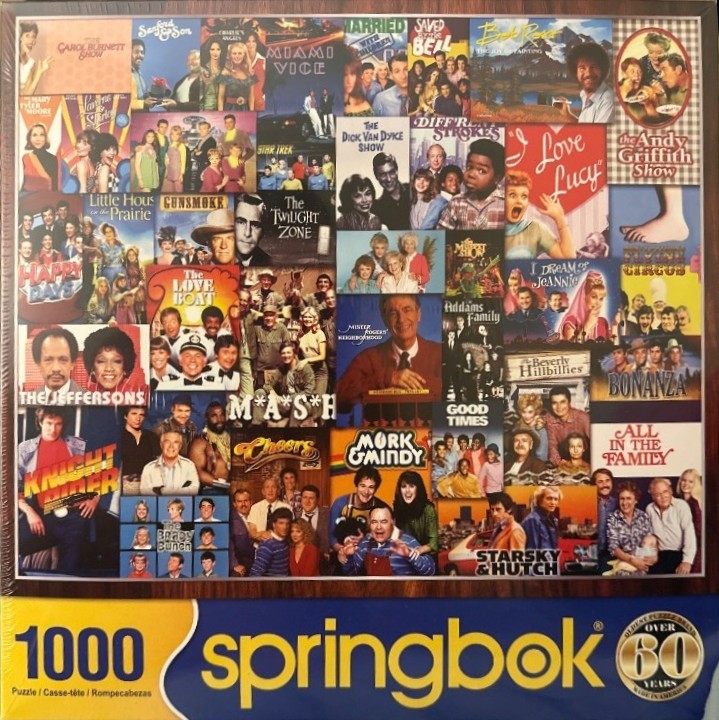
This image presents a dense, overlapping collage of iconic American television shows from the mid-to-late 20th century. The layout is chaotic and layered, featuring candid cast photos, promotional artwork, and promotional graphic titles. Some of the featured imagery includes iconic sitcoms, variety shows, and dramas, with notable figures such as Fred Rogers, Bob Ross, and various ensemble casts visible across the frame. The overall composition creates a nostalgic tapestry of pop culture history.
The colour palette is varied, reflecting the individual aesthetic of each show’s original promotional materials, ranging from saturated technicolour posters to soft-focus vintage photography and sharp, high-contrast promotional stills. The lighting shifts significantly between panels, moving from the warm, golden glows of 1970s interior sets to the bright, studio-lit backdrops of variety programs.
The artwork serves as a visual encyclopedia of classic television, utilizing a mix of photographic realism and stylized illustrative text. Each segment competes for space, creating a textured mosaic that invites the eye to scan from one familiar face or title to the next. The borders between images are often indistinct, allowing the individual scenes to blend into a unified, albeit crowded, celebratory retrospective of television broadcasting.
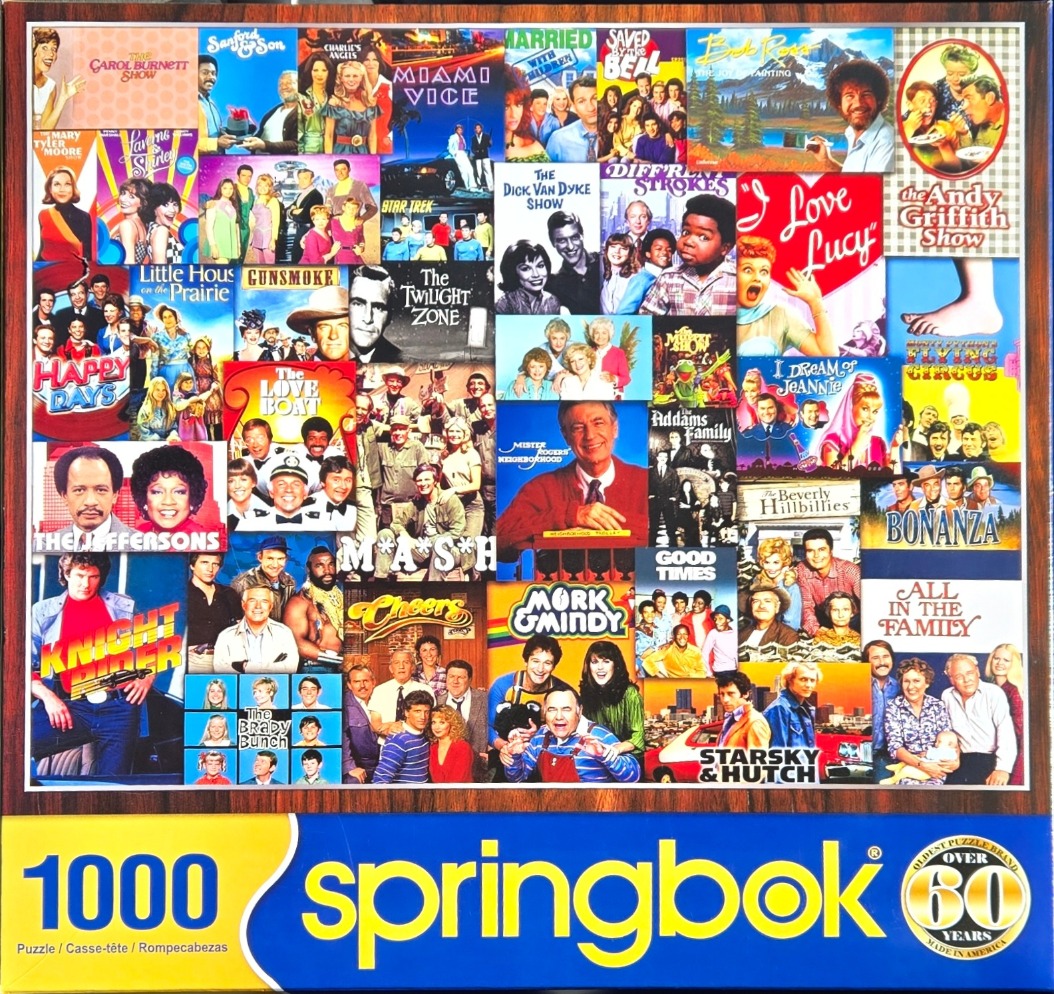
This image presents a dense, overlapping collage of iconic American television shows from the 20th century. The composition is a mosaic of promotional materials, including cast portraits, episode stills, and show logos. Prominent shows represented include The Jeffersons, Happy Days, I Love Lucy, M*A*S*H, Knight Rider, Miami Vice, and Mister Rogers' Neighborhood. The layout is chaotic yet vibrant, with various rectangles and squares of differing sizes packed tightly together to cover the entire space, creating a nostalgic survey of broadcast history.
Each individual element features the distinct visual style of the specific show, ranging from gritty seventies color palettes to bright, saturated eighties graphics. The overall color scheme is eclectic and multi-faceted, reflecting the diverse aesthetics of these various television decades. There is no single light source or unifying style, as the collage stitches together a wide array of photographic prints, painted illustrations, and graphic typography.
Additional smaller segments of the collage highlight classic sitcoms, dramas, and sketch comedy programs, recognizable by the faces of famous performers like Bob Ross, Lucille Ball, and various ensemble casts. The texture varies between the clean, sharp lines of printed promotional photos and the softer, grainier look of older television stills. The arrangement serves as a comprehensive visual homage to popular culture, celebrating a wide spectrum of media artifacts that define a specific era of home entertainment.