The Lion
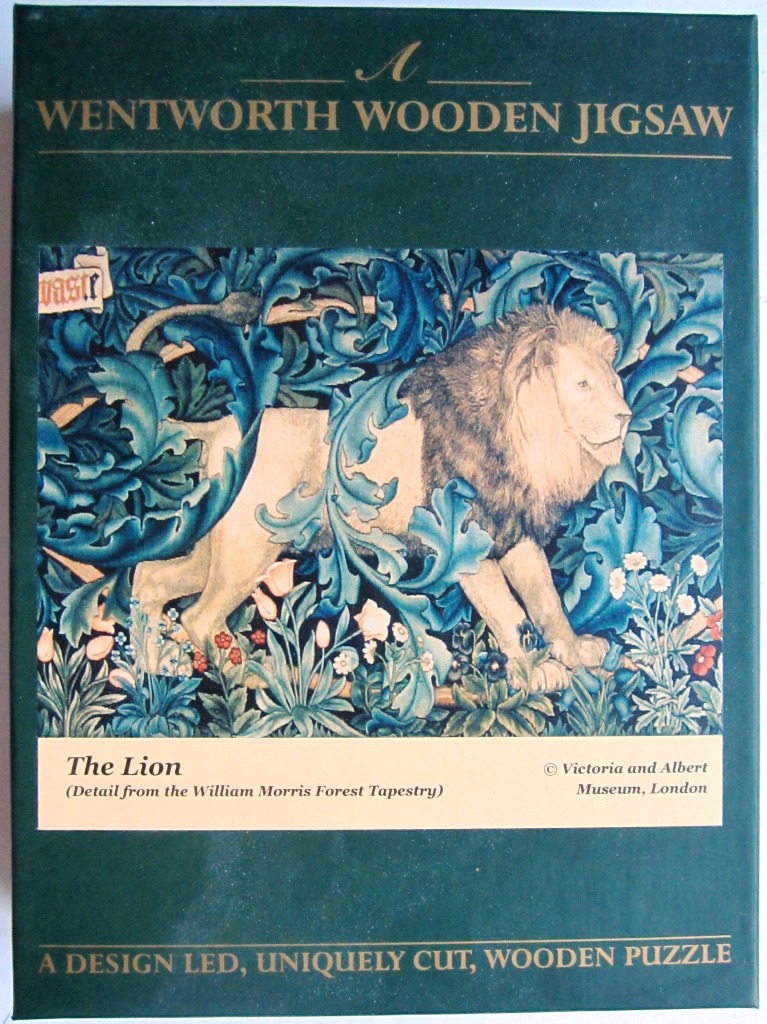
The artwork depicts a central, stoic lion standing in profile, rendered in muted cream and sandy brown tones. The lion is positioned amidst a dense, lush backdrop of oversized, deeply stylized foliage. These leaves are rendered in varying shades of rich, dark blue and teal, creating a sense of a thick, impenetrable forest floor.
Beneath the lion, the ground is populated by smaller, delicate botanical elements, including tiny red and white flowers and light-colored blossoms. The overall composition is flat and decorative, characteristic of the Arts and Crafts textile design style. A small, decorative scroll or banner fragment is visible in the upper-left corner of the design, adding a touch of period-appropriate detail to the tapestry.
The colour palette is dominated by intense, cooling blues that contrast sharply with the warmer, neutral tones of the lion’s fur. The style is classic and illustrative, mimicking the texture of a woven fabric. The composition feels dense and ornamental, with the lion serving as the natural focal point amidst the repetitive, flowing patterns of the stylized forest flora.
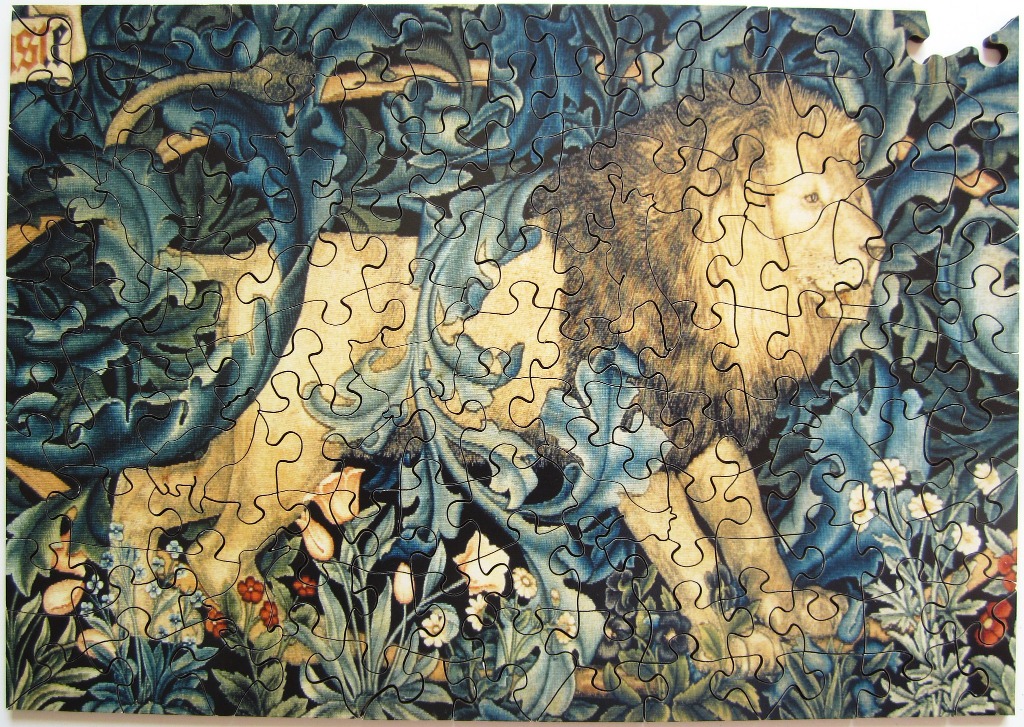
This image depicts a majestic lion walking from left to right through a dense, stylized forest. The lion is rendered in shades of gold and beige, with a thick, textured mane that blends into the background. Its expression is calm and focused as it navigates the thicket. The creature's body is partially obscured by lush, intricate greenery that surrounds it.
The setting is reminiscent of a traditional medieval millefleur tapestry. Large, dark blue acanthus leaves dominate the composition, creating a deep, shadowy environment. Smaller, delicate wildflowers in white, yellow, and subtle reddish tones bloom along the bottom foreground, providing a sharp contrast to the darker, larger foliage behind them. The design features a flat, decorative aesthetic typical of woven textiles, with repeating patterns and a lack of traditional perspective.
The colour palette is intentionally limited, relying heavily on deep navy and cool teal tones to anchor the dark background, which makes the creamy gold of the lion and the bright specks of the small flowers stand out. The lighting is soft and even, as if captured on fabric rather than a realistic landscape, giving the entire scene a historical and regal atmosphere.
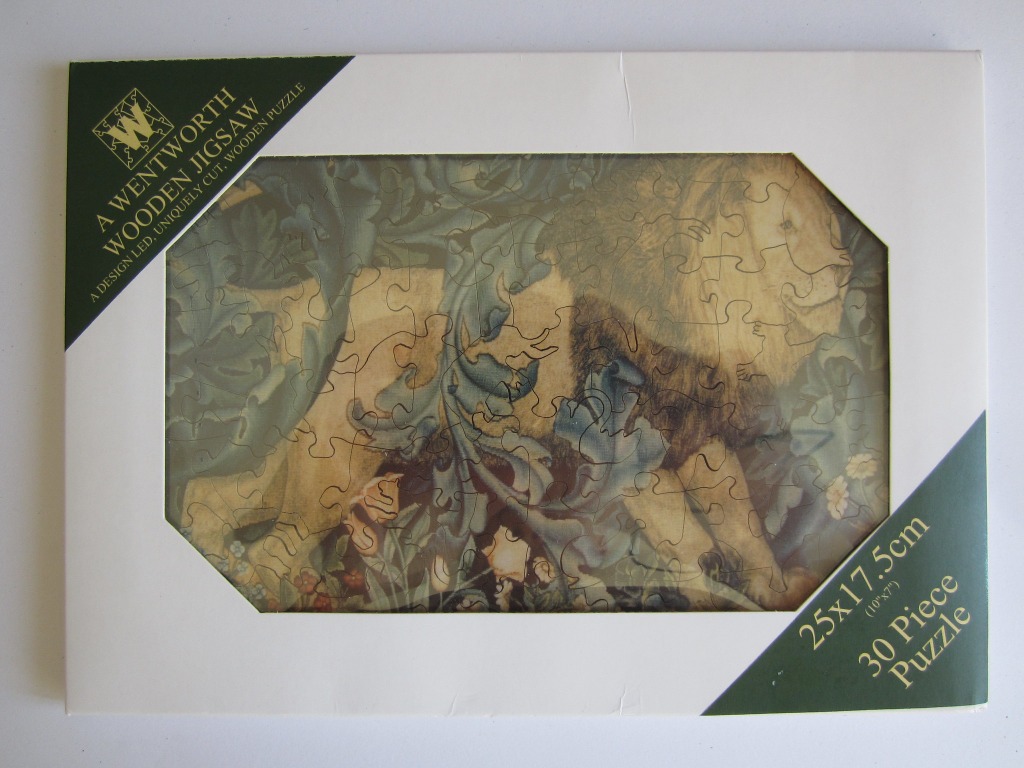
The artwork features a majestic male lion standing in profile, rendered in the classic, intricate style of a late 19th-century tapestry. The lion, depicted in warm, golden-tan tones, is partially obscured by lush, stylized foliage and botanical patterns. The beast looks toward the right side of the frame, with its mane and body seamlessly blending into the organic, swirling shapes of the background.
Compositionally, the scene is densely packed with dense, overlapping leaves and decorative plant forms in varying shades of muted teal, sage, and deep blue-green. These cool, shadowy tones create a striking contrast with the warmth of the lion’s fur. Small, subtle flowers are scattered amongst the greenery, adding delicate points of lighter colour that punctuate the shadowy depths of the vegetation.
The overall aesthetic is heavily influenced by the Arts and Crafts movement, characterized by flat, repetitive patterns and a focus on natural, rhythmic forms. The lighting is soft and diffuse, emphasizing the texture of the tapestry-like weave rather than harsh highlights. The illustration feels organic and rich, evoking the atmosphere of a verdant, overgrown forest thicket where the lion emerges as a singular, imposing presence.
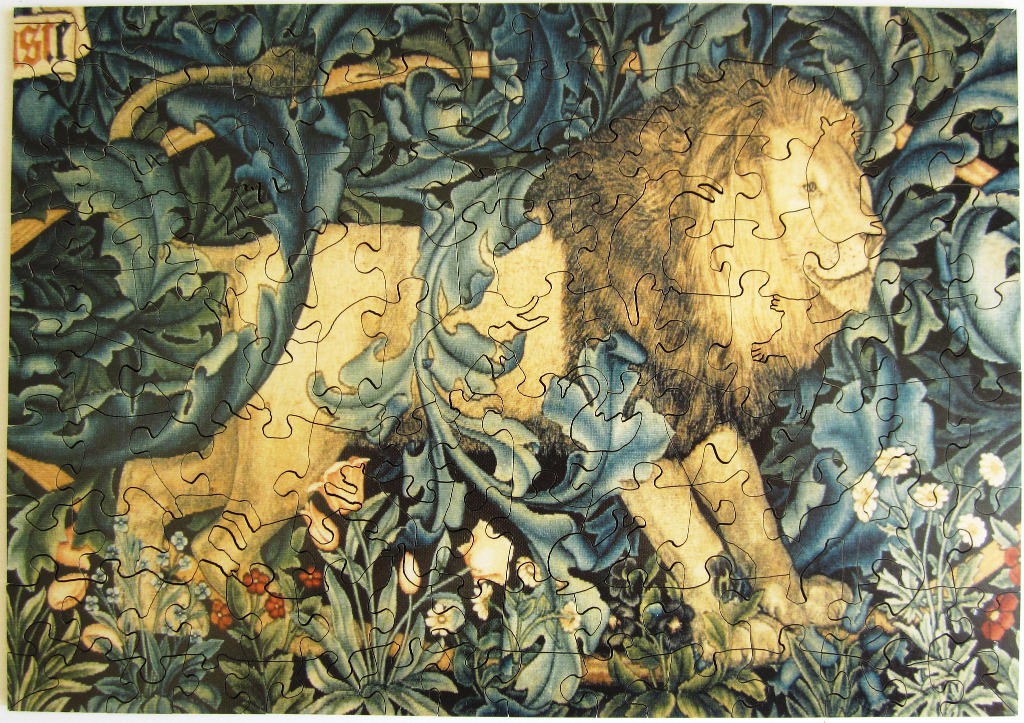
This image features a majestic lion depicted in the style of a medieval millefleur tapestry. The lion is shown in profile, walking toward the right, with its golden-tan body integrated into a lush and intricate forest setting. Its gaze is gentle, and its mane is rendered with soft, textured strokes, contrasting with the more rigid, decorative elements surrounding it.
The background and foreground are dominated by a dense, repeating pattern of large, sweeping acanthus-style leaves in deep shades of teal, blue, and dark green. These stylized plants weave in and out behind the lion, creating a sense of depth and a forest canopy. At the bottom of the scene, delicate wildflowers in white, blue, and red emerge from the foliage, adding small pops of colour to the dark, verdant undergrowth.
The overall aesthetic is evocative of historical textile art, characterized by flat perspective and highly detailed, decorative botanical motifs. The colour palette relies heavily on the juxtaposition between the warm, natural tones of the lion and the cool, moody blues and greens of the surrounding vegetation, creating a rich, atmospheric scene that feels like a classic work of art.
by Leonisha 2024-08-25