Vintage Opera Poster
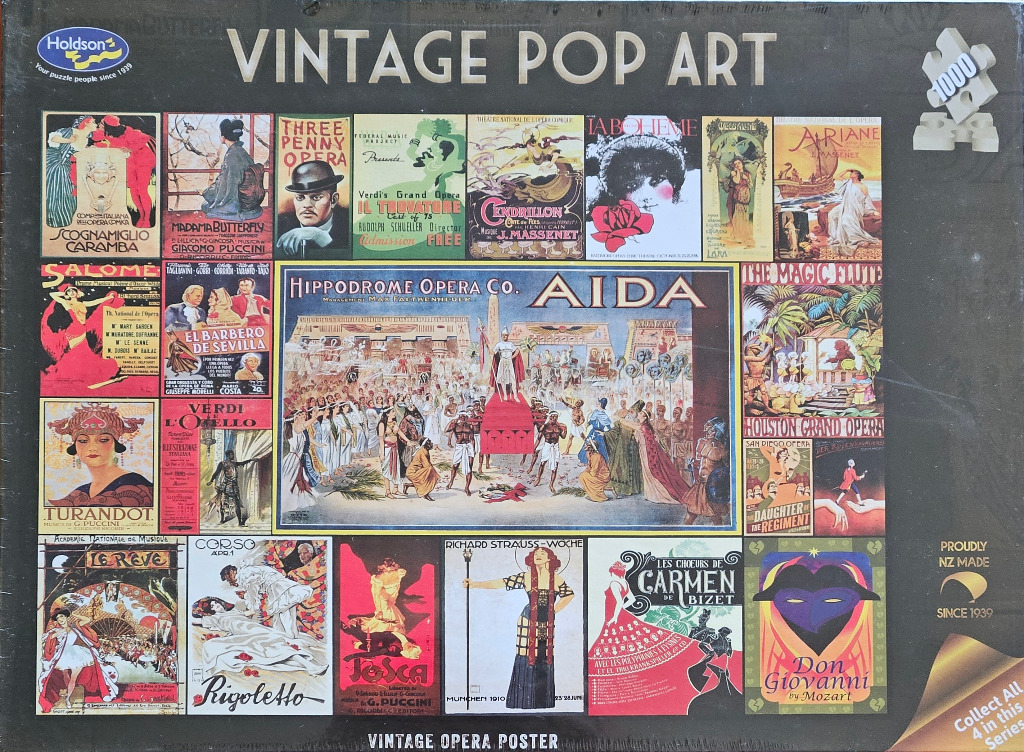
This collection of vintage opera posters is arranged in a grid-like collage, with a large, central illustration depicting an elaborate scene from the opera Aida. The Aida panel shows an ancient Egyptian setting with a pharaoh standing on a raised red dais, surrounded by courtiers, soldiers, and ornate architecture under a bright, warm-toned sky. The surrounding frames feature smaller, diverse posters for famous operas, including Madama Butterfly, The Magic Flute, Carmen, and Don Giovanni.
The aesthetic is defined by Art Nouveau and early 20th-century graphic design, characterized by stylized typography, bold colour palettes, and intricate illustrative techniques. The colours range from vibrant reds and deep blacks to muted golds, soft greens, and cream backgrounds, reflecting the varied print techniques of historical advertising. Some posters focus on portraiture of lead performers, while others depict dramatic narrative scenes or symbolic imagery.
Each element within the collage mimics the appearance of weathered, historical paper advertisements, complete with ornate borders and distinct artistic signatures. The arrangement creates a balanced yet busy visual field, emphasizing the diversity and cultural history of opera through these graphic artifacts. The juxtaposition of the grand, central Egyptian scene against the surrounding smaller, varied poster styles creates a sense of depth and curated historical interest.
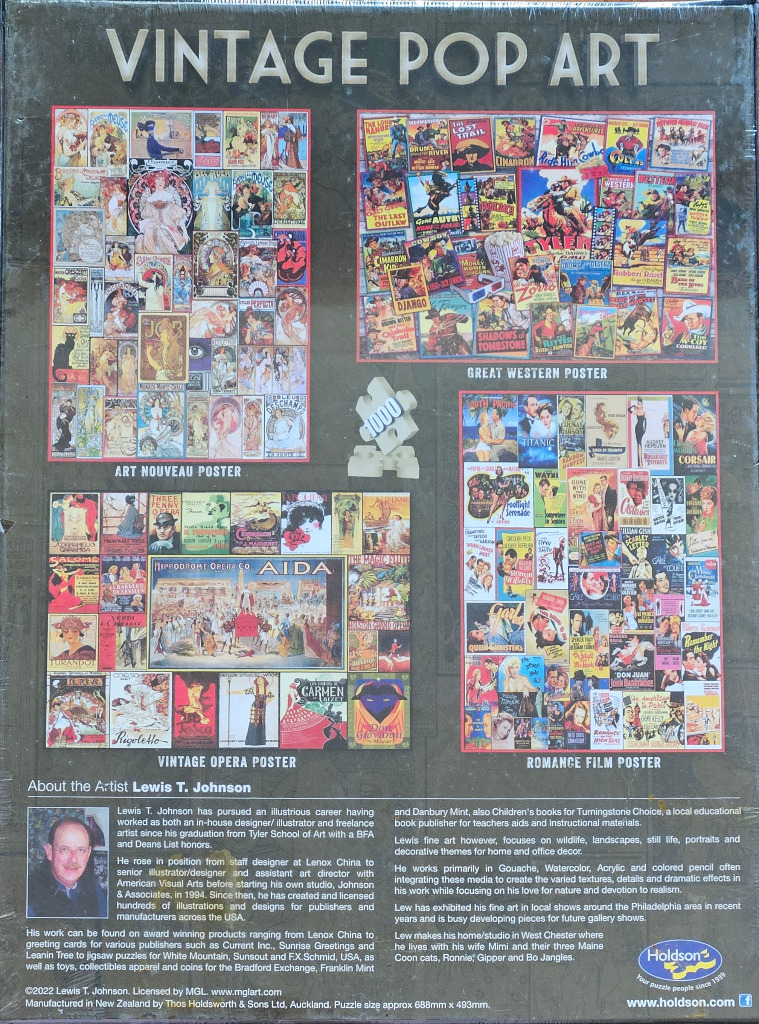
This collection of vintage imagery is organized into four distinct rectangular collages, each representing a specific theme: Art Nouveau, Great Westerns, Opera, and Romance Films. The layout is structured like a gallery wall, with dozens of individual, smaller posters tiled together in each of the four sections. Centrally located among these groupings is a single, stylized illustration of a white jigsaw piece, acting as a visual separator between the varied artistic themes.
The Art Nouveau section features ornate, flowing designs, while the Western and Romance film sections are composed of classic movie posters and lobby card-style graphics. The Opera section showcases dramatic illustrations and typography associated with famous theatrical productions. Each grouping utilizes a rich, varied color palette consistent with historical print media, ranging from the muted, elegant tones of the Art Nouveau period to the vibrant, high-contrast colors of vintage cinema and performance posters.
The overall aesthetic is that of a meticulously arranged collage, celebrating graphic design and commercial illustration from the 20th century. The individual artworks vary in style, showcasing everything from lithographic print techniques and classic illustration to early photographic montage. The composition is clean and orderly, allowing for a comprehensive view of historical pop culture and artistic expression.

The image is a horizontal collage featuring several distinct vintage opera posters set against a dark background. On the left, the text "VINTAGE POP ART" and "VINTAGE OPERA POSTER" is written in bold, clean typography. The artwork consists of a grid of historical theater advertisements, showcasing diverse artistic styles ranging from art nouveau-inspired portraiture to dramatic, detailed figurative paintings.
The central focus is a large, wide horizontal panel featuring a scene from "Aida." This illustration is vibrant and crowded, depicting an expansive Egyptian landscape with monumental architecture in the background. A royal figure in white and gold stands prominently on a raised platform, surrounded by a multitude of figures dressed in period-appropriate attire. The color palette here is lighter, featuring sandy tones, bright blue skies, and pops of regal red and gold.
The surrounding panels show smaller, varied poster designs. These include stylized portraits of performers, bold typography in gold and red, and intricate illustrations of operatic scenes. The overall aesthetic mimics the look of historic lobby cards or billboard posters, emphasizing the dramatic flair of early 20th-century theater design. The contrast between the dark surrounding space and the colorful, illustrative posters creates a museum-like display effect.

This visual composition features a collage of historical opera posters arranged in a series of rectangular segments. The central focus is a large, detailed illustration depicting a grand, multi-figure scene from the opera "Aida," showcasing characters in ornate historical costumes gathered in an Egyptian-inspired setting. This central panel is flanked by smaller, distinct graphic works representing various operatic productions.
To the left of the central "Aida" panel, smaller sections include a stylized illustration featuring a dark, circular motif accented with a prominent red rose, and a decorative art nouveau-style segment with muted tones. To the right, the composition highlights a vibrant "Carmen" poster featuring a woman in a sweeping red dress, positioned above another vertical panel depicting a figure in regal, gold-trimmed attire.
The overall aesthetic is that of a curated archival exhibition of 19th-century graphic design. The color palette is diverse, ranging from the warm earth tones and rich blues of the "Aida" scene to the bold, high-contrast reds and blacks found in the "Carmen" poster. The styles vary between detailed figurative paintings and bold, flat-colored graphic illustrations typical of early theatrical advertising, capturing the dramatic flair and cultural legacy of classical opera.