Haunted 2 Places and What Lurks Within
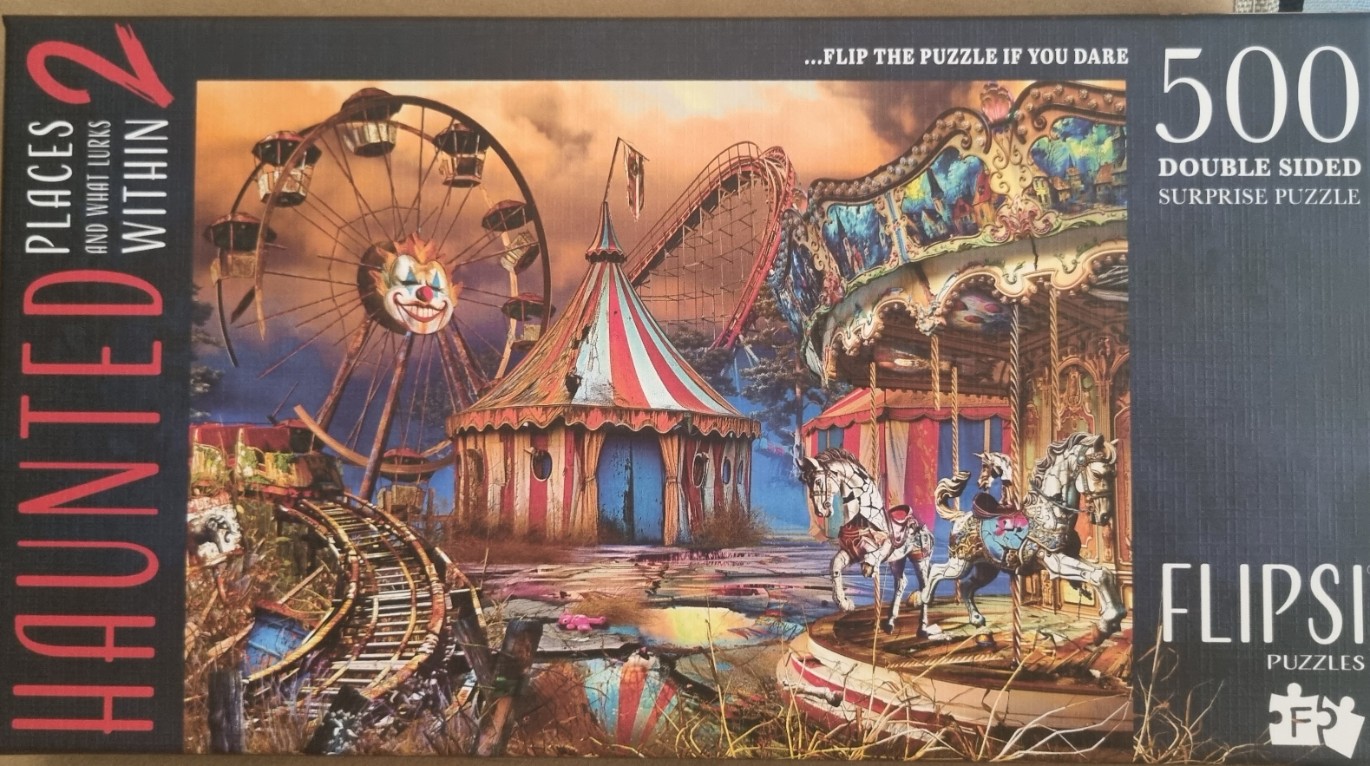
The main scene depicts a derelict and ominous carnival at dusk. Dominating the background is a rusted ferris wheel featuring a large, sinister clown face at its center, glowing with a menacing expression. Beside it stands a faded, striped circus tent and the skeletal remains of a roller coaster track that curls into the distance. In the foreground, a ornate carousel sits partially overgrown, its decorative horses frozen in a lifelike stance. The entire area is filled with weeds, puddles reflecting the dim light, and a sense of decay that suggests the fairground has been long forgotten.
The composition is layered, leading the eye from the decaying tracks and foreground debris toward the towering, haunting structures behind. The sky is a moody blend of deep purples and oranges, casting a dramatic, eerie glow over the scene. The lighting is low and atmospheric, emphasizing the rusted textures of the rides and the tattered fabric of the tents.
Stylistically, the artwork is a detailed digital illustration that leans into the horror-fantasy genre. The colour palette is dominated by muted, autumnal earth tones, dark blues, and pops of distressed red and gold, which heighten the gothic, abandoned aesthetic. Small, unsettling details like a lone stuffed animal left in the dirt add to the unsettling narrative of the image.
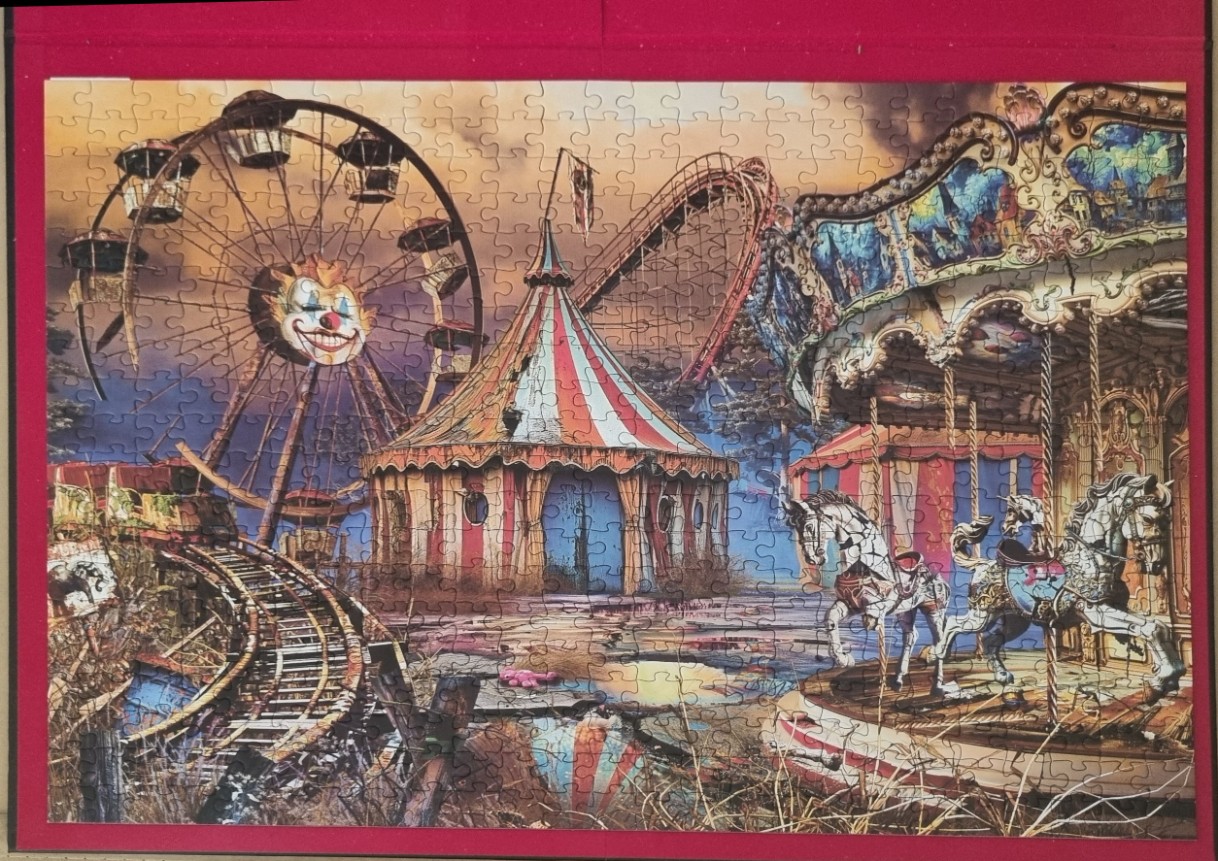
This illustration depicts a surreal and eerie, abandoned carnival scene at dusk. The composition is anchored by a large, rusted ferris wheel on the left, which features a prominent, unsettling clown face at its center. Adjacent to this is a weathered, red-and-white striped circus tent, while a decaying roller coaster track winds through the foreground. On the right side, an ornate, vintage carousel stands partially obscured, its painted horses appearing worn and weathered.
The setting is bathed in a moody, twilight atmosphere. The color palette relies heavily on dusty browns, muted yellows, and desaturated blues, creating a sense of neglect and decay. Dark, ominous clouds gather in the sky, contributing to the gloomy, melancholic mood. The light is dim and diffuse, casting long, indistinct shadows that emphasize the dilapidated state of the amusement park structures.
Secondary details include scattered debris and overgrown, dry vegetation surrounding the rides, suggesting years of abandonment. The artistic style is detailed and evocative, leaning toward the macabre or dark fantasy genre. The entire scene captures a haunting, post-apocalyptic carnival atmosphere, where once-joyful attractions are now relics of a forgotten time.
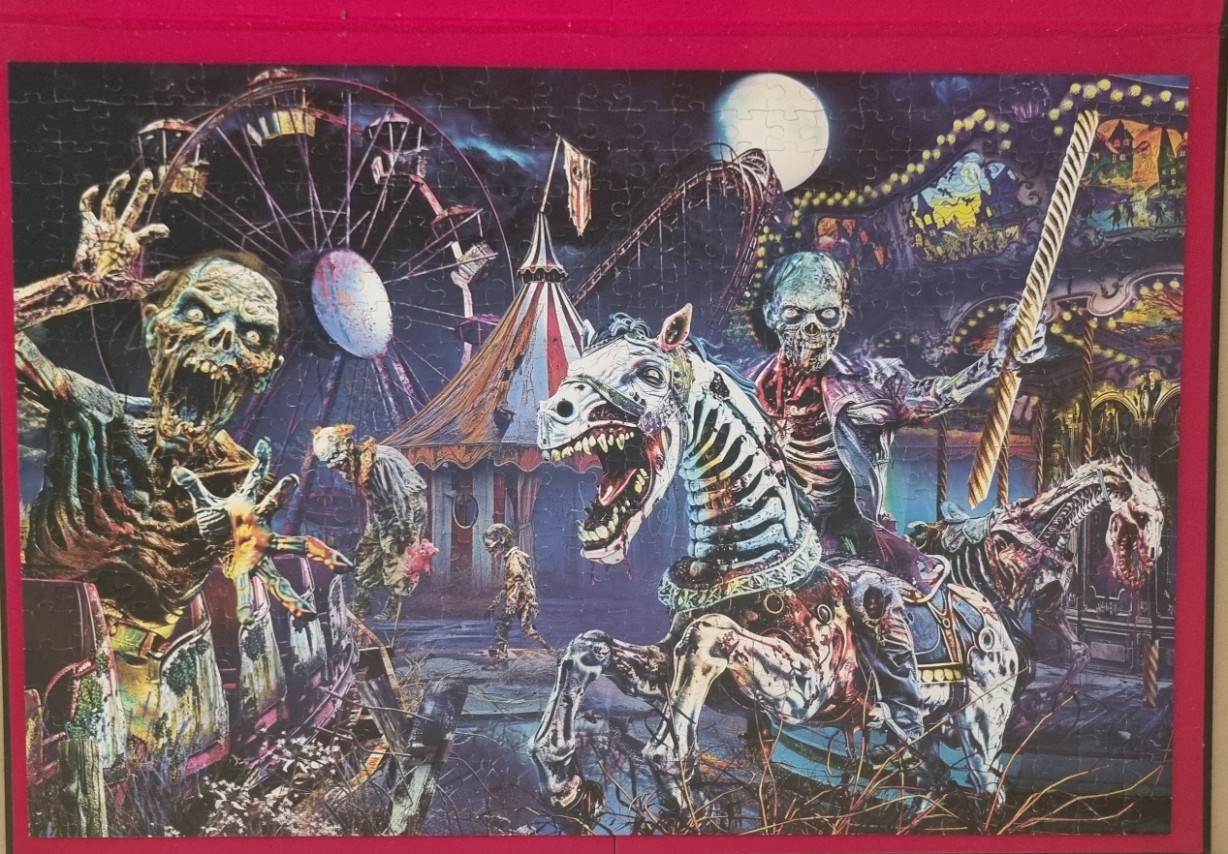
This macabre illustration depicts a dark, abandoned carnival at night, overrun by the undead. In the foreground, a skeletal figure with exposed ribs rides a menacing carousel horse, holding a long pole aloft. Beside it, another undead figure reaches out with decaying hands toward the viewer. The background features classic carnival attractions, including a massive, looming Ferris wheel and a striped big-top tent, all rendered in a decaying, derelict state.
The composition is anchored by the sinister figures of the carousel, which draws the eye toward the center-right. A full, bright moon hangs in the dark sky, casting an eerie glow over the scene and providing contrast against the deep blues and purples of the night. The overall color palette is a mix of moody, cool-toned shadows punctuated by the harsh, skeletal whites of the figures and the warm, golden hues of the carousel lights.
The style is detailed and graphic, reminiscent of horror-themed comic book art. Every element, from the rotting flesh of the figures to the weathered wood of the amusement rides, is rendered with dramatic textures and high contrast. The atmosphere is ominous and unsettling, creating a surreal and terrifying vision of a haunted fairground.
by KazB 2025-10-01