Adoration of the Magi
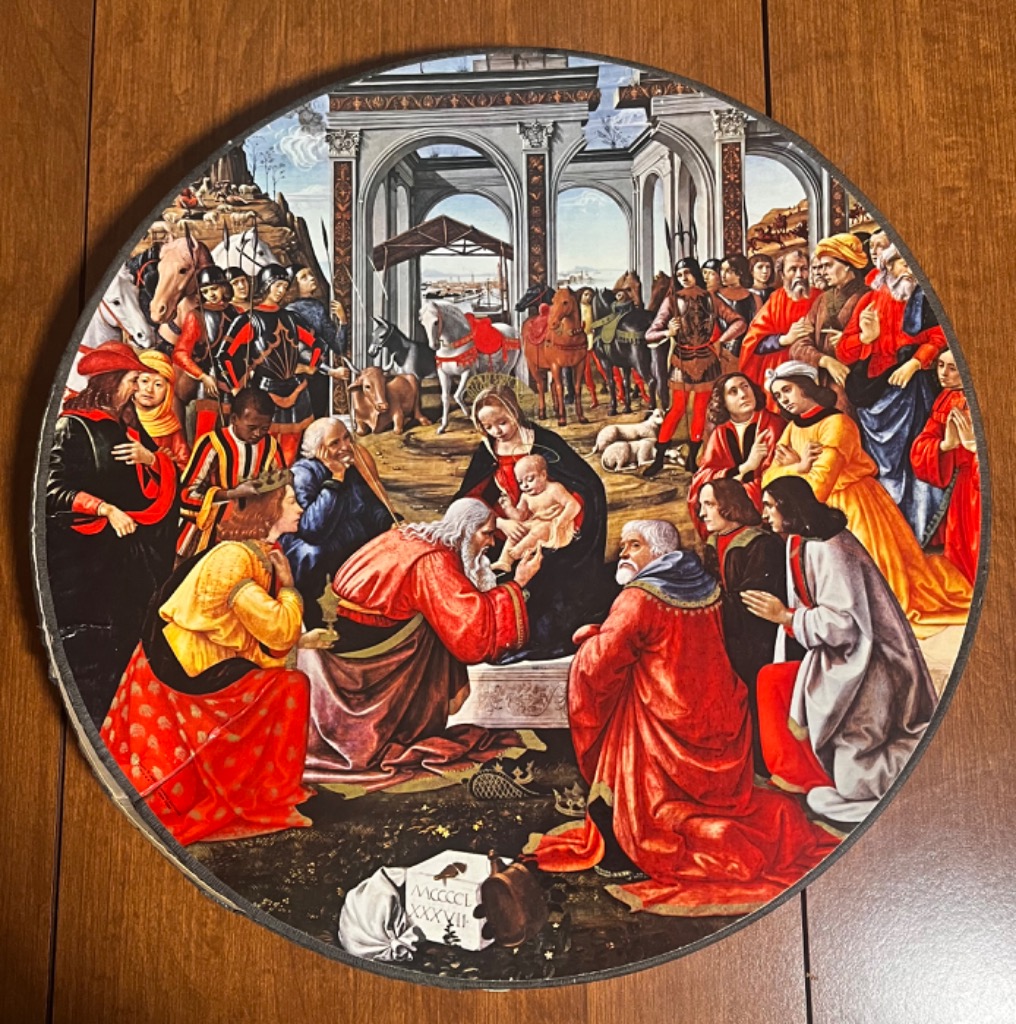
This circular artwork depicts the Adoration of the Magi in a classic Renaissance style. In the center, the Virgin Mary sits with the infant Jesus on her lap, surrounded by a large, bustling crowd. Two of the Magi are kneeling before the child, dressed in vibrant crimson robes, while the third stands nearby. They are flanked by a diverse group of onlookers, including figures in period garments of yellow, orange, and blue, as well as soldiers wearing polished armor.
The scene is set against an elaborate architectural background featuring tall, classical stone arches and columns that frame a view of a distant landscape with a harbor. The composition is packed with secondary details, including horses, a donkey, and an ox positioned near the ruins, suggesting a stable-like environment within the grandeur of the architecture. Small animals, such as sheep, are tucked into the middle ground.
The painting uses a rich, warm palette dominated by deep reds and golds, contrasted against the cool, pale grey of the stone pillars. The lighting is clear and even, characteristic of the period's focus on structured perspective and human anatomy. In the immediate foreground, a white stone block inscribed with Roman numerals sits on the ground, serving as a subtle anchor for the complex, multi-layered scene. The overall style is reminiscent of 15th-century Italian tempera or oil works, noted for its meticulous attention to clothing, textures, and depth.
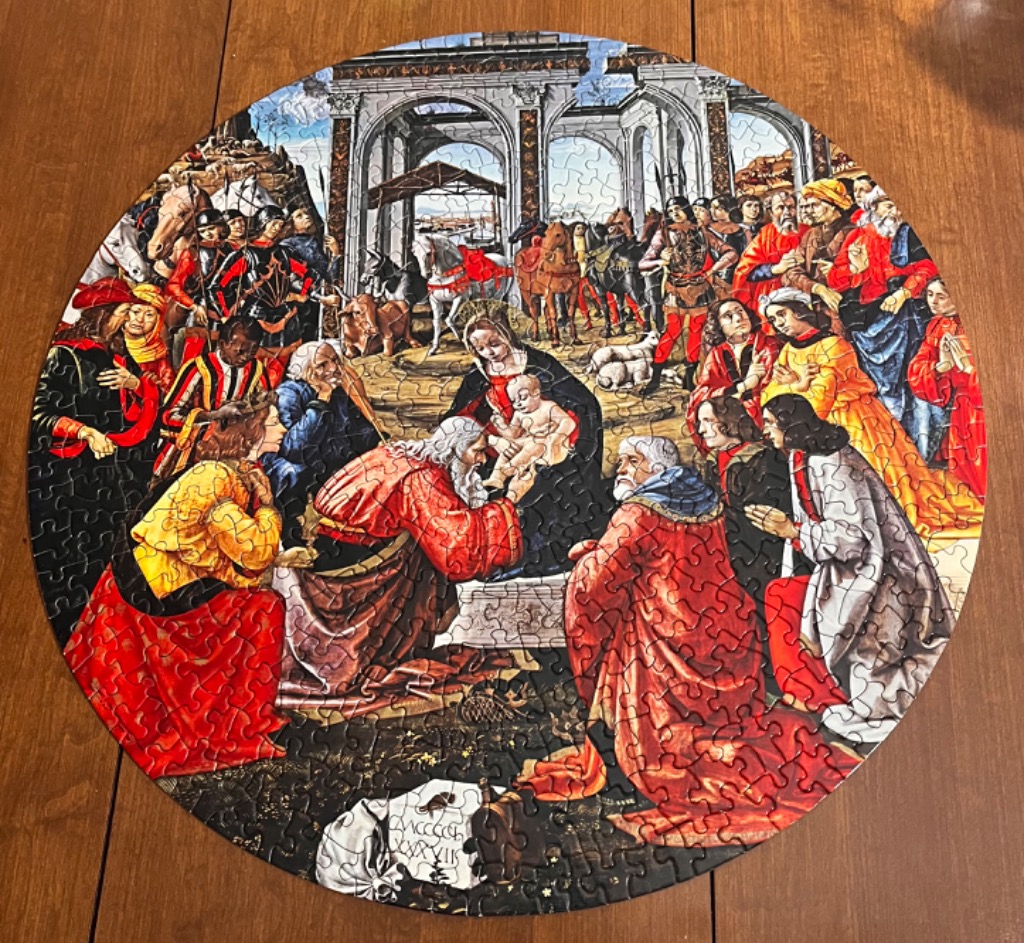
This circular image depicts a classic Renaissance scene of the Adoration of the Magi. At the center, the Virgin Mary holds the infant Jesus, who is being adored by three kings and a large, ornate retinue. The figures are dressed in lavish, period-appropriate robes in vivid shades of red, gold, and deep blue, creating a rich tapestry of color against the darker foreground.
The setting is structured by grand, classical Roman-style stone arches that frame the background. Behind the main group, a bustling crowd includes men on horseback, soldiers with lances, and various attendants, all gathered in a wide courtyard. The composition is balanced and dense, drawing the viewer's eye toward the central kneeling king who offers a gift to the child. In the immediate foreground, a discarded white cloth is inscribed with Roman numerals that appear to mark the date of the work.
The lighting is theatrical, highlighting the bright, primary-colored garments of the central figures while casting deeper shadows toward the bottom of the scene. The style is quintessentially Italian Renaissance, characterized by precise detail, anatomical focus, and a theatrical, narrative approach to the biblical subject matter. The overall mood is one of solemnity and spectacle, typical of grand religious art from this era.
by Larry Hostetter 2024-12-26