Chalk Cliffs on Rügen
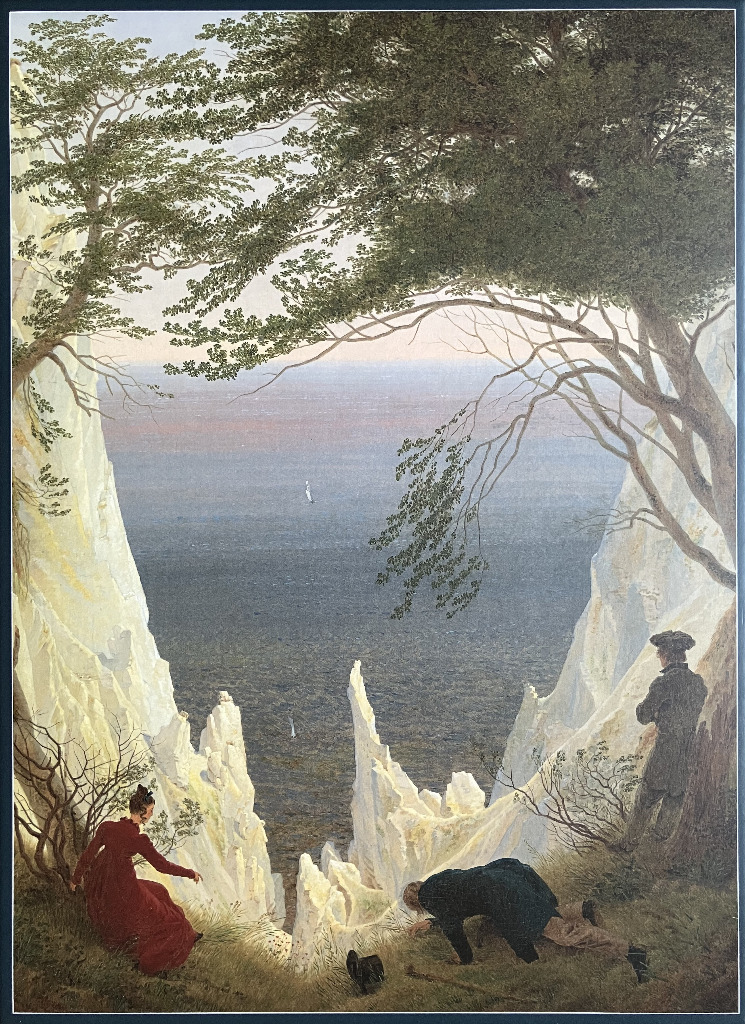
This iconic Romantic-era painting presents a breathtaking view through a natural frame of twisted, leafy tree branches. Three figures overlook a vast, deep blue sea from the precipice of jagged, bright white chalk cliffs. The composition is balanced by two large trees on either side that arch overhead, drawing the eye toward the open horizon where a faint, rosy sunset meets the distant water.
In the foreground, the three individuals are positioned in different poses of contemplation. To the left, a woman in a vibrant, floor-length red dress sits on the grassy verge, gesturing toward the drop. In the center, a man in a dark coat leans forward on his hands and knees, peering cautiously over the edge. To the right, a man in a dark frock coat and hat stands tall, leaning against the trunk of a tree while gazing calmly out toward the two tiny sailboats visible in the middle distance.
The colour palette is a striking study in contrasts. The intense, stark white of the limestone cliffs catches the sunlight, standing out against the deep indigo and teal tones of the sea. These cool, expansive tones are warmed by the soft, pastel pinks of the sky at the horizon and the rich, deep red of the woman’s gown. The intricate textures of the rugged rock, the spindly bark of the trees, and the soft, flowing fabric of the clothing create a serene yet awe-inspiring atmosphere characteristic of the German Romantic movement.
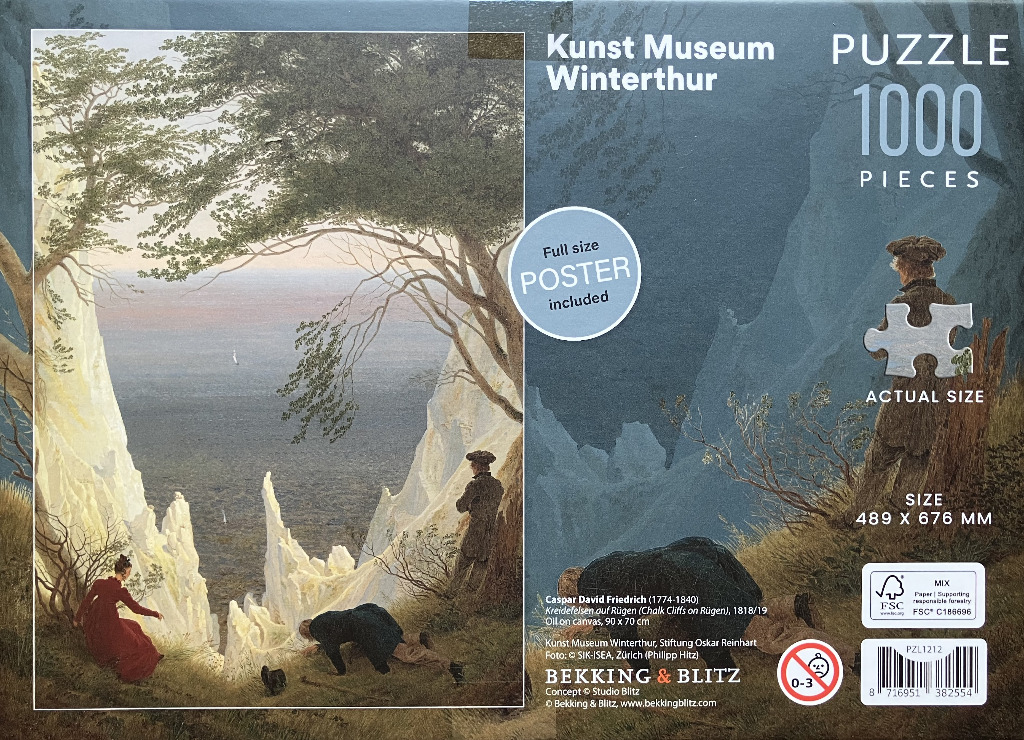
This classical oil painting, titled "Chalk Cliffs on Rügen" by Caspar David Friedrich, captures a breathtaking and somber coastal landscape. The composition is framed by two large, overhanging trees whose branches arch toward the center, creating a natural window that overlooks a vast, hazy sea. The focal points are three figures positioned at the edge of the precipice: a woman in a long red dress standing on the left, a man in dark clothing leaning over the edge in the foreground, and another man in a top hat standing on the right, gazing toward the horizon.
The setting is dominated by sheer, jagged chalk cliffs that plummet down toward a deep blue-grey ocean. Small, distant sails are visible on the calm water, adding a sense of immense scale to the scenery. The color palette is composed of muted, natural tones, including the stark white of the cliffs, the deep greens of the foliage, and the melancholic, atmospheric blues and greys of the sky and sea, which appear to blend together at the horizon.
Technically, the painting is a fine example of Romanticism, emphasizing the sublime and the emotional response to nature's grandeur. The light is soft and diffused, likely representing early morning or a misty day, which enhances the contemplative and quiet mood of the piece. The intricate details of the gnarled branches and the rough texture of the cliff face provide a sharp contrast to the vast, flat expanse of the sea below.