The Miraculous Spring
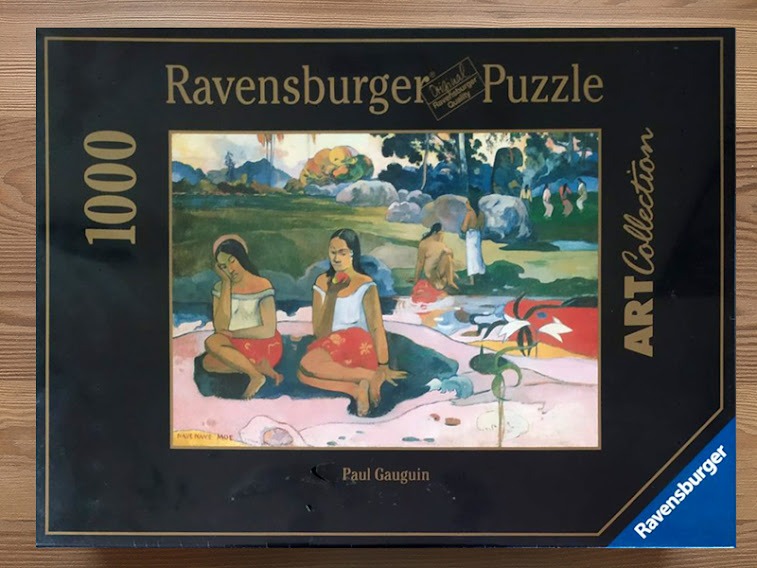
The central artwork depicts two Tahitian women resting on a patch of grass near a riverbank. The woman on the left sits with her chin resting on her hand in a contemplative pose, while the woman on the right holds a piece of fruit. Both are dressed in traditional clothing with white tops and patterned, reddish-orange skirts. They are positioned in the foreground, anchoring the composition against a vibrant, dreamlike background.
Behind the main figures, the scene transitions into a flat, semi-abstract landscape featuring a winding river, verdant green hills, and patches of deep blue water. In the distance, several other figures are visible, some walking near the tree line. The painting style is characterized by bold, flat areas of colour, expressive brushwork, and a lack of traditional perspective, typical of Post-Impressionist works.
The colour palette is rich and saturated, dominated by earthy greens, deep blues, soft pinks, and warm terracotta tones. The lighting is diffuse, lacking sharp shadows and creating a peaceful, timeless atmosphere. Small, stylized floral elements and foliage are scattered near the bottom of the canvas, adding decorative detail to the scene. The overall composition evokes a tranquil, pastoral island life, rendered with the distinctive artistic vision of Paul Gauguin.
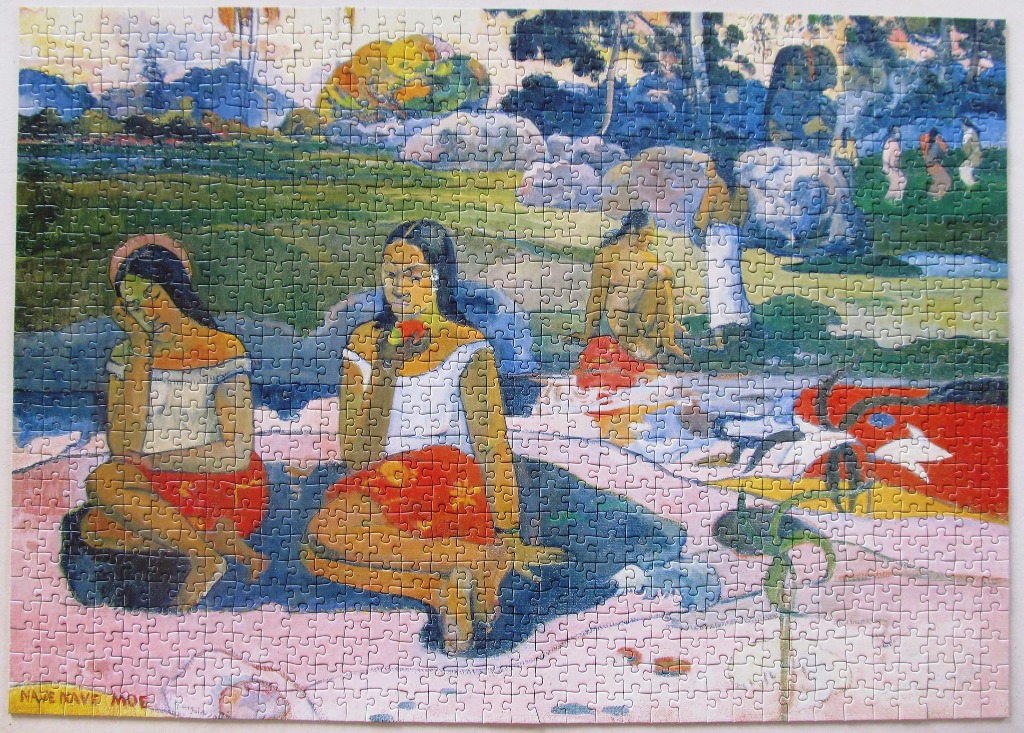
This post-impressionist oil painting depicts a tranquil, tropical scene featuring two Tahitian women seated in the foreground. They are positioned on a large, pinkish-purple patch of ground. The woman on the left leans her head on her hand in a contemplative pose, while the woman on the right holds a piece of fruit to her mouth. Both women are depicted with warm, golden skin tones and wear simple white tops with red patterned sarongs.
In the background, the composition expands into a lush, vibrant landscape. Several other figures, including a seated person and others walking in the distance, are scattered across a green field. The scenery includes large, rounded rocks, a blue stream or pool, and dense, stylized foliage. The horizon is filled with rounded, colourful trees in shades of orange, yellow, and deep green under a soft, muted sky.
The colour palette is rich and expressive, dominated by earth tones, deep blues, and bold accents of red and pink. The light is diffused and even, suggesting a peaceful, dreamlike atmosphere rather than a specific time of day. The style is distinctly symbolic, with flat planes of colour and simplified, flowing forms. In the bottom left corner, the title of the work, "NAVE NAVE MOE," is lettered in a decorative, pale script.
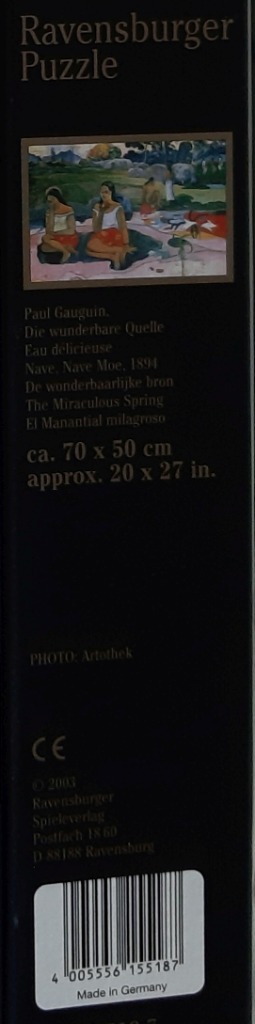
This painting features a group of Tahitian women resting in a lush, tropical landscape. In the foreground, two women sit on a patch of pinkish-white sand, framed by green and earthy blue terrain. The woman on the left rests her head on her hand, looking pensive, while the woman on the right sits more upright, holding a piece of fruit. In the middle ground, another woman is partially submerged in water, and further back, smaller figures walk across a field towards a dark, monolith-like shape.
The scene is composed in a post-impressionist style, characterized by flat, bold areas of colour and decorative forms. The palette is rich with earthy tones—greens, muted yellows, and ochres—contrasted by the soft pinks of the ground and the vibrant, saturated blues of the water. The light is diffused, creating a calm, meditative atmosphere typical of tropical island scenes.
The background depicts rolling hills under a soft, hazy sky, filled with stylized trees and boulders that add depth to the composition. The artwork, titled "Mave Mai Moe" by Paul Gauguin, utilizes expressive, non-naturalistic colours and simplified shapes to convey a sense of exotic tranquility and idyllic everyday life, typical of the artist's Tahitian period.
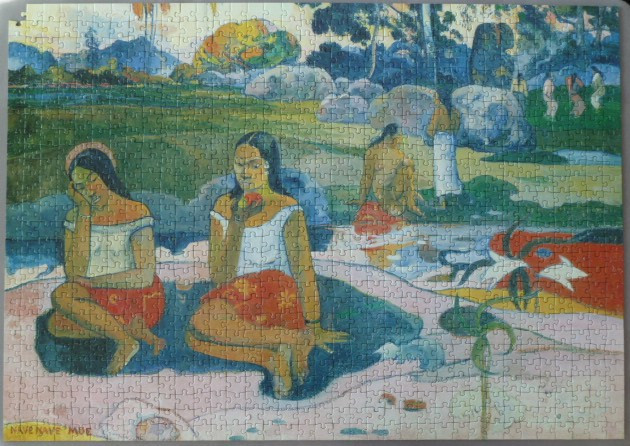
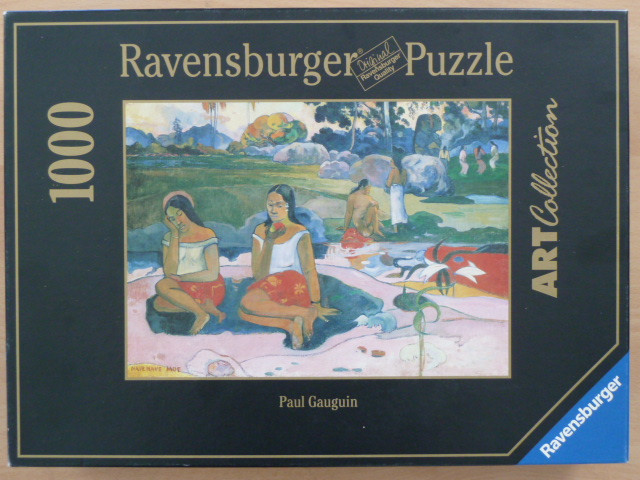
This post-impressionist painting depicts a serene, tropical scene set in a lush landscape. In the foreground, two women with dark hair sit on the ground, wearing white tops and patterned skirts. The woman on the left rests her chin on her hand, while the woman on the right holds a small, round object. They are positioned against a backdrop of deep blue pools and soft, rounded grey rocks that define the middle ground.
Beyond the central figures, the landscape expands into a vibrant green field leading to a line of stylized trees and distant hills. Several other smaller figures in light-coloured garments wander in the distance, partially obscured by the foliage, suggesting a sense of movement and quiet activity within a mythic, idyllic setting. To the right, a large, flattened red shape provides a bold contrast to the cooler greens and blues that dominate the composition.
The artwork is rendered in Gauguin’s characteristic flat, decorative style, employing a palette of rich, saturated colours—deep teals, vibrant forest greens, warm ochres, and bright reds. The lighting is soft and diffuse, lacking strong shadows, which enhances the dreamlike, rhythmic quality of the scene. The bottom left corner contains the text "NAVE NAVE MOE."