L’adorazione dei magi
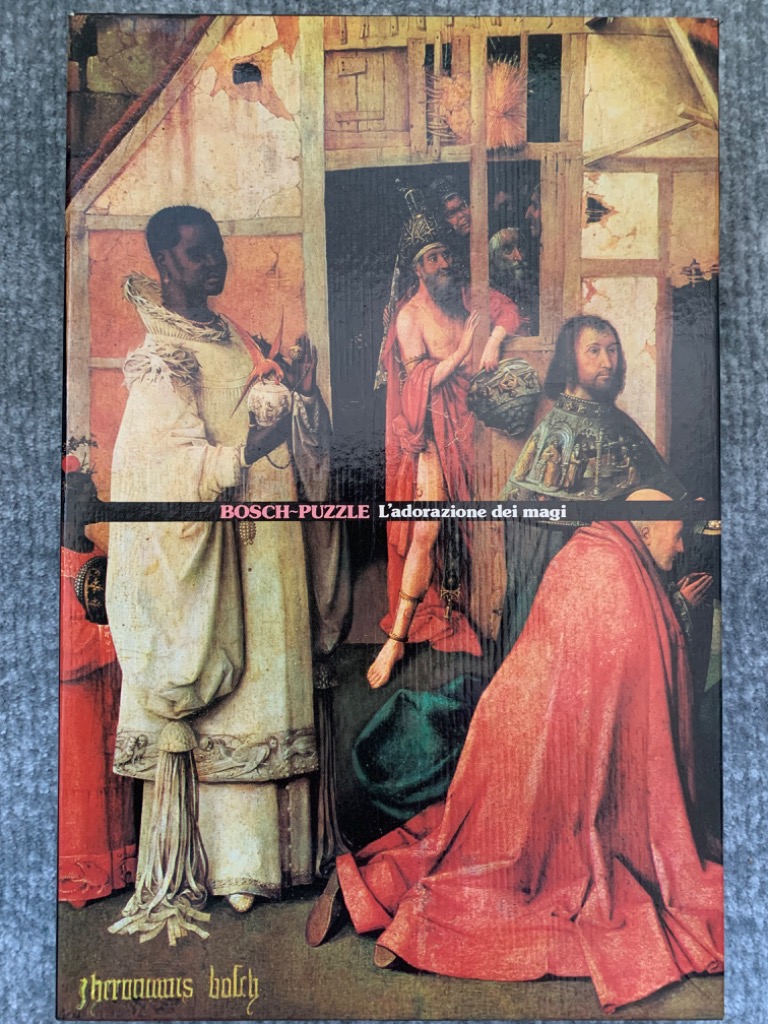
The scene depicts a fragment of a Renaissance oil painting, likely the Adoration of the Magi. On the left, a Black king stands tall, dressed in a voluminous, heavily draped cream-coloured robe with gold embroidery and a large, fringed tassel hanging from his waist. He holds an ornate vessel topped with a small, stylized bird. In the background, a partially ruined wooden structure serves as a stable, where figures peek out from the dark, shadowy interior.
To the right, a kneeling figure is draped in a brilliant, expansive red cloak that occupies the lower foreground. Beside him stands another king, partially obscured, wearing a dark green cloak decorated with detailed narrative scenes. The composition is structured with strong vertical lines from the wooden stable pillars, creating a sense of depth and enclosure. The light is focused and dramatic, highlighting the rich textures of the heavy fabrics and the expressive faces of the figures.
The colour palette is dominated by deep, warm earth tones, juxtaposed with the striking cream of the first king's robes and the vibrant red of the kneeling man's cloak. The style is characteristic of late medieval or early Northern Renaissance art, featuring high detail in the clothing, muted background tones, and a solemn, theatrical atmosphere. The entire piece feels like a cinematic framing of a classical religious narrative.
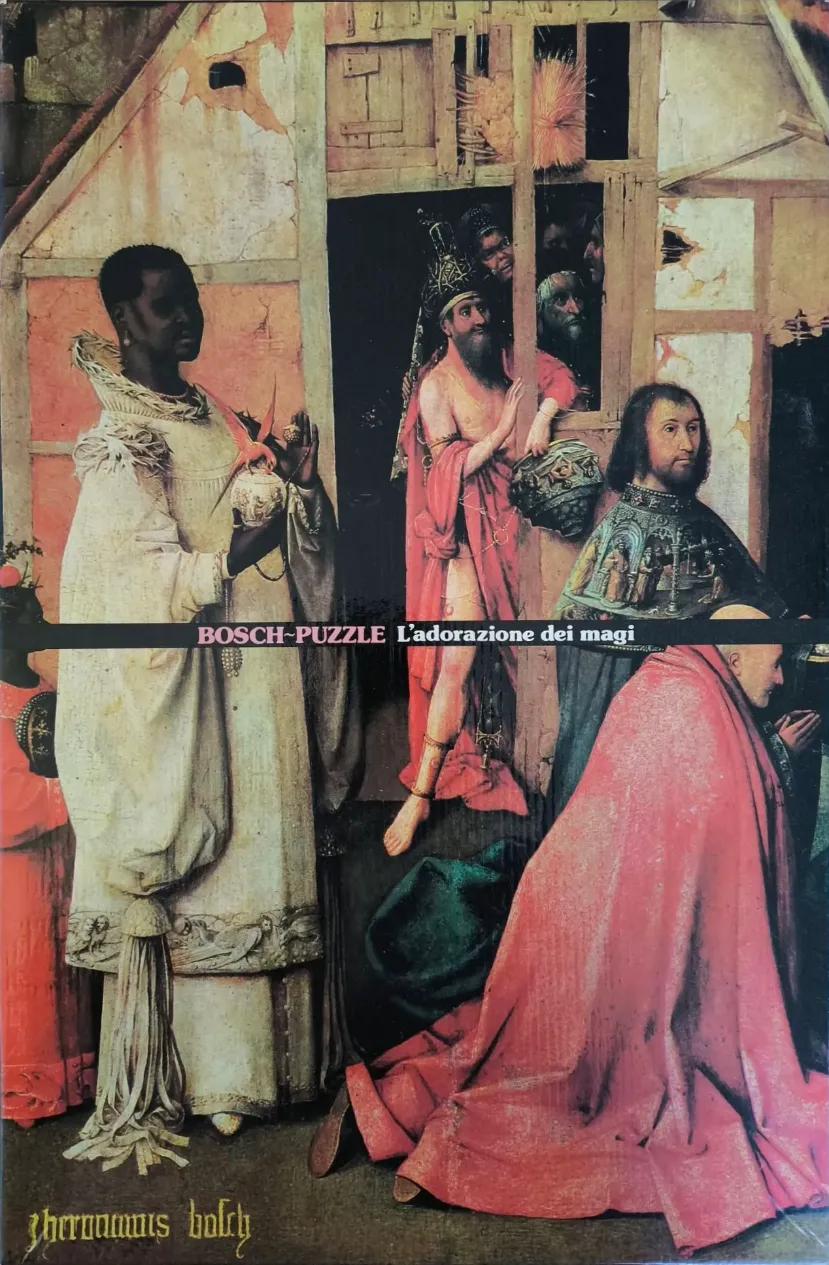
This classical oil painting depicts the biblical Adoration of the Magi. A central figure of an African king stands on the left, wearing a lavish, voluminous white robe with intricate embroidery and a high, stiff collar. He holds a spherical, decorated vessel. To his right, within the dark threshold of a dilapidated structure, another king in a flowing red robe emerges. Beside him, a third figure with shoulder-length hair wears a dark green cape adorned with detailed biblical scenes. In the foreground, a figure in a deep pink cloak kneels in prayer, their back to the viewer, while other faces peer out from the shadows of the building.
The composition is structured around the architectural frame of a rustic, weathered hut. The scene is divided between the bright, illuminated figures in the foreground and the murky, mysterious darkness of the interior space. The background consists of exposed timber framing and crumbling plaster, giving the painting a gritty, atmospheric realism.
The color palette is rich and earthy, dominated by deep crimsons, muted greens, and clean, bright whites. The lighting is focused on the figures, creating strong contrasts against the dark interior of the stable. The style is characteristic of the Northern Renaissance, known for its meticulous detail, realistic facial expressions, and dense, symbolic narrative elements typical of the artist's traditional religious portraiture.

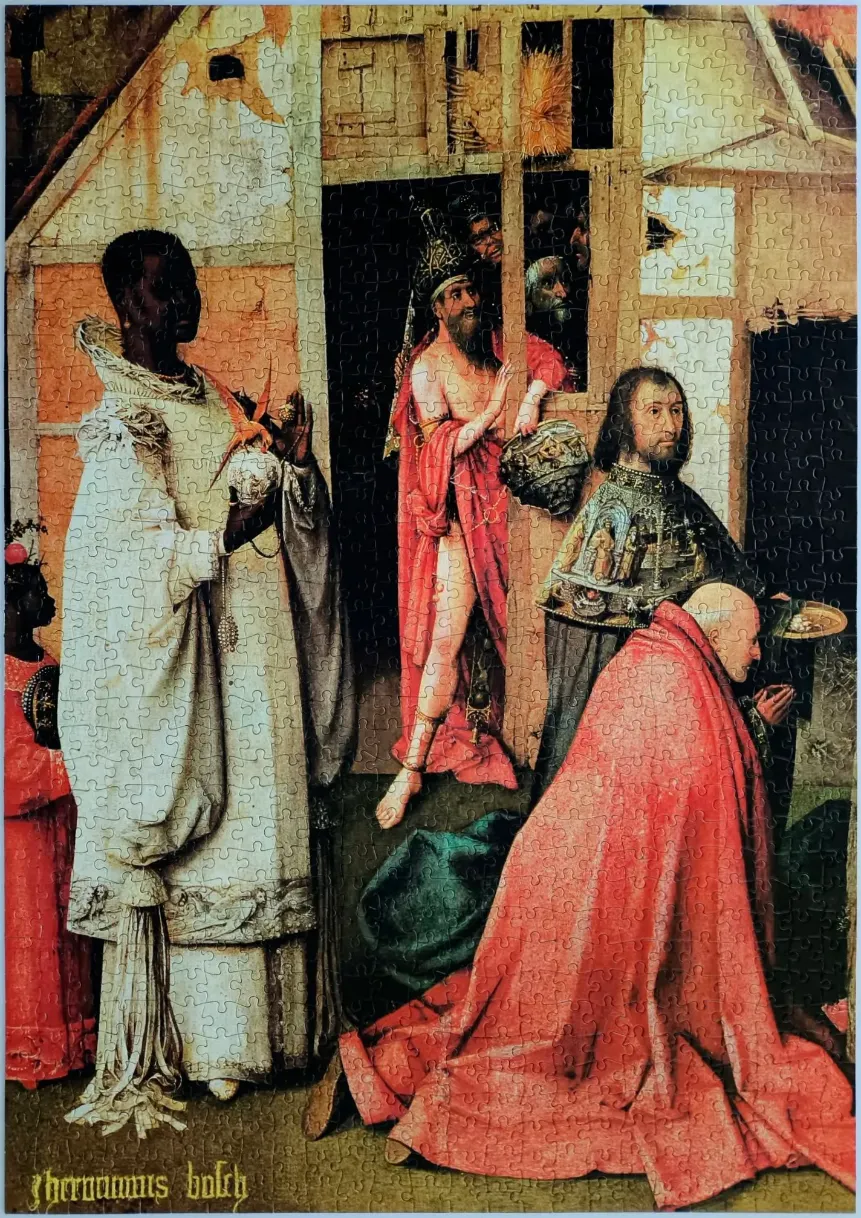
This artwork depicts a scene of the Adoration of the Magi, set against a weathered wooden structure. In the foreground, a prominent figure with dark skin stands wearing an elaborate, flowing white robe with intricate embroidery and a high ruffled collar, holding a unique vessel. Beside him, an older man with a bald head kneels in the foreground, draped in a vibrant, heavy crimson cloak that pools on the ground. Another central figure, also in red, stands just behind the threshold of the building, peering out with a bearded face and wearing a detailed headpiece, while other shadowy figures emerge from the dark interior doorway.
The composition is layered, emphasizing depth through the interplay of figures inside and outside the humble, rustic shelter. The architecture features exposed wooden beams and plaster, suggesting a sense of age and decay. The lighting is dramatic, casting deep shadows within the doorway while highlighting the rich textures of the garments and the expressions on the subjects' faces. The colour palette is defined by deep, saturated reds, crisp whites, and earthy wood tones, creating a somber yet regal atmosphere. The painting exhibits the characteristic meticulous detail and surreal, somewhat eerie stylistic nuances of Northern Renaissance art, with the artist's name, 'Jheronimus Bosch', inscribed in gothic script at the bottom left.