Marvellous Minerals
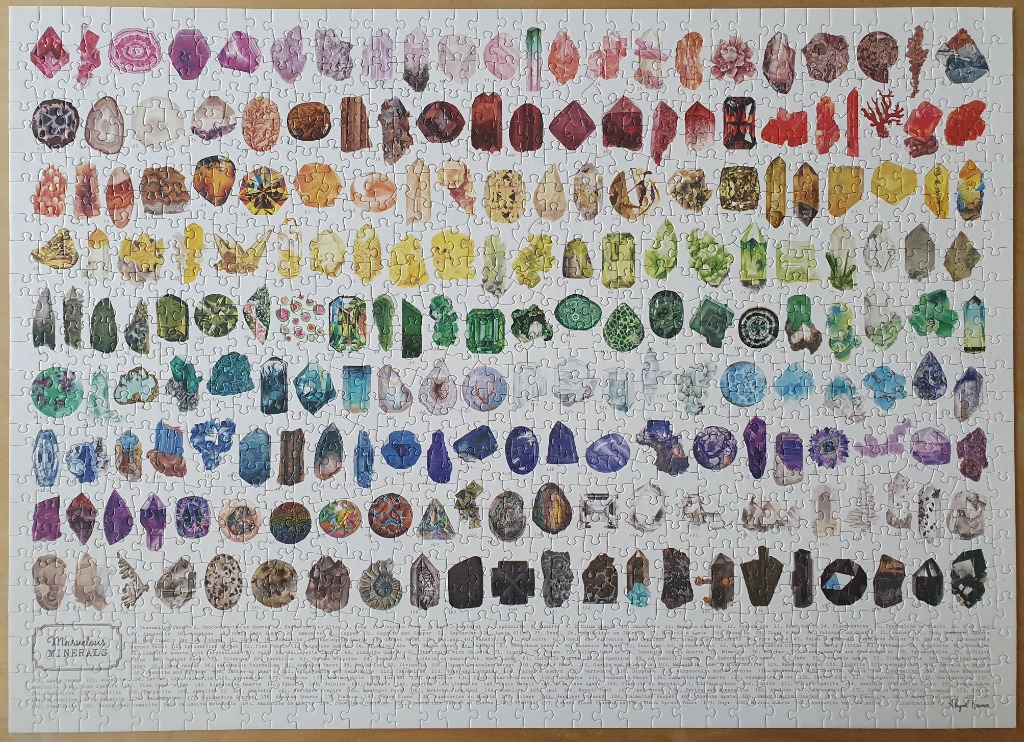
This image displays a comprehensive, organized grid of various crystals, gemstones, and minerals set against a stark white background. The specimens are arranged in rows, following a spectrum from red and pink at the top, transitioning through orange, yellow, green, blue, and violet, down to earthy browns, blacks, and greys at the bottom. Each specimen is individual, showcasing diverse geological structures ranging from sharp, geometric crystal points to rounded, banded, and raw organic formations.
The composition is highly structured, resembling a scientific identification chart. Each item is small, distinct, and accompanied by a tiny, faint number, suggesting a key system. The spacing is consistent, creating a clean, aesthetic order that emphasizes the natural variations in color, texture, and clarity across the different mineral types. The style is that of a realistic, detailed scientific illustration.
The color palette is vibrant and saturated, moving fluidly through the rainbow across the rows. The lighting is neutral and even, highlighting the translucent and reflective surfaces of the various gems without creating harsh shadows. In the bottom left corner, a stylized rectangular box features the text "MARVELOUS MINERALS," serving as a title for the collection. The bottom edge contains a dense block of small, printed text that acts as an index for the numbered specimens, with the illustrator's name appearing in the bottom right corner.
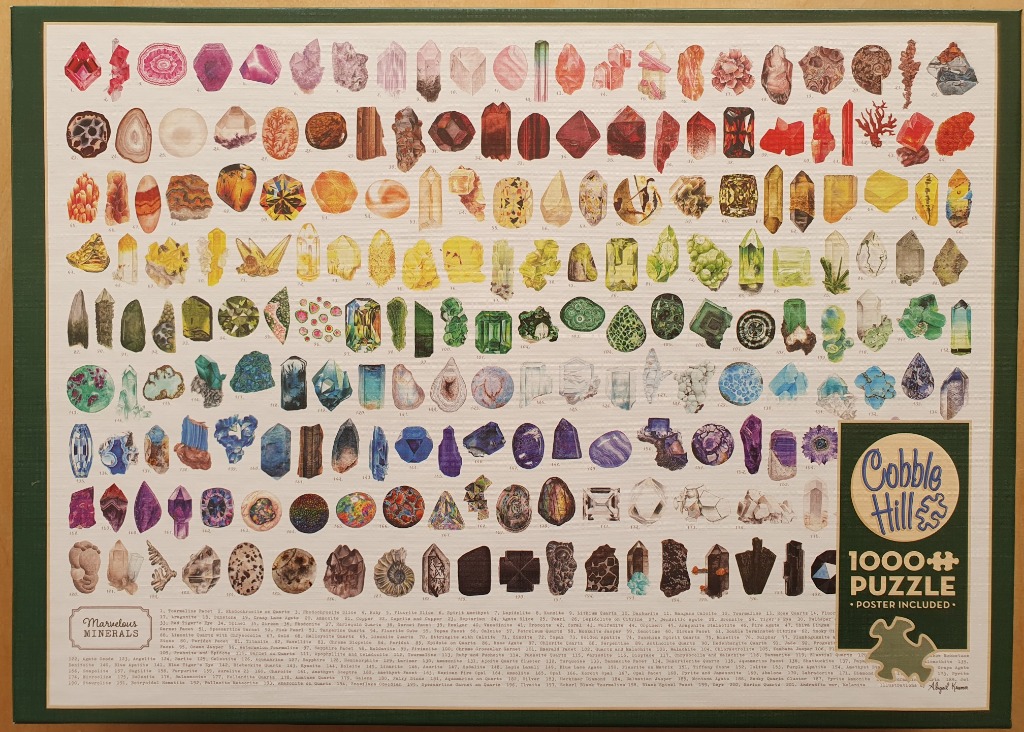
This illustration features a systematic, grid-like arrangement of various mineral and crystal specimens displayed against a pale, horizontal-lined background. The collection is organized by color, transitioning from warm reds, pinks, and oranges at the top, through yellows and greens in the middle, to blues, purples, and earthy browns and blacks at the bottom. Each specimen is individually illustrated with intricate detail, showcasing diverse textures, geometric crystal formations, and organic, rounded geological shapes.
Compositionally, the minerals are placed in rows, creating a colorful gradient across the surface. The light source appears neutral and even, highlighting the unique translucency, opacity, and luster of each stone. Each specimen is labeled with a tiny corresponding number, providing a sense of scientific documentation and cataloging.
The overall aesthetic is that of a classic natural history reference chart. The illustration style is detailed and clean, utilizing a variety of artistic techniques to capture the reflective surfaces of polished gems and the raw, rugged edges of unrefined crystals. The arrangement is orderly yet visually vibrant, turning geological variety into a harmonious spectrum of color.