Still Life with Basket
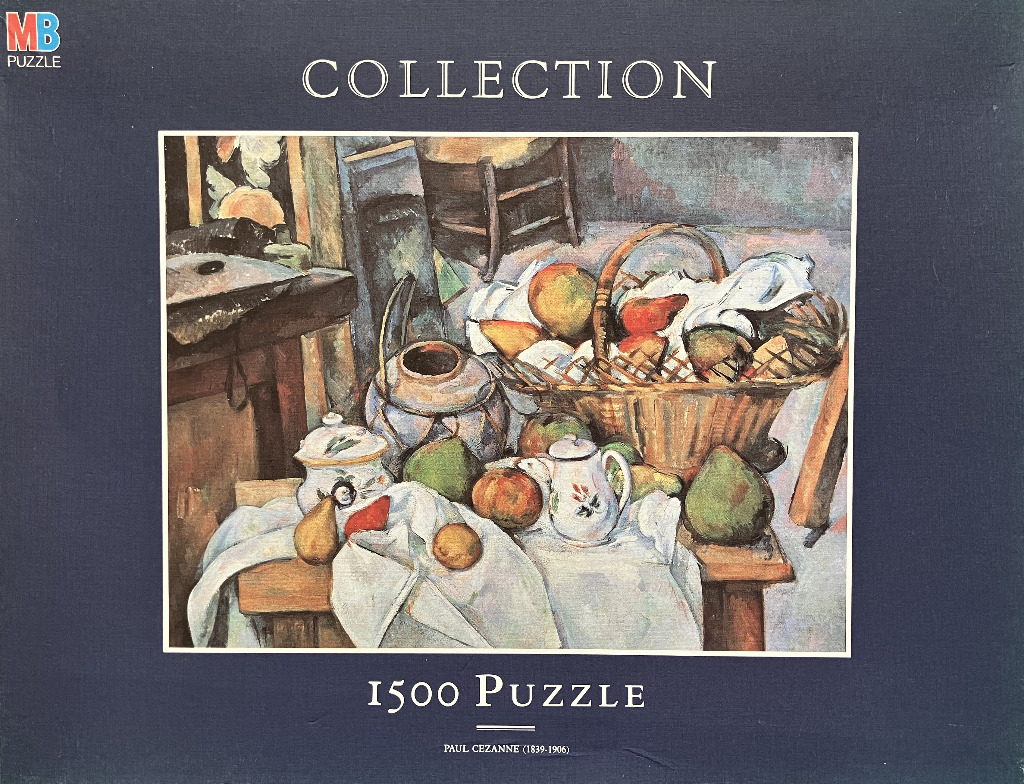
This post-impressionist oil painting depicts a rustic still life arrangement set upon a wooden table draped with a crumpled, thick white cloth. The central focus is a woven basket overflowing with various fruits, including peaches, pears, and apples. Beside the basket, a decorative ceramic pitcher and a lidded sugar bowl sit on the white fabric, adding a sense of domesticity to the composition.
In the background, the scene transitions into a darker, more ambiguous space, suggesting the interior of a room with furniture like a chair partially visible in the shadows. The composition is built on geometric structures, typical of the artist's style, where forms are rendered with deliberate, visible brushstrokes and a sense of architectural solidity rather than photographic realism.
The colour palette is earthy and warm, dominated by shades of ochre, sage green, deep brown, and soft whites. The light appears to originate from the left, casting subtle shadows that define the roundness of the fruit and the folds of the linen. The overall mood is contemplative and grounded, focusing on the tactile quality of the objects through heavy application of paint and a structured, flattened perspective.

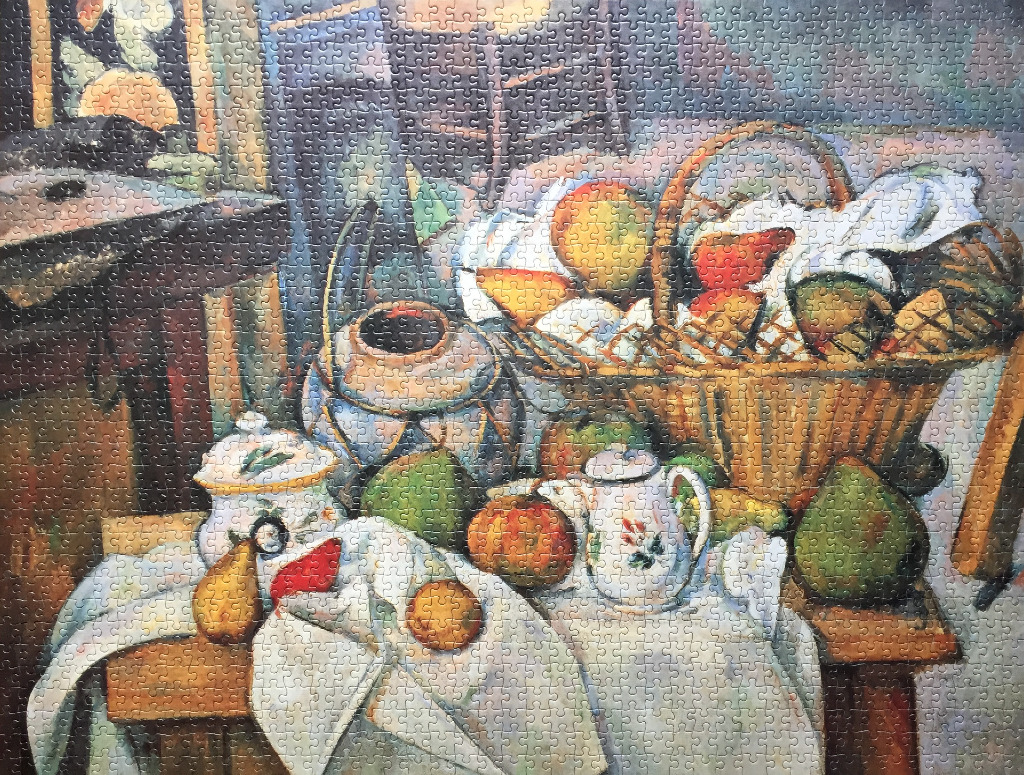
This still life scene depicts a collection of objects arranged on a wooden table, rendered in a textured, post-impressionist painting style. In the center and foreground, there are two ceramic vessels—a small teapot with floral motifs and a larger, rounded lidded container. A white cloth is draped carelessly across the table, partially covering a pear, a citrus fruit, and the base of the ceramics. To the right, a large, woven wicker basket overflows with a variety of fruits including pears, apples, and possibly citrus, cushioned by white fabric lining the interior.
The composition is anchored by the wooden table, which is shown from a slightly elevated angle. Behind the main arrangement, the background is muted and abstract, suggesting the interior of a rustic kitchen or dining area with hints of structural lines that imply a wall or a window frame to the left. The scene is bathed in a soft, diffused light that emphasizes the rounded forms of the fruit and the textural quality of the woven basket and fabric.
The colour palette is dominated by earthy tones, including ochre, burnt orange, olive green, and warm browns, punctuated by the stark white of the cloth and ceramics. The brushwork is visible and deliberate, creating a sense of depth and tactile engagement with the objects. The overall mood is quiet and domestic, evoking a timeless, classic still life aesthetic common in late 19th and early 20th-century European art.