Edible Flowers
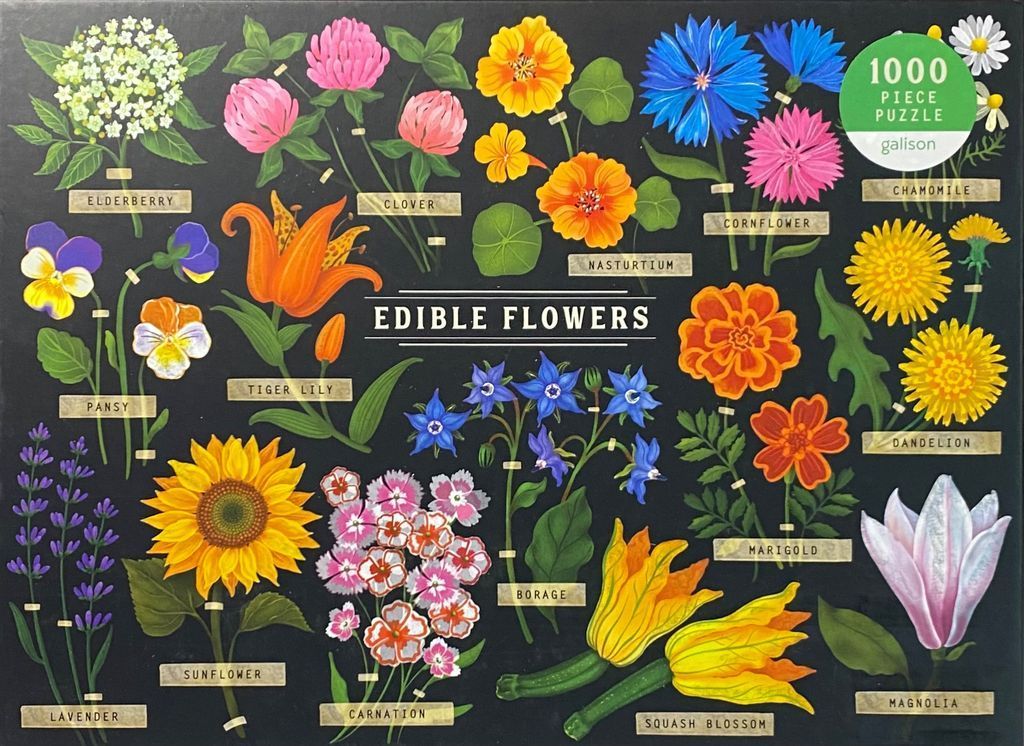
This botanical illustration features a collection of edible flowers arranged against a solid black background. The center of the composition is anchored by the bold white text "EDIBLE FLOWERS." Surrounding this title are various species, each depicted with clear stems, foliage, and vibrant blooms. The style is classic botanical art, emphasizing scientific accuracy with clean lines and a flat, modern graphic sensibility.
The colour palette is exceptionally bright, contrasting the deep charcoal backdrop with vivid yellows, oranges, pinks, purples, and blues. Notable specimens include a golden sunflower, a bright orange tiger lily, blue borage, and yellow squash blossoms. Each flower is positioned to look like a pressed specimen or a floating study, with thin, understated white lines connecting them to small, parchment-coloured rectangles that identify each plant by name, such as "Elderberry," "Clover," "Nasturtium," "Pansy," and "Lavender."
The composition is balanced, filling the negative space evenly without feeling cluttered. The lighting is soft and consistent, highlighting the textures of the petals and leaves without harsh shadows. This digital or gouache-style illustration evokes the feel of a vintage field guide while maintaining a contemporary, clean aesthetic that makes the colours pop against the dark field.
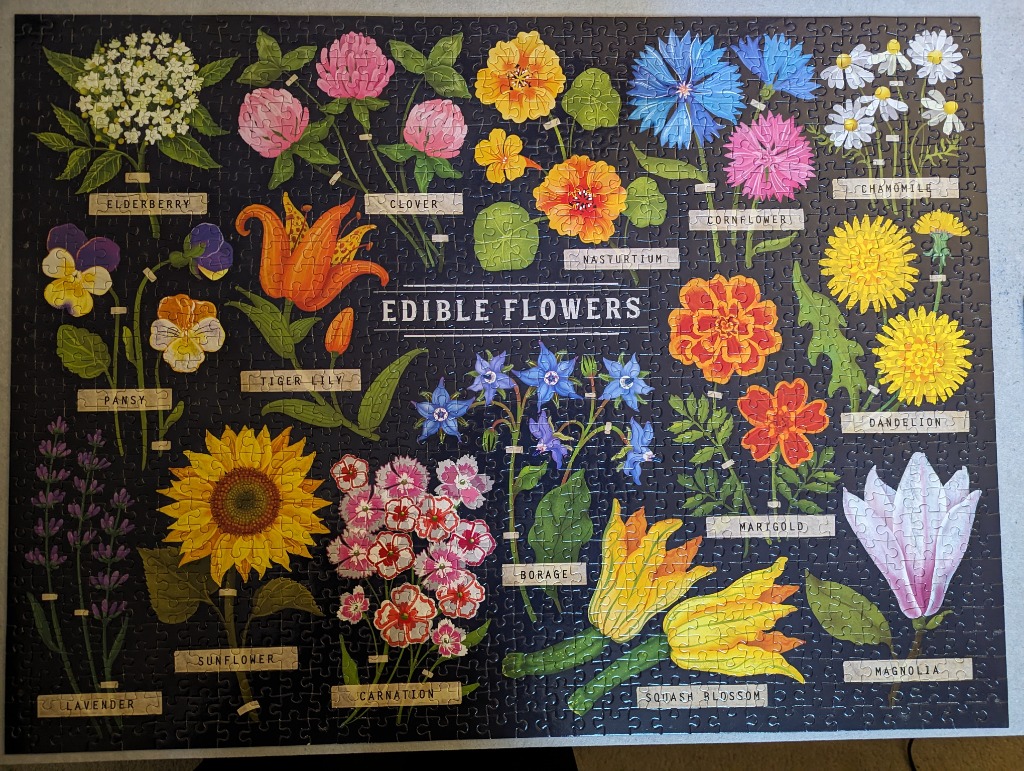
This botanical chart features a collection of diverse edible flowers arranged against a solid, dark background. Centered among the flora is the text "EDIBLE FLOWERS" in a clean, white font. The illustration style is reminiscent of a classic scientific study, with each plant depicted clearly with its green foliage and signature blooms.
Each flower is accompanied by a small, parchment-like label identifying the species, including varieties such as elderberry, clover, nasturtium, cornflower, chamomile, pansy, tiger lily, dandelion, lavender, sunflower, carnation, borage, marigold, squash blossom, and magnolia. The composition is balanced, with the plants distributed across the space, creating a dense yet organized appearance that highlights the unique structure of each petal and leaf.
The colour palette is vibrant and varied, providing a sharp contrast between the saturated oranges, yellows, pinks, purples, and blues of the flowers and the deep, near-black backdrop. The lighting is even and flat, typical of a botanical reference guide, ensuring that all details—from the delicate petals of the chamomile to the bold, sun-like shape of the sunflower—are easily discernible.