The New Dress
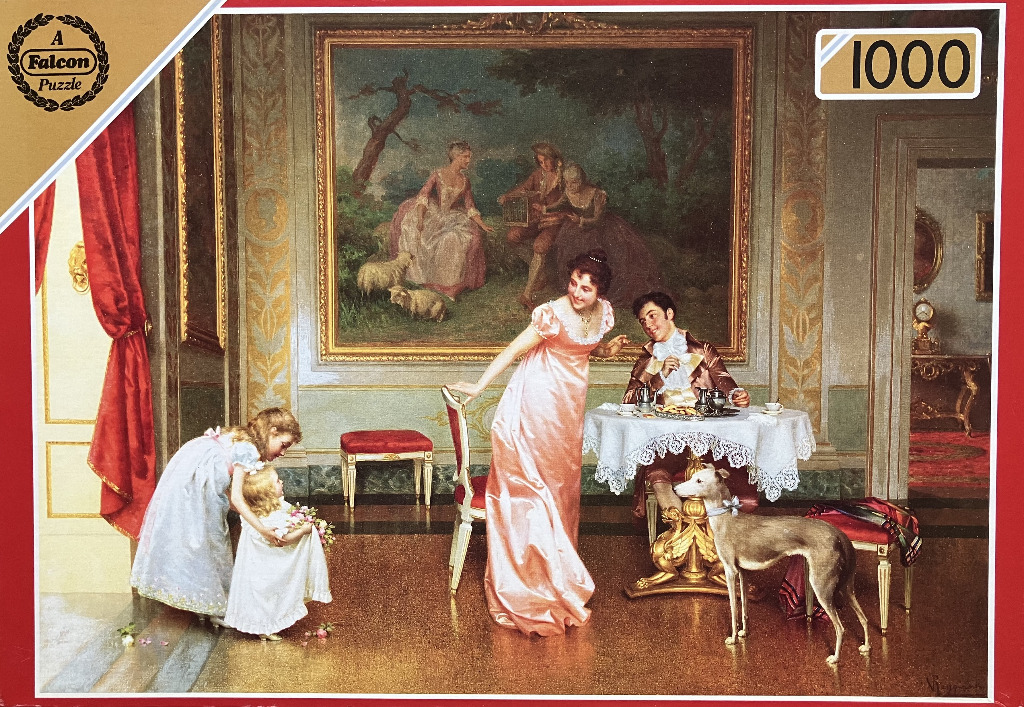
This oil painting depicts a refined 19th-century domestic interior, capturing a moment of family interaction in a grand parlor. The central focus is a woman in a flowing, pale pink empire-waist gown, standing beside a small dining table. She looks towards a man seated at the table, who is dressed in a dark, formal coat and white cravat, holding a cup. To the left, two young girls in white dresses interact, with one offering a small bouquet of flowers to the other. A sleek greyhound wearing a light blue ribbon stands poised in the foreground, facing the children.
The setting is opulent, featuring polished wooden floors, decorative wall panels, and deep red velvet curtains framing the left side of the room. Behind the main figures hangs a large, ornate, gold-framed painting of a pastoral scene, depicting figures in a verdant landscape. The composition is balanced, with the dining table and chairs providing a clear sense of depth. An open doorway to the right reveals a glimpse of an adjoining room containing an antique clock on a sideboard, suggesting a well-appointed estate.
The colour palette is dominated by soft, warm tones—the pastel pink of the woman's dress, the creamy whites of the children’s clothing and the table linen, and the rich wood and velvet accents. The lighting is bright and even, highlighting the textures of the fabric, the sheen of the wooden floor, and the classic, realistic painting style characteristic of 19th-century genre art.
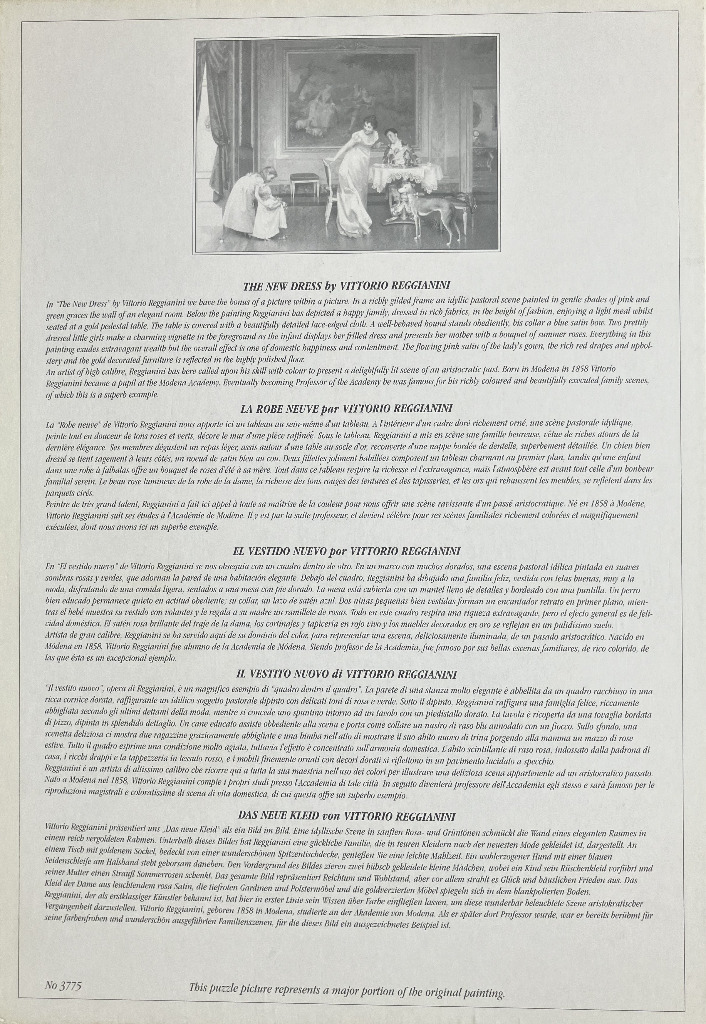

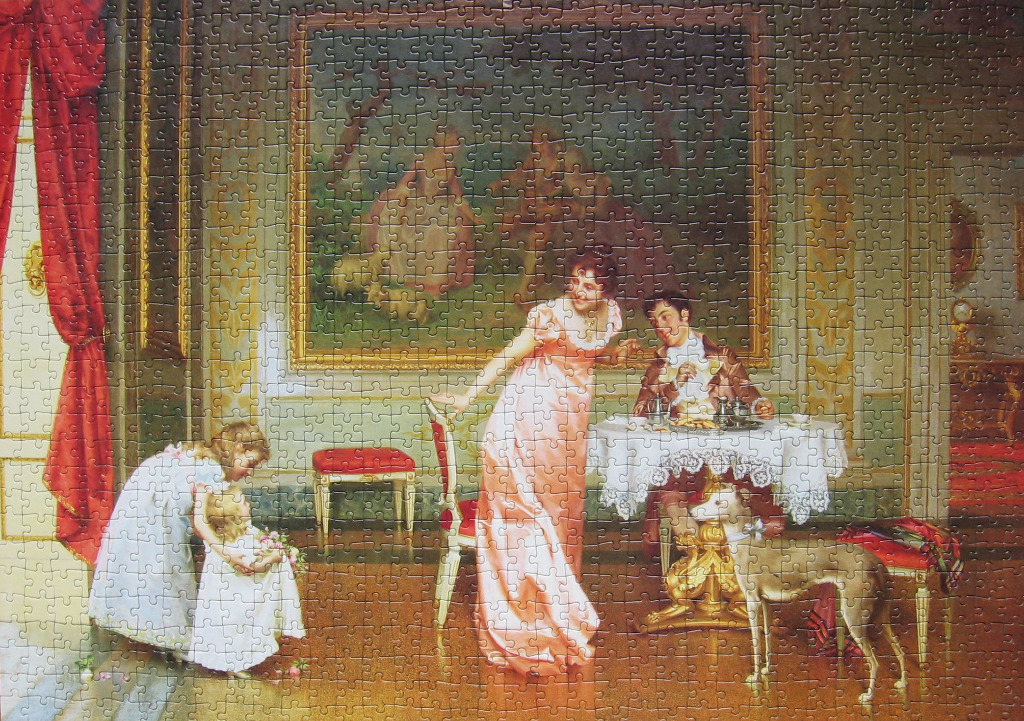
This scene depicts an elegant, 18th-century domestic interior populated by a young family. In the foreground, a woman wearing a soft peach-colored gown stands beside a small, round table, smiling toward a man seated at the table. To her left, a woman in a white dress kneels on the floor, assisting a small child who is holding a bouquet of flowers. A lithe, greyhound-type dog stands near the man, looking toward the foreground.
The room is decorated with a classical aesthetic, featuring tall, red velvet curtains on the left and a large, gold-framed oil painting on the wall behind the figures, which depicts a park scene with people. The walls are panelled, and the floor is a polished, warm-toned surface. The color palette is composed of rich, warm tones, including the vivid red of the curtains and stools, the peachy-pink of the main figure's dress, and the soft golds and browns that define the woodwork and furniture.
The composition is staged like a period drama, with balanced spacing between the figures. The style is that of a traditional oil painting, characterized by detailed brushwork that emphasizes the texture of the lace on the table, the folds of the heavy curtains, and the delicate facial expressions of the subjects. The lighting is soft and ambient, suggesting a serene afternoon indoors.