Queen Elizabeth I “The Pelican Portrait”
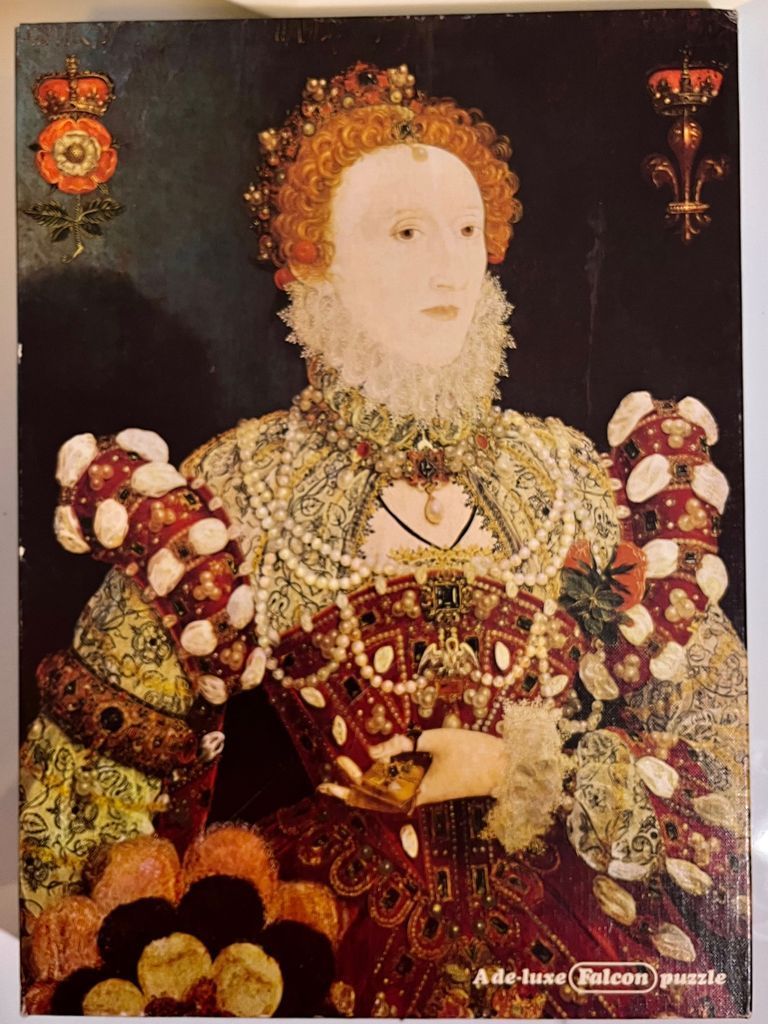
This classic portrait features Queen Elizabeth I as the central subject, rendered in the formal, stiff style characteristic of Elizabethan-era oil paintings. She is shown from the waist up, her expression pale and serene, framed by a high, intricate lace ruff collar. Her auburn hair is tightly coiffed and adorned with jewels, emphasizing her status as monarch.
Her attire is incredibly ornate, consisting of a structured bodice and sleeves embellished with embroidery, dark gemstones, and many strands of white pearls draped across her chest. The gown is a deep, rich crimson, contrasting with the lighter, pale yellow patterned sleeves. In her hands, which are held gracefully near her waist, she holds a small, rectangular golden object. To her left is a large, rounded decorative flourish, while the background remains a dark, moody shadow that pushes the subject to the foreground.
Floating in the upper corners are two royal heraldic symbols. On the top left is a Tudor rose surmounted by a crown, rendered in vibrant shades of orange and red. On the top right is a golden fleur-de-lis, also topped with a crown. The lighting is focused primarily on the Queen's face and the luminous pearls, giving the painting a solemn, regal atmosphere typical of royal iconography from the late 16th century.
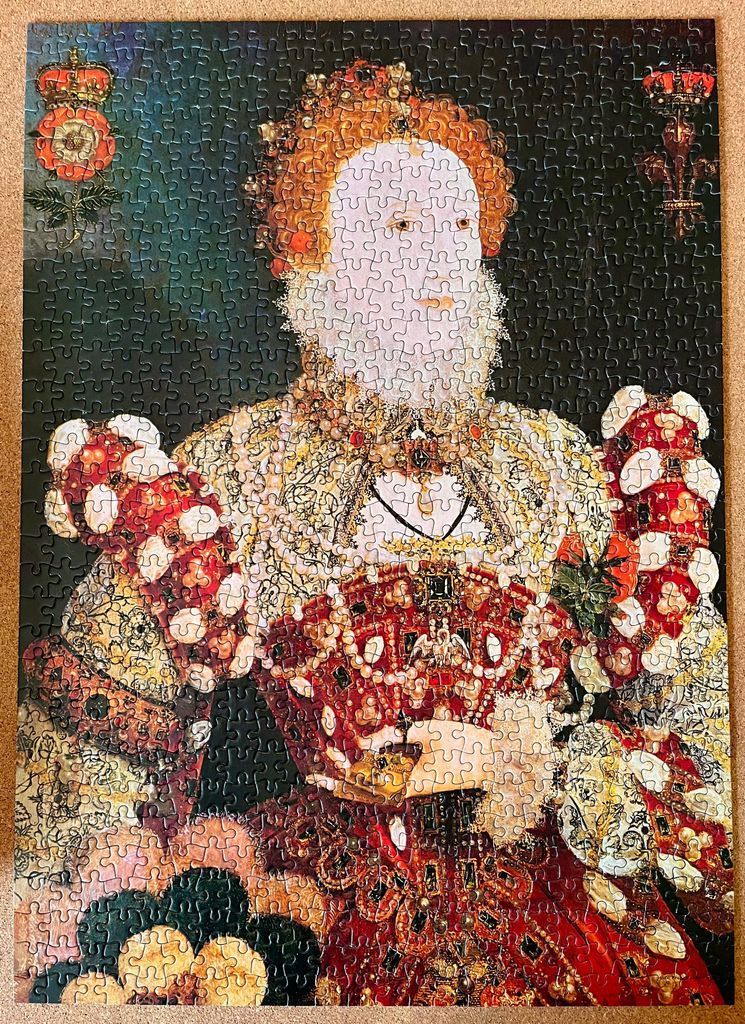
This portrait depicts Queen Elizabeth I, captured in a bust-length, formal pose typical of Renaissance court painting. She is the central focal point, presented with a stark, pale complexion and a prominent ruff encircling her neck. Her hair is curled in a reddish-gold hue, topped with an ornate crown. She is dressed in an elaborately decorated garment featuring rich textures, intricate gold lace patterns, and heavy embroidery.
The figure is set against a dark, moody, atmospheric background that emphasizes her luminous skin and bright attire. The composition is regal and symmetrical, with the Queen's ornate bodice heavily adorned with clusters of pearls, faceted jewels, and crimson fabrics. Flanking her upper torso are two symbols: a Tudor rose surmounted by a crown on the left, and a decorative crown emblem on the right. The contrast between the deeply shadowed background and the luminous, ornate details of her clothing creates a sense of immense luxury and historical grandeur.
As an illustration of a classic oil painting, the work utilizes dramatic lighting to highlight the individual pearls and gemstones across her sleeves and chest. The style reflects 16th-century portraiture, emphasizing status through heavy ornament, symbolic heraldry, and a stoic, commanding expression. The overall colour palette is defined by the depth of black shadows against the vibrant pops of ruby red, brilliant white pearls, and shimmering gold fabric.


by Echo Sierra 2025-11-25
by Larry Hostetter 2024-03-19