The Lover Crowned
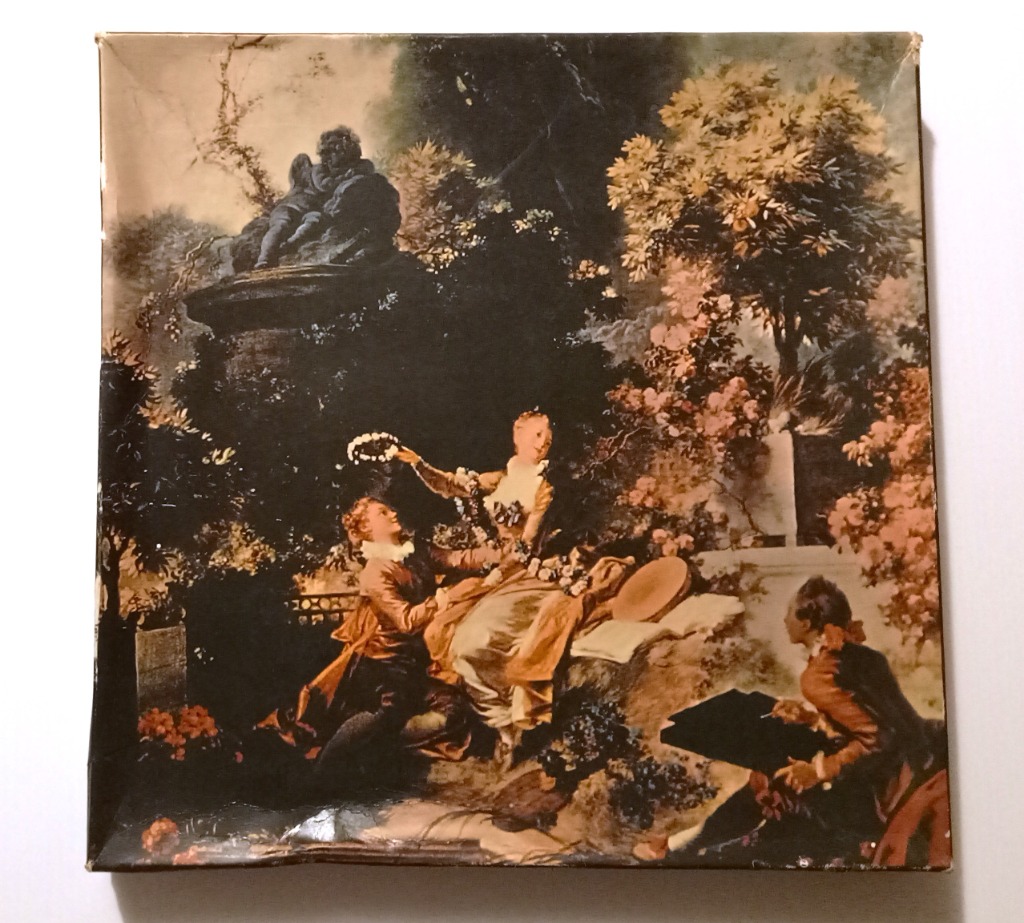
This scene depicts a Rococo-style garden gathering featuring three figures in period attire. In the center, a woman sits on a stone ledge, wearing a cream-coloured gown, while a man kneels before her, offering a floral wreath. To the lower right, a second man sits, seemingly sketching or writing on a portfolio. The composition is grounded in an intimate, woodland setting.
Deep, shadowy greens and earth tones dominate the background, suggesting a secluded grove. The foliage is thick and overgrown, highlighted by patches of soft, blooming pink flowers that climb up nearby structures. A dark stone monument featuring a sculptural figure sits in the background, further emphasizing the classical, romantic mood of the setting.
The artwork appears to be a reproduction of an 18th-century oil painting. The lighting is dramatic, with highlights concentrated on the figures, particularly the central woman, making them pop against the muted, dark tones of the surrounding garden. The painterly style utilizes soft, blurred brushstrokes to create a dreamlike, idyllic atmosphere common to the era's romantic depictions of courtship and leisure.
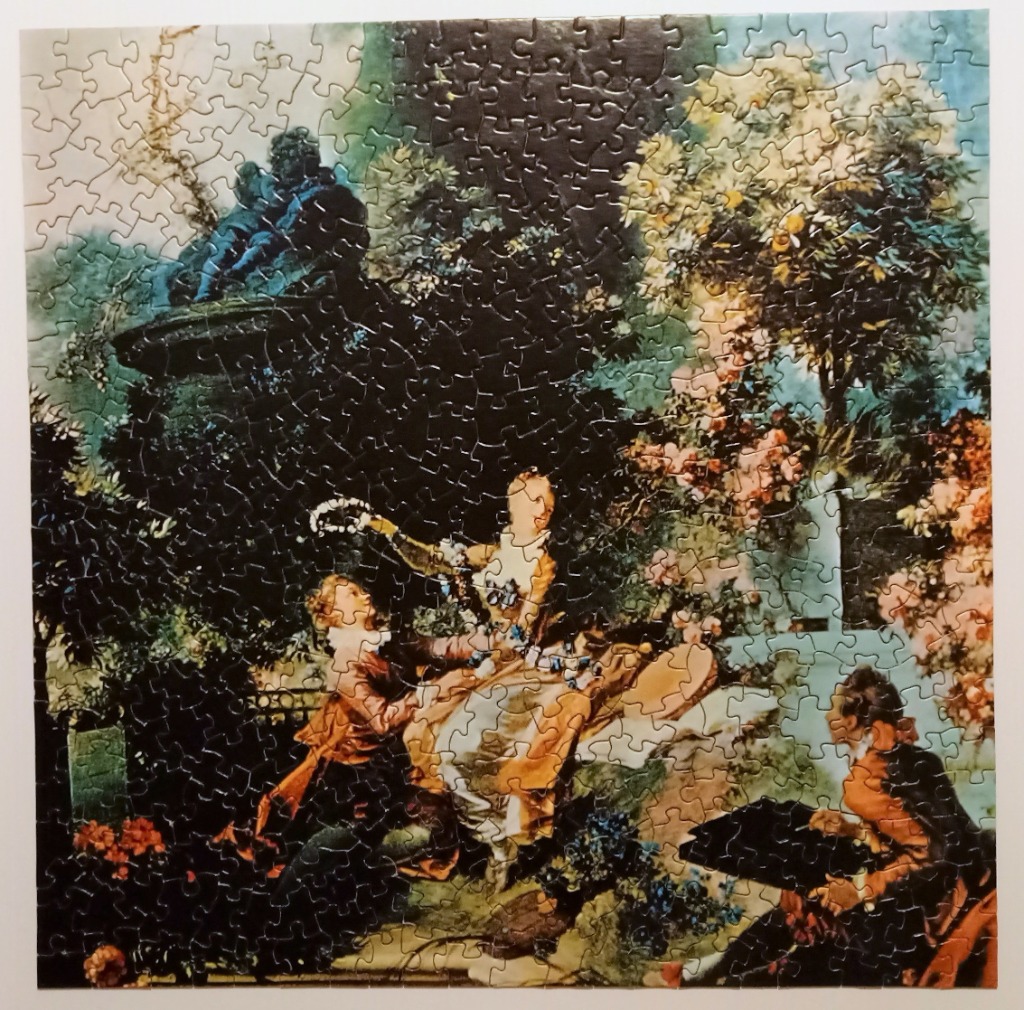
This painting captures a romantic scene from the Rococo era set within a lush, dark garden. The primary focus is a young woman in a flowing, pale gown and golden wrap, seated on a stone ledge. She holds a floral wreath in one hand, extending it toward a young man kneeling before her, who is dressed in a warm orange jacket and dark breeches. A second man, also dressed in formal period attire, sits to the right, looking on as he sketches or writes on a tablet.
The setting is dense with heavy foliage, with large, dark trees casting deep shadows that frame the figures. Behind the central couple, a large, dark stone fountain or pedestal is topped with a blue, sculptural figure. To the right, the garden opens slightly to reveal flowering bushes in shades of pink, yellow, and white, which add warmth and texture to the otherwise somber palette of deep greens and charcoals.
The style is reminiscent of 18th-century European oil painting, emphasizing high contrast between the illuminated figures and the cavernous, shadowy background. The light appears to emanate from an unseen source, highlighting the fabric of the woman's dress and the expressive poses of the trio. The overall mood is theatrical, intimate, and elegant, characteristic of courtly love scenes often depicted in art from this period.
by Echo Sierra 2024-06-19