La Barque Pendant l'Inondation à Port-Marly
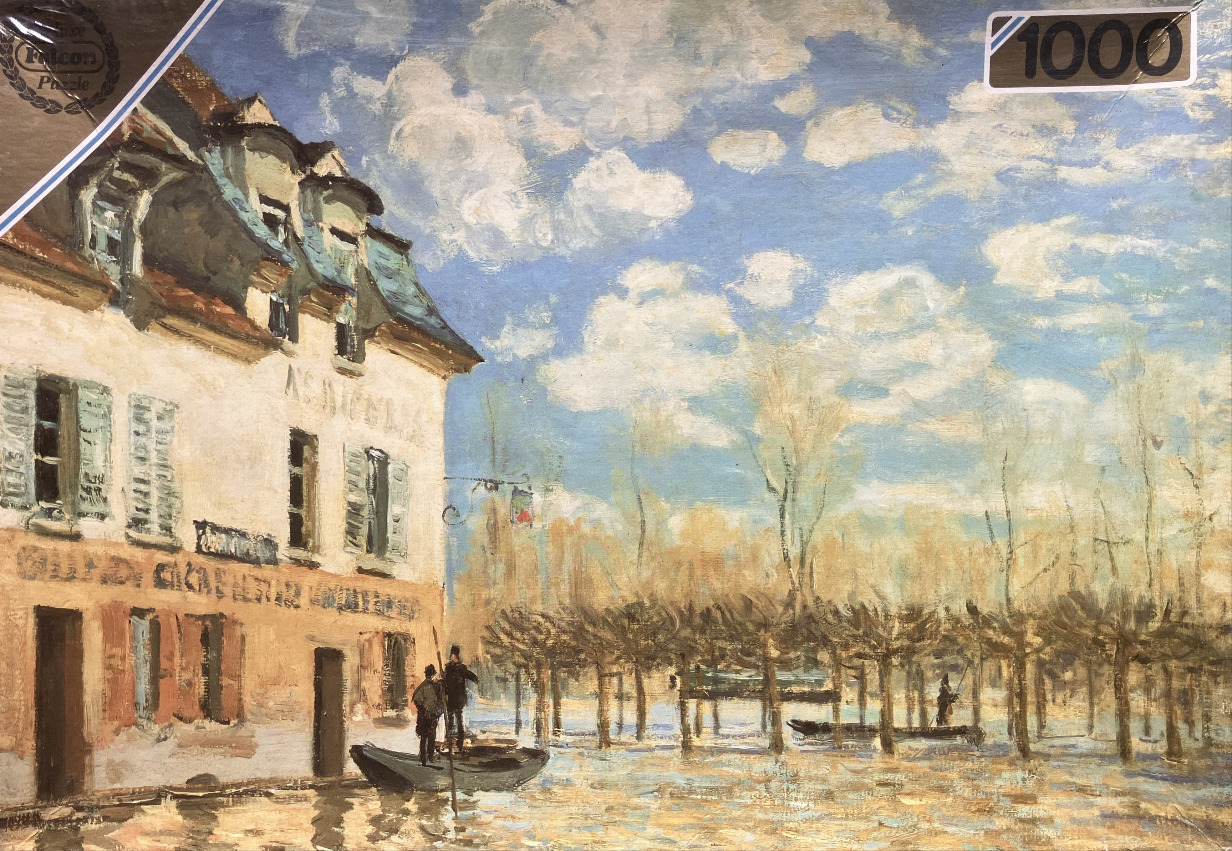
The scene depicts a town during a flood, captured in a loose, impressionist painting style. On the left, a multi-story building with a light-coloured facade, dark shutters, and a steep roof anchors the composition. The ground floor of the structure appears to be partially submerged in water. In front of the building, two figures stand in a small dark boat, while another boat containing a lone figure is visible further to the right near a row of bare, pruned trees.
The composition is balanced, with the vertical mass of the building contrasting against the horizontal sprawl of the flooded square and the treeline. The water, which occupies the lower third of the canvas, reflects the pale browns and ochres of the building and the muted tones of the distant landscape. The brushwork is visible and expressive, creating a sense of movement and texture throughout the water and the sky.
The colour palette is dominated by earthy neutrals, soft ochres, and pale blues. The sky takes up nearly half of the image, filled with voluminous, wispy white clouds set against a bright, periwinkle blue background. The light suggests a bright, overcast day, lending a tranquil yet somber mood to the scene of natural disruption. The medium appears to be oil on canvas, utilizing thick, impasto-like applications of paint that suggest the shimmering quality of light on water and the texture of the building's weathered exterior.
The artwork depicts a tranquil, flooded street scene rendered in a monochromatic style. In the center, a small rowing boat sits upon the water-covered thoroughfare, while two figures stand nearby on the edge of the path. Behind them, several multi-story residential buildings line the street, their facades marked by rows of windows and modest architectural detailing. The composition focuses on the stillness of the floodwaters reflecting the overcast sky and the surrounding structures.
Rendered with the characteristic light touch of an Impressionist landscape, the scene is presented in shades of grey, black, and white. The lack of vibrant color emphasizes the overcast atmosphere and the subdued mood of the rainy day. The brushwork creates a soft, textured quality that blurs the lines between the architecture and the watery reflections on the ground.
This classic landscape scene captures a moment of quiet reflection amidst a natural event. The spatial layout draws the eye from the foreground path toward the cluster of buildings in the background, creating a sense of depth despite the muted color palette. The entire image exudes a sense of peaceful isolation, typical of works capturing the everyday environment with an emphasis on weather and light.

The central image features an Impressionist-style painting titled "La barque pendant l'inondation." The scene depicts a multi-story stone building standing partially submerged in water, reflecting the turbulent conditions of a flood. To the lower right of the building, two figures are positioned in a small, dark rowboat, navigating the water that reaches the lower levels of the structure.
The composition is anchored by the vertical weight of the building on the left, which contrasts with the expansive, watery foreground. The sky above is filled with soft, textured clouds painted in shades of white, cream, and pale grey, suggesting a bright yet overcast day. The overall palette is composed of earthy tones—warm tans and ochres for the building’s facade and the reflecting water—offset by the cool, ethereal blues and whites of the sky.
The style is quintessentially Impressionistic, characterized by loose, visible brushstrokes and an emphasis on the interplay of light and shadow upon the water's surface. The reflections are blurred and dappled, capturing the ripples and the movement of the floodwaters. The painting conveys a somber yet peaceful atmosphere, highlighting a moment of stillness amidst the environmental event. The building, with its shuttered windows and rustic stone exterior, provides a sense of history and endurance against the rising tide.