Charlestown Station
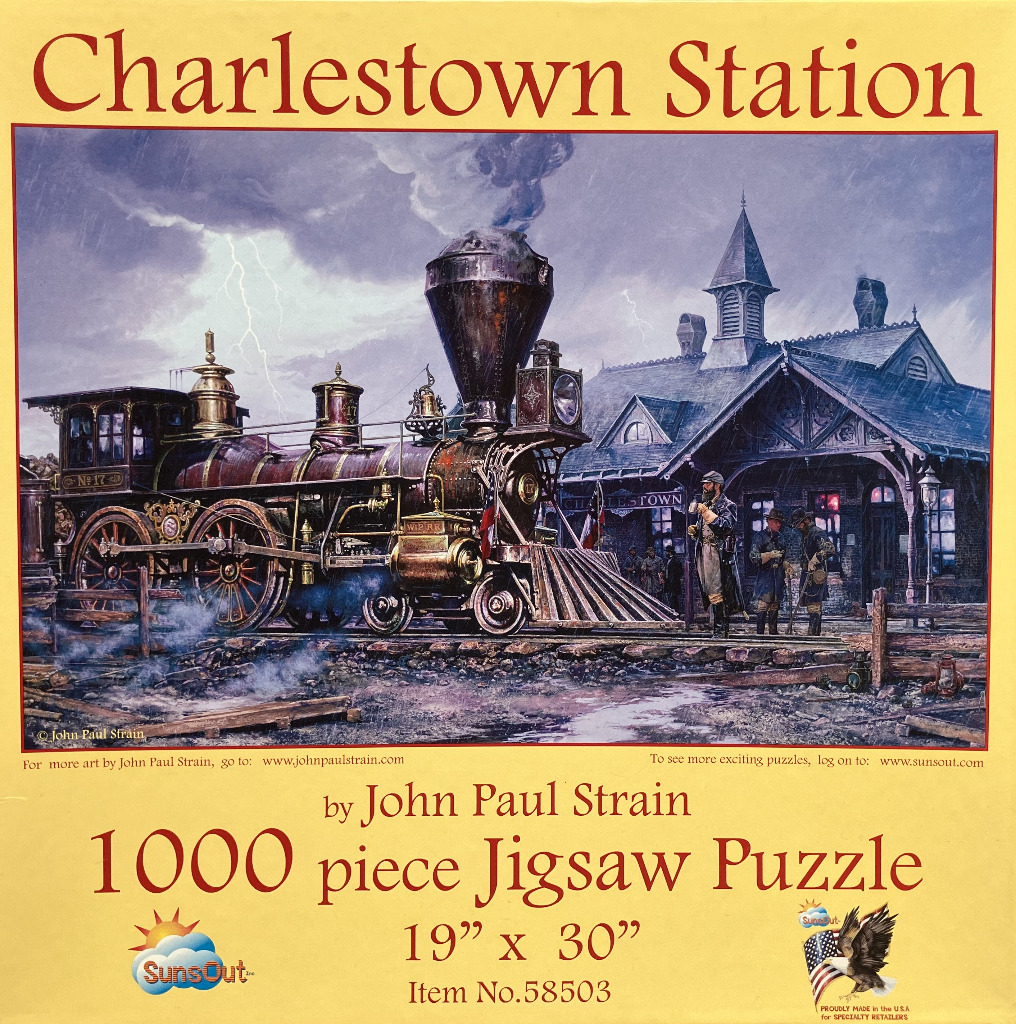
This historical illustration features a large, ornate 19th-century steam locomotive idling at Charlestown Station. The engine, painted in deep tones with brass detailing, sits prominently on the tracks. Beside it, a few figures dressed in mid-1800s military-style attire stand on the platform, one holding a mug, appearing to pause amidst their duties. The station building, a classic wooden structure with a pointed roof, provides a rustic architectural backdrop.
The setting is dramatic and atmospheric, defined by a brewing storm. Dark, swirling clouds dominate the sky, pierced by a jagged bolt of lightning that illuminates the scene. The overall colour palette is composed of moody greys, deep browns, and muted blues, accented by the golden brass highlights on the train and the warm, dim light emanating from the station windows. Rain seems to dampen the gravel and wooden ties of the track, giving the ground a slick, reflective texture.
The artwork is rendered in a painterly, realistic style typical of historical fine art. The composition effectively juxtaposes the mechanical power of the locomotive with the tense, quiet energy of the storm. Attention to detail is high, focusing on the complex ironwork of the train’s wheels and boiler, as well as the textural nuances of the weather-worn station architecture.

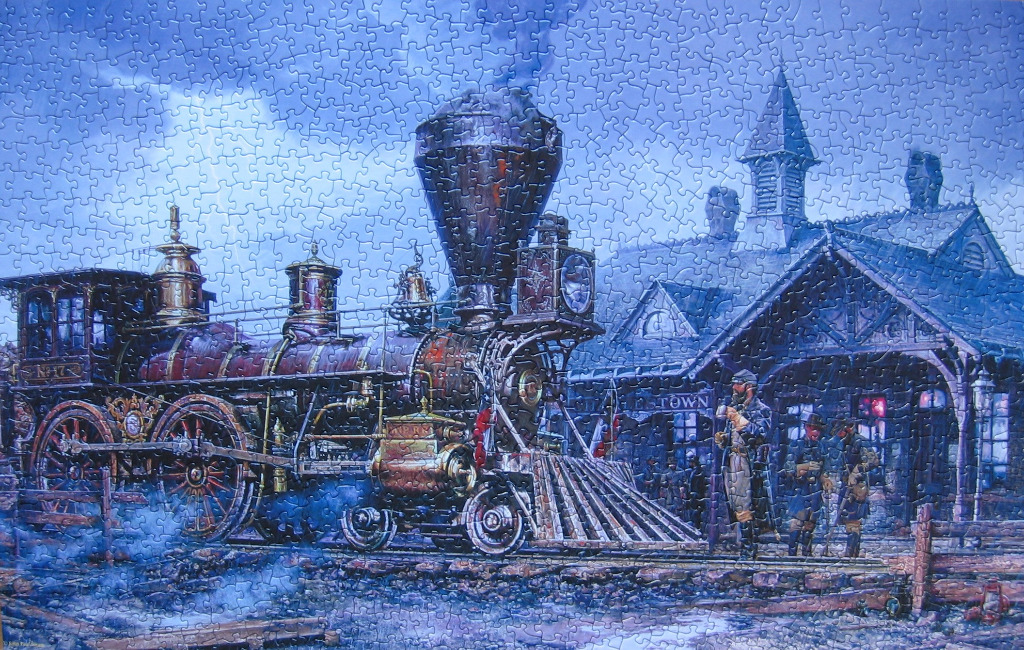
This atmospheric illustration depicts a late 19th-century steam locomotive pulling into a small town train station. The massive black and dark-red engine dominates the left side of the scene, featuring intricate brass detailing, a large smokestack emitting a wisp of steam, and a traditional cowcatcher at the front. The train is marked with the number 17, and its mechanical design captures the rugged, industrious aesthetic of the era.
The setting is a dimly lit, blue-hued station platform where a few figures in period clothing, resembling soldiers or travelers, stand and converse. The building behind them is a weathered, gabled wooden structure that blends into the dusky, misty environment. Subtle lighting highlights the station entrance, while shadows deepen toward the corners of the scene. The overall composition is balanced horizontally, with the train leading the eye from the left toward the figures gathered near the depot.
The entire scene is bathed in a monochromatic palette of deep blues, indigos, and soft grays, creating a moody, cold, and quiet atmosphere. The lighting is diffused, suggesting either early dawn or late twilight, with hazy light reflecting off the metallic surfaces of the engine. The artistic style is detailed and realistic, emphasizing historical accuracy in the machinery and architecture while maintaining a cinematic, evocative quality.