Paying the Harvesters
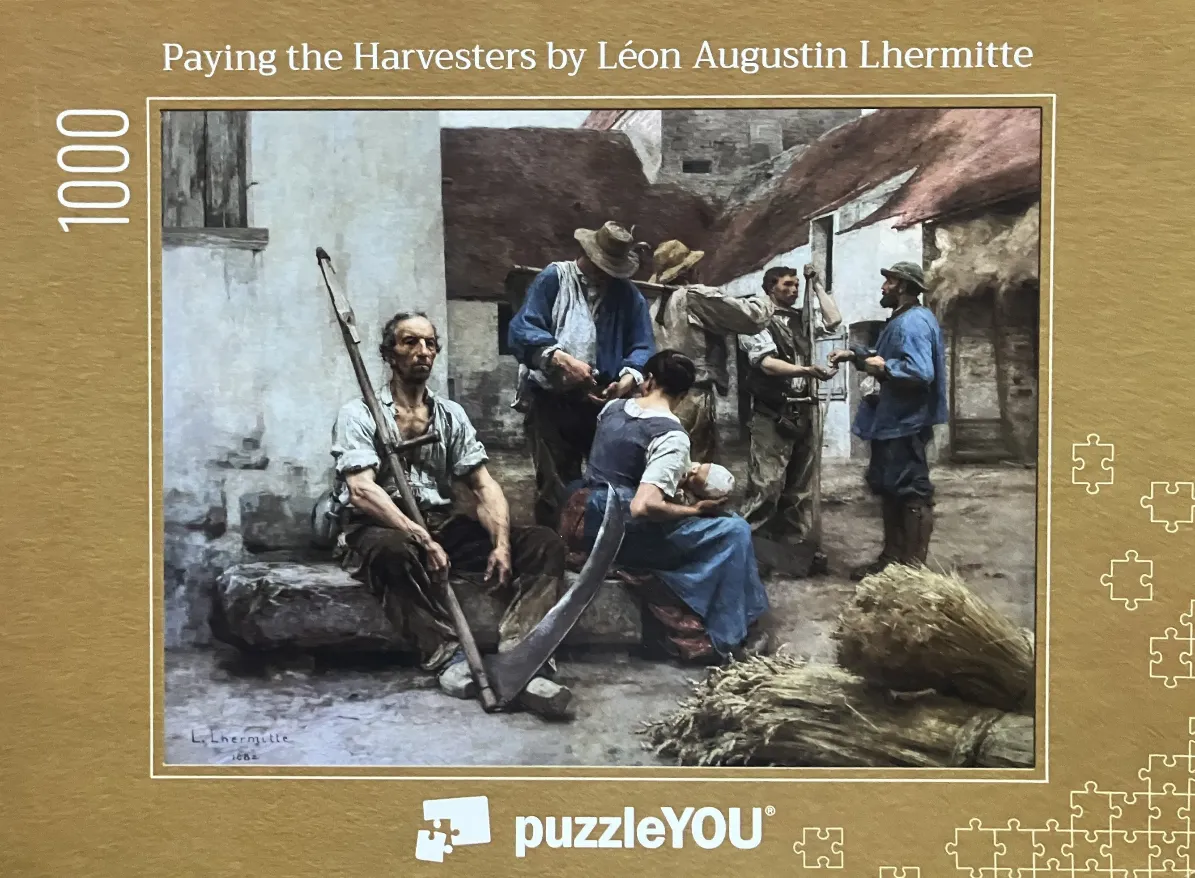
The scene depicts a group of 19th-century farm laborers gathered in a rustic courtyard, likely after a day of work. In the foreground, a weary man sits on a stone ledge, resting his hands on a long-handled scythe. Next to him, a woman sits with her back to the viewer, cradling an infant in her arms. Nearby, other men in worn, earthy clothing stand and interact, one appearing to receive payment while others look on.
Set against the backdrop of simple, light-colored stone buildings with muted red-tiled roofs, the composition feels grounded and intimate. The figures are arranged in a natural, conversational grouping that captures a quiet, perhaps solemn, moment of daily life. Bundles of harvested grain lie scattered in the lower right corner, underscoring the agricultural theme of the work.
The painting style is characteristic of late 19th-century realism, utilizing a subdued, earthy color palette dominated by greys, browns, and soft blues. The light is soft and diffused, creating subtle shadows that enhance the texture of the workers' weathered clothing and the stone surroundings. The brushwork is precise yet expressive, capturing the somber, humble mood of the rural scene. The artist's signature, "L. Lhermitte 1882," is visible in the lower left corner.

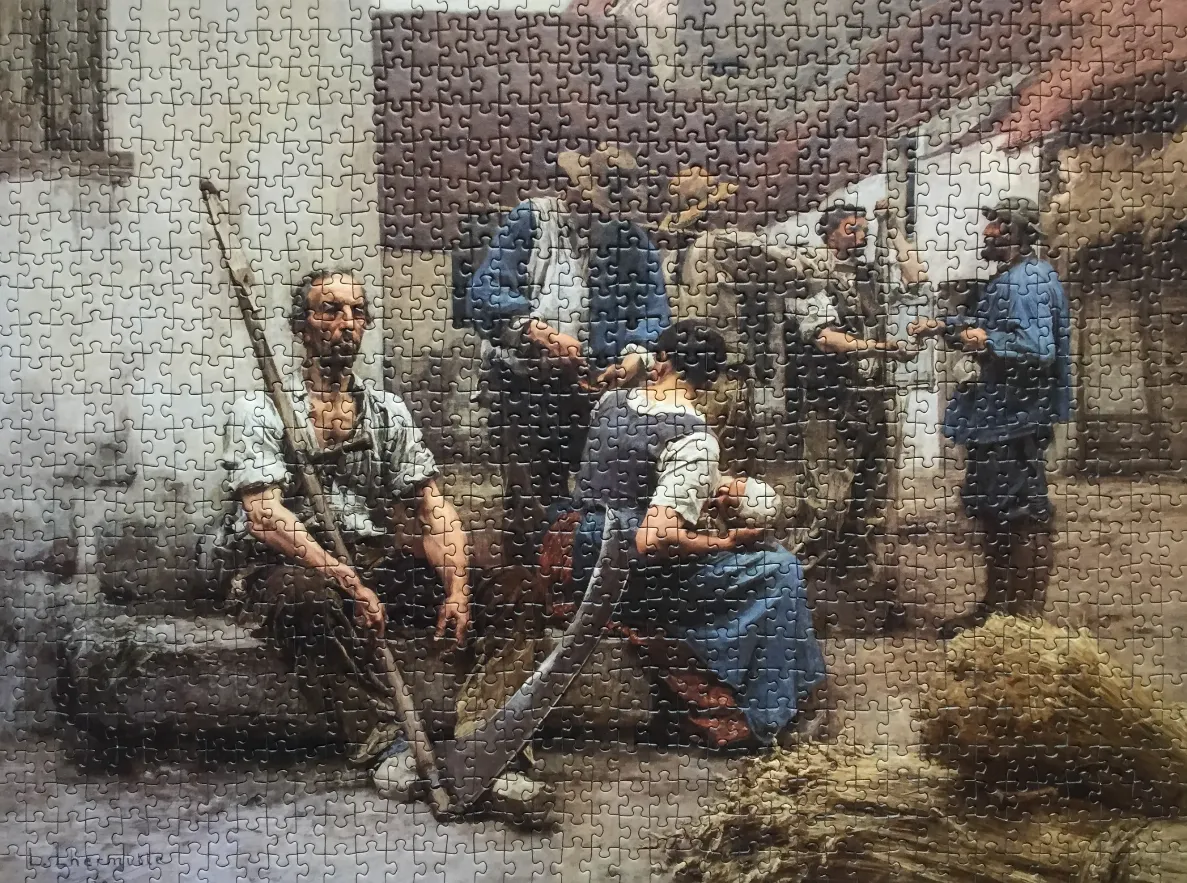
This oil painting depicts a realistic, somber scene of rural life, likely set in the 19th century. In the foreground, a weary man with a beard sits on a stone ledge, clutching a long wooden staff or pole. Next to him, a woman in a blue dress sits with her back toward the viewer, cradling a small child. They are surrounded by several other figures, including men standing in the background who appear to be engaged in conversation or labor, set against the backdrop of rustic, weathered building walls.
The composition is anchored by the seated man in the foreground, creating a quiet, contemplative atmosphere. The spatial layout is dense, with the figures clustered together in a small courtyard or village square. The artist employs a muted color palette dominated by earth tones—browns, beiges, and greys—punctuated by the soft blue of the clothing worn by the woman and one of the men. The lighting is soft and natural, casting subtle shadows that emphasize the textures of the stone walls and the weathered clothing of the peasants.
The style is highly representational, characteristic of realist genre painting, focusing on the dignity and hardship of everyday labor. Details such as the man’s worn facial expression and the loose, unrefined appearance of the gathered hay in the foreground add to the authentic feel of the period scene. The overall mood is one of stillness, weariness, and rustic simplicity, capturing a fleeting moment of respite for a working-class family.