Galatea of the Spheres
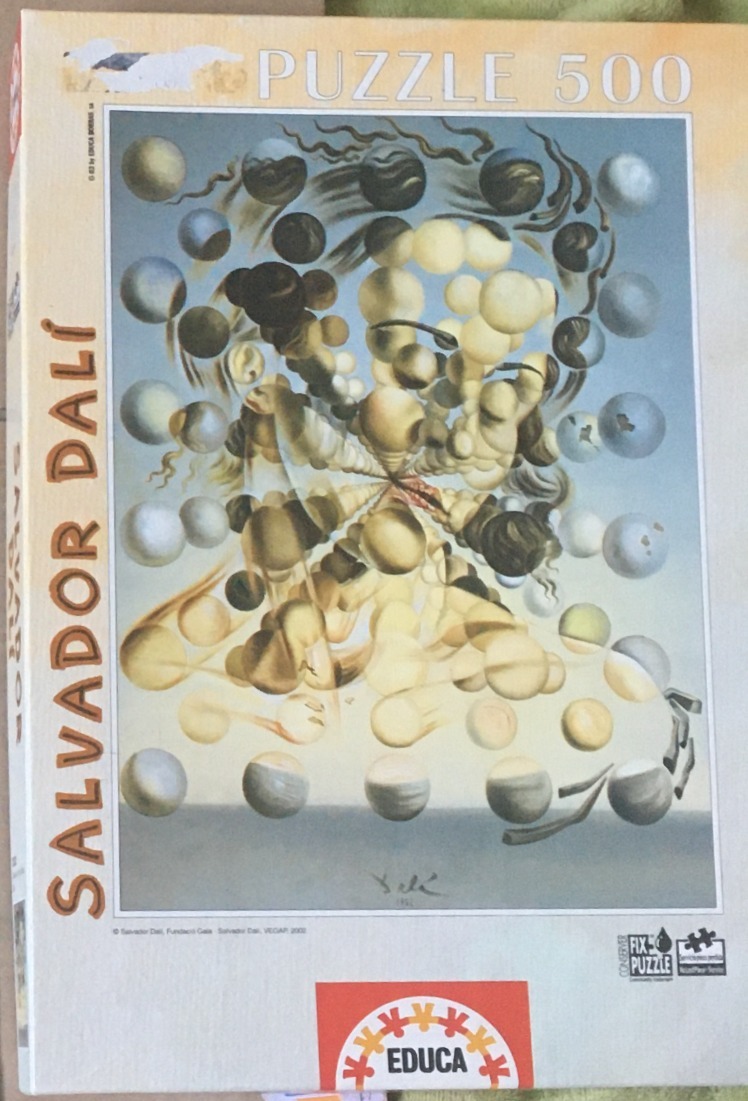
This surrealist artwork features a portrait of a woman, Galatea, constructed entirely from a complex arrangement of floating spheres. The spheres vary in size and translucency, creating a sense of depth and dimensionality as they recede toward a central point of perspective. The composition is highly structured, with the spherical forms meticulously organized to imply the features of a human face looking slightly to the side.
Set against a muted, light blue-grey background, the image utilizes a palette of creamy yellows, whites, and shadowy greys. The light appears to originate from the upper left, casting subtle gradients across the surfaces of the spheres, which gives them a glossy, almost planetary appearance. Thin, wispy tendrils of paint swirl between the spheres, adding an ethereal, dreamlike quality to the rigid geometric forms.
The medium is an oil painting characterized by a smooth, academic technique typical of the artist's mid-career period. The spheres are rendered with precision, contrasting with the soft, atmospheric backdrop. At the bottom, a flat, monochromatic surface provides an anchor for the floating elements, and a faint signature is visible in the lower center of the painted area.
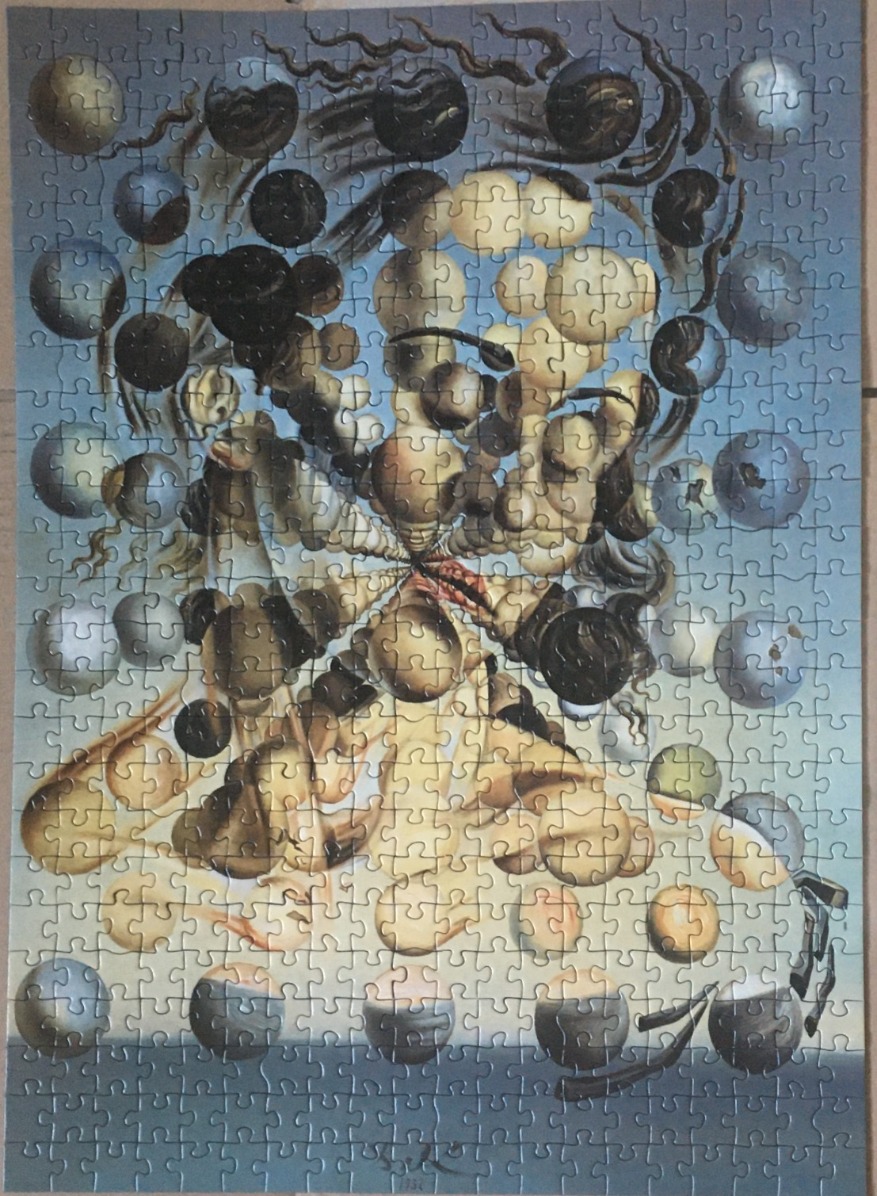
This surrealist artwork features a central, abstract portrait formed by a multitude of spheres suspended in space. The spheres vary in shading, ranging from deep charcoal and black to pale cream and warm beige, suggesting a three-dimensional, glowing, or metallic quality. These orbs are arranged in a dynamic, explosive pattern that radiates outward from a central point, creating an impression of both assembly and disintegration. The central focus creates a vague outline of a human face, with the spheres acting as modular building blocks for features and hair.
Set against a muted, dusty blue background, the composition feels ethereal and dreamlike. The spheres are scattered unevenly around the central mass, with some appearing to float freely toward the edges, while others cluster tightly in the middle. The lighting is dramatic, with highlights on the spheres providing a strong sense of volume and depth, while the dark, swirling shapes near the top resemble wisps of smoke or hair caught in a vortex.
The overall mood is enigmatic and highly stylized, characteristic of 20th-century surrealism. The painting technique is precise, focusing on smooth gradients and realistic textures for the spheres, which contrast with the abstract, geometric arrangement. At the bottom, a flat, dark horizontal surface suggests a horizon line, grounding the floating, gravity-defying objects in a sparse landscape.