The Story of Impressionism
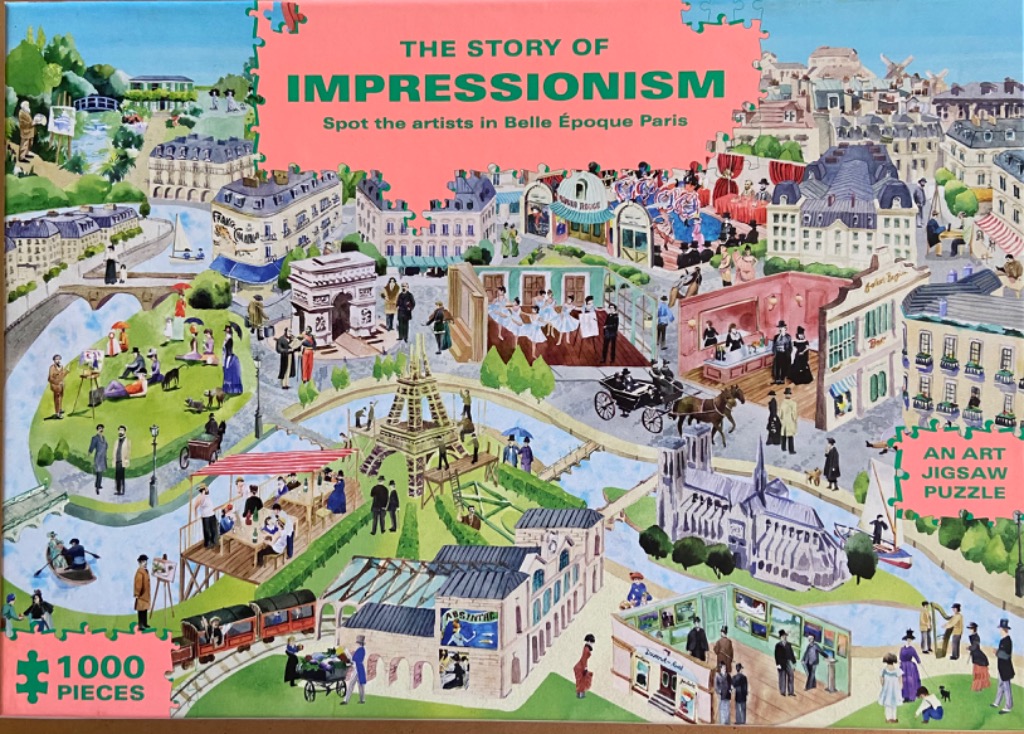
This whimsical, stylized illustration depicts a bustling, condensed version of Belle Époque Paris, densely packed with iconic landmarks, historical figures, and artistic scenes. Centrally located is the Eiffel Tower under construction, surrounded by famous structures such as the Arc de Triomphe, Notre-Dame Cathedral, and various Parisian streetscapes. The scene is populated by numerous tiny figures representing famous artists and their subjects, engaged in activities like painting outdoors, dancing, or socializing in cafes.
The composition is a vibrant, map-like collage that layers architectural elements with green spaces, waterways, and interior vignettes. The perspective is slightly flattened, allowing for a wide-angle view that brings disparate parts of the city into a single frame. The colour palette is bright and cheerful, dominated by soft pastels, lush greens for the parks, and clear blue water, reflecting a lighthearted and celebratory mood.
The art style is reminiscent of a children’s book illustration, using bold outlines and flat, expressive colours. The scene is filled with secondary details, including horse-drawn carriages, small boats on the river, and posters advertising venues like the Moulin Rouge. Text overlaid on the top pink banner reads "THE STORY OF IMPRESSIONISM" and "Spot the artists in Belle Époque Paris," while small vignettes show dancers in a studio and artists presenting their work in galleries.
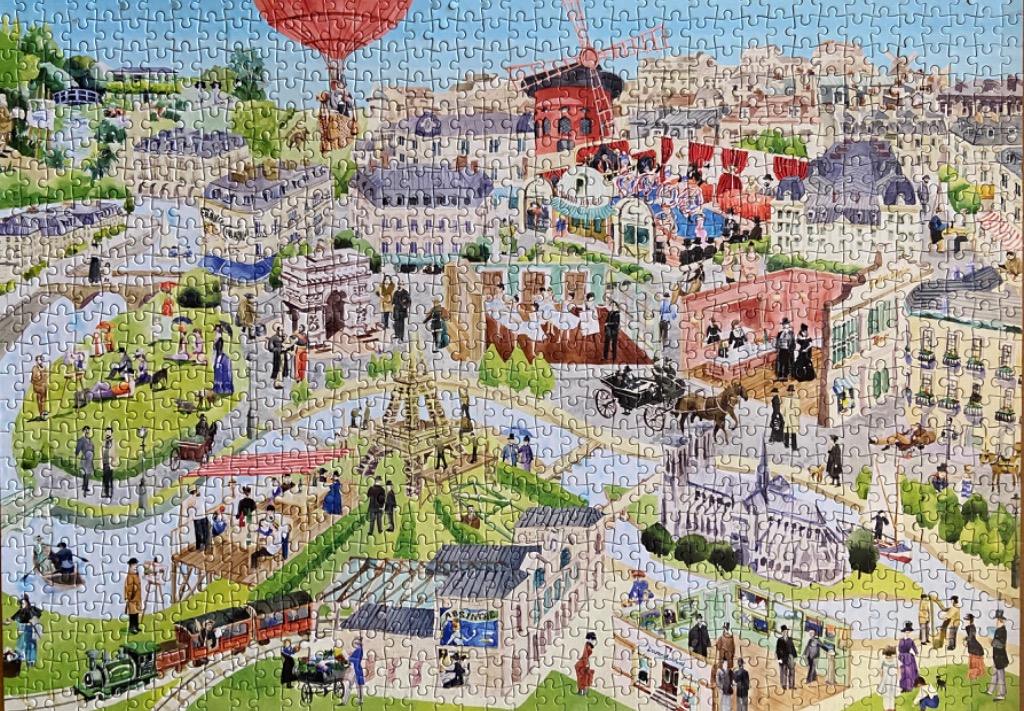
This intricate illustration captures a bustling, whimsical 19th-century Parisian cityscape filled with historical charm. The scene is dense with activity, featuring iconic elements such as a prominent red windmill reminiscent of the Moulin Rouge, a hot air balloon drifting in a pale blue sky, and architectural landmarks including a cathedral and a triumphal arch. The composition is sprawling and map-like, offering a bird's-eye view that allows for countless individual vignettes of city life.
Throughout the scene, people dressed in period-appropriate attire walk through public squares, relax in parks, and visit outdoor cafes. A horse-drawn carriage traverses the streets, while a small steam train chugs along tracks in the foreground. Other details include an open-air art gallery, people enjoying a boat ride on a canal, and groups gathered at small tables. The perspective blends various areas of the city into a single continuous, lively narrative.
The artwork is rendered in a colorful, slightly stylized, and cartoonish aesthetic with a palette dominated by soft pastels, earthy browns, and vibrant reds from the windmill and balloon. The lighting is bright and even, suggesting a pleasant, sunny day. The style leans towards a classic postcard or storybook illustration, emphasizing a charming and busy atmosphere that invites the viewer to discover small, hidden stories tucked into every corner of the cityscape.
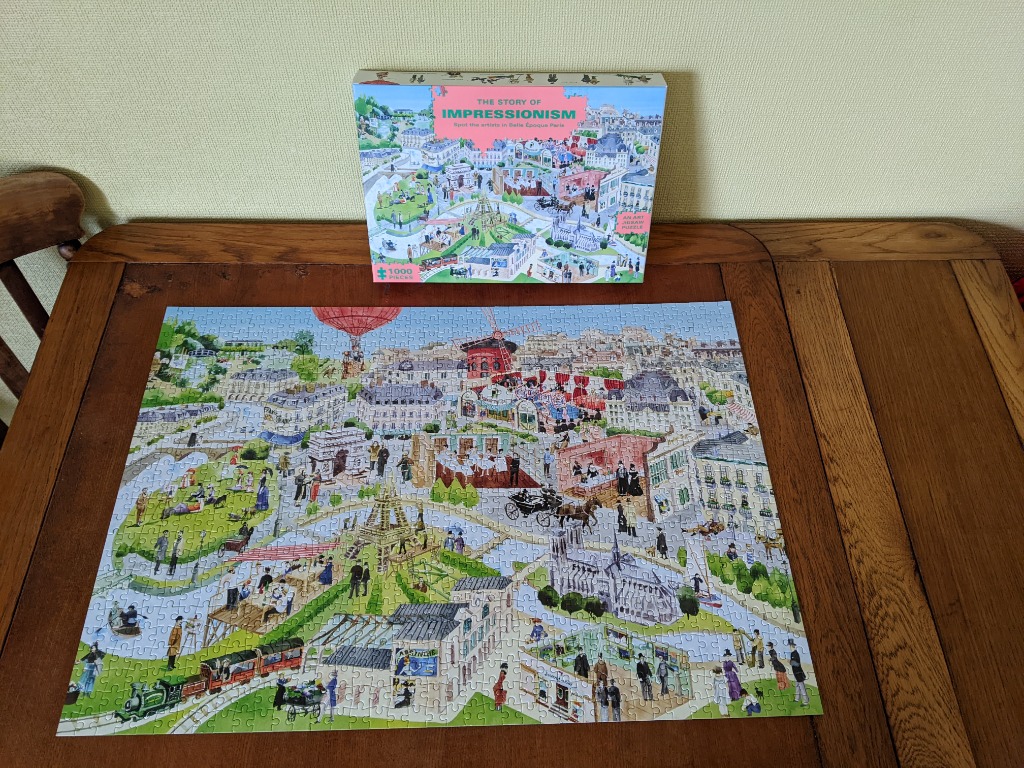
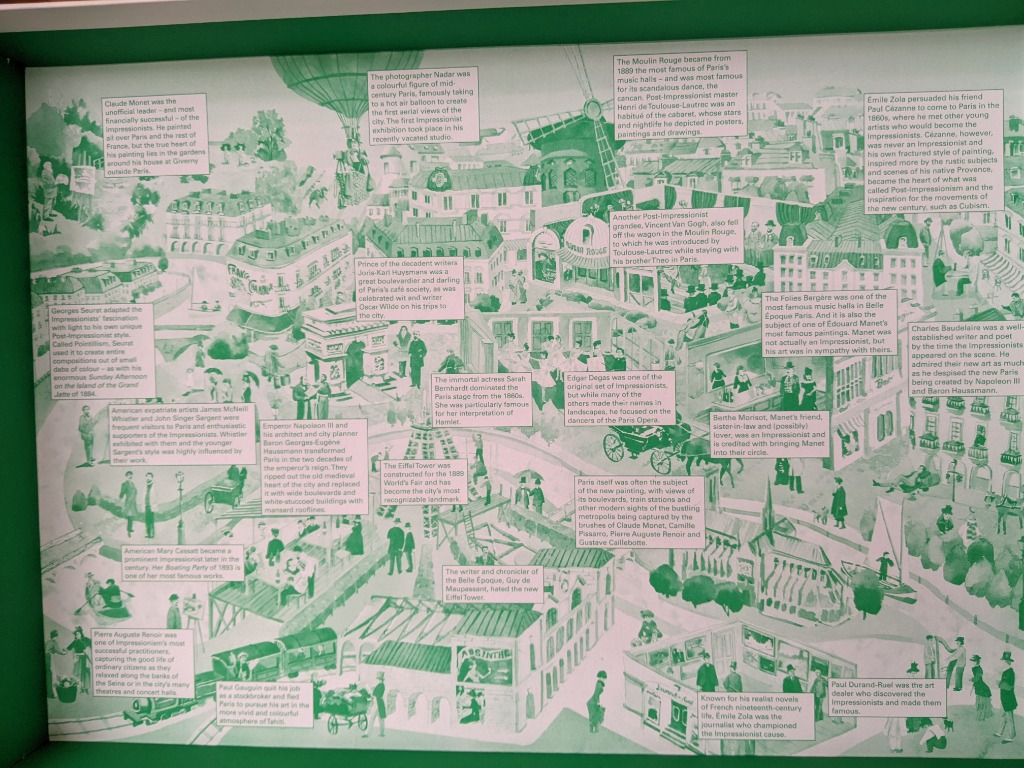
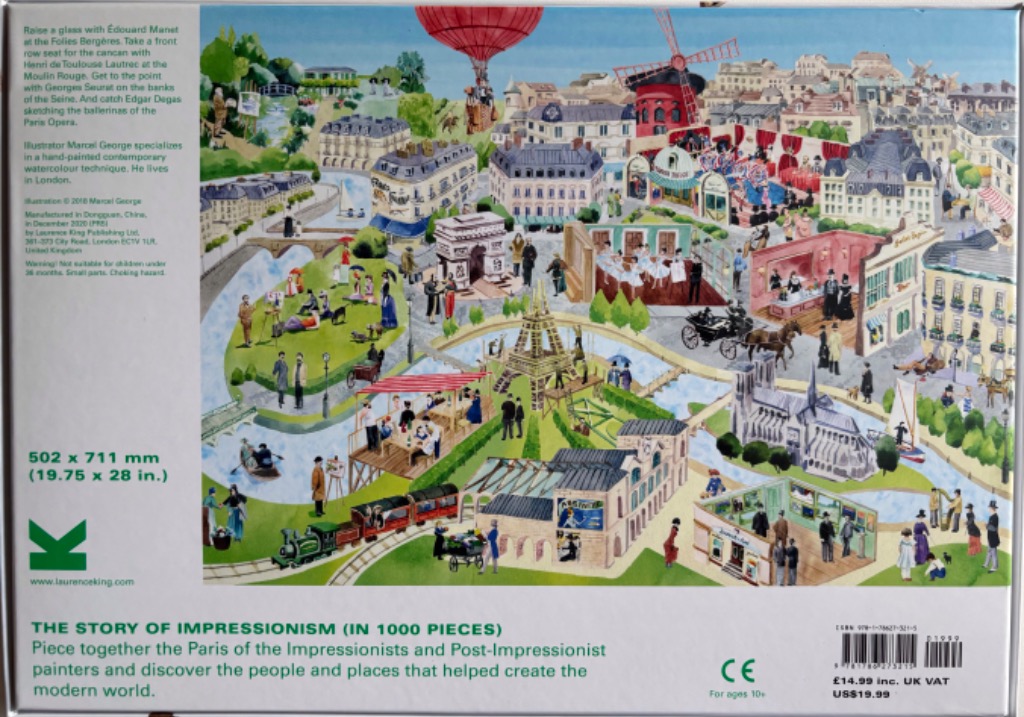
This whimsical watercolor illustration depicts a vibrant, imaginative landscape of 19th-century Paris. The scene is densely packed with iconic Parisian landmarks and cultural symbols, including a red-sailed windmill reminiscent of the Moulin Rouge, the Eiffel Tower, the Arc de Triomphe, and Notre Dame. A hot air balloon floats in the soft sky above the cityscape, while small trains and horse-drawn carriages traverse the streets and pathways below.
Compositionally, the artwork serves as a collage of famous historical spaces. Green parklands and winding river segments provide a backdrop for various vignettes of daily life and artistic creation. Figures resembling historical painters are scattered throughout, shown sketching on canvases or observing the lively activity. The composition is expansive and aerial, offering a bird's-eye view that allows the eye to travel through different neighborhoods and interior scenes simultaneously.
The colour palette is soft and painterly, dominated by lush greens of the parks, the cool blue of the river, and the warm, earthy tones of building facades. The style is fluid and illustrative, emphasizing expressive brushwork and a charming, nostalgic mood. Light and shadows are depicted with delicate washes of colour, creating a bright and inviting atmosphere that captures the artistic spirit of the era.

This illustration depicts a series of individual portraits or vignettes of notable 19th-century French artists, writers, and public figures arranged in a horizontal row against a plain, off-white background. Each figure is rendered in a realistic, detailed illustration style, often showing them in iconic poses or settings associated with their lives and professions. Beneath or above each figure is their name printed in a bold, dark green sans-serif font.
The lineup begins on the left with Pierre-Auguste Renoir standing beside an easel holding a painting. Next is an illustration representing Mary Cassatt, shown rowing a boat with two women. Beside her is the actress Sarah Bernhardt, followed by Paul Cézanne and another individual engaged in a game of cards at a small table. Moving right, there is a seated portrait of the poet Charles Baudelaire. This is followed by a couple representing the artist Berthe Morisot, and then Baron Haussmann standing near an officer. The row concludes with a small portrait of the writer Guy de Maupassant and a standing figure of the art dealer Paul Durand-Ruel leaning against a pedestal.
The figures are isolated with no shared background elements, creating a crisp, archival aesthetic. The color palette consists of muted, historical tones, including shades of dark brown, black, grey, and deep red, contrasted against the clean, pale background. Each character is dressed in period-appropriate attire, such as formal suits, top hats, and Victorian-era dresses, emphasizing the 19th-century setting of the collective portrait.

This horizontal illustration features a collection of notable 19th-century cultural figures depicted in a stylized, painterly manner against a plain white background. The subjects are arranged in small vignettes across the frame, each accompanied by their name written in small green text. From left to right, the figures include Claude Monet painting at an easel, followed by Oscar Wilde and Émile Zola standing in formal attire. Further along, a scene shows a man painting at an easel near a seated couple and a dog, representing Georges Seurat, alongside Paul Gauguin holding artistic tools, James McNeill Whistler, and finally, Nadar appearing in a hot air balloon basket.
Each figure is rendered with distinct historical clothing, such as top hats, frock coats, and vintage artistic gear, rendered in a palette of muted earth tones, soft greys, and touches of deep red and black. The illustration style is somewhat loose and expressive, reminiscent of classic character sketches. The hot air balloon in the upper right adds a dynamic element, providing a vertical contrast to the mostly standing or seated figures below. The overall composition is clean and minimalist, allowing the individual personalities to stand out clearly against the white negative space.