Course to the treasure
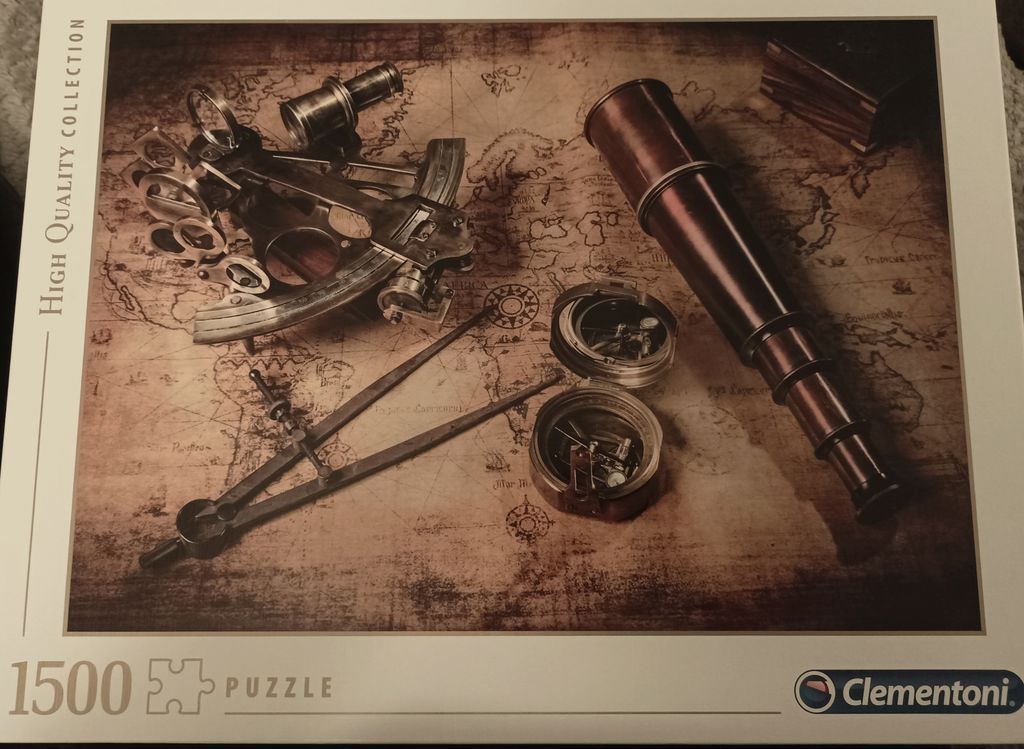
This still-life composition features a collection of vintage maritime navigation tools arranged on top of a weathered, antique world map. The main subjects include a prominent brass telescope lying diagonally across the surface, a complex brass sextant with its intricate dials and gears, and a small, open circular compass. A metal drafting compass with two pointed arms rests in the foreground, adding to the theme of exploration and cartography.
The setting is suggestive of a ship’s cabin or a historical study, with the map providing a rich, textured background covered in faded calligraphy and geographic markings. The arrangement of the objects is asymmetrical and organic, creating a sense of history and discovery. The composition uses a shallow depth of field, causing the edges of the image to softly vignette, which draws the viewer's eye directly to the center where the brass instruments are clustered.
The colour palette is dominated by warm, sepia-toned hues, including deep browns, copper, rusted golds, and aged parchment yellows. The lighting is soft and directional, highlighting the polished surfaces of the metallic instruments and creating deep, dramatic shadows that provide a sense of volume and weight to each object. The overall mood is one of nostalgia and scientific curiosity, captured in a realistic, photograph-like style that evokes the era of legendary sea voyages.
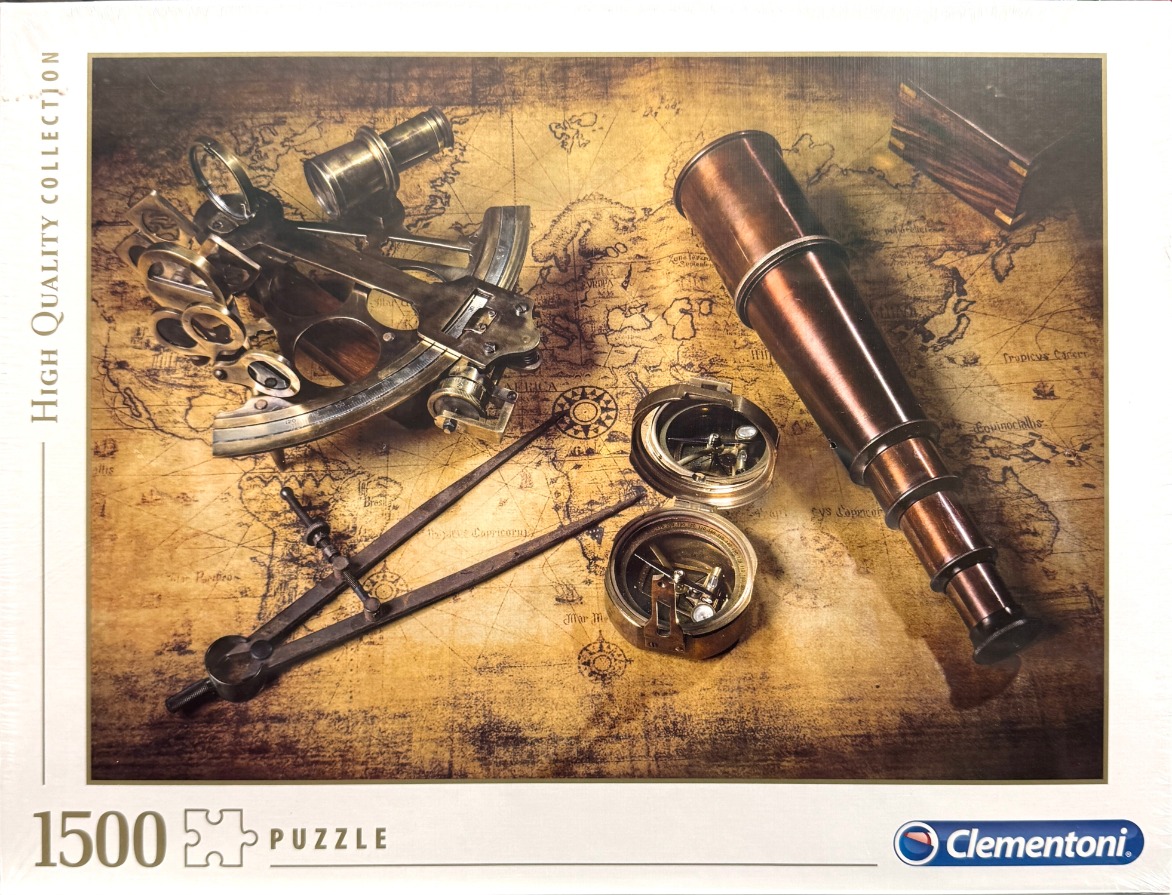
This still-life composition features a collection of antique nautical navigation instruments resting upon an aged, weathered world map. The tools include a vintage brass sextant, a long cylindrical telescope, an open brass compass, and a pair of metal drafting dividers. These objects are arranged in a loose cluster on the parchment-like surface of the map, which is covered in faint, faded geographical outlines and classic cartographic markings.
The image is rendered in warm, sepia-toned colours that evoke a sense of history and exploration. The lighting is soft and directional, casting subtle shadows that give the metal instruments depth and a realistic, tactile quality. The deep bronze and gold hues of the tools contrast with the lighter, yellowish parchment of the map, creating a cohesive, golden-hour aesthetic. The background map shows textured paper details, including signs of wear and age, which ground the scene in an era of traditional maritime discovery. The overall mood is scholarly and nostalgic, suggesting the tools of a seasoned explorer or a historical study.