Evolution
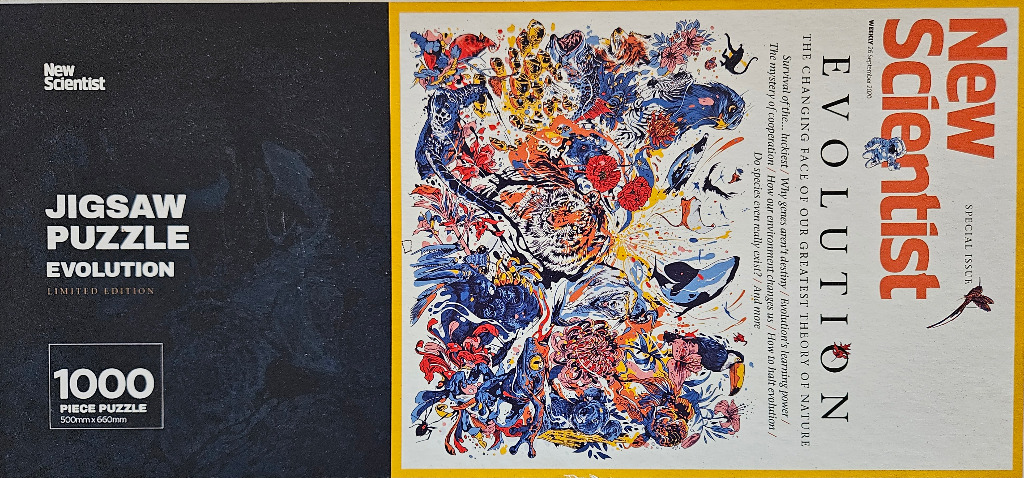
This detailed illustration depicts a complex, interconnected ecosystem teeming with diverse life forms. At its heart, a tiger’s face emerges from a swirling, organic collage of creatures, including a whale, a frog, a toucan, various birds, insects, and small mammals. The subjects are interspersed with lush, blooming floral patterns and intricate botanical elements, creating a sense of dense, chaotic energy that pulses from the center outward.
The composition is highly stylized and rhythmic, utilizing a collage-like approach where wildlife and vegetation bleed into one another. The background is a stark, clean cream, which forces the vivid colors of the subjects to pop. To the right of the central illustration, vertical text reads "EVOLUTION" alongside various questions about biology and nature, framed by small, whimsical drawings like a tiny astronaut and a dragonfly.
The color palette is saturated and high-contrast, dominated by deep midnight blues, vibrant reds, and sun-drenched yellows, punctuated by subtle white negative space that adds depth. The art style feels like a modern, digital take on naturalistic botanical and zoological prints, using thick, expressive line work and bold flat color fills to define the silhouettes of the animals and plants. The mood is scientific yet artistic, celebrating the multifaceted complexity of the natural world.

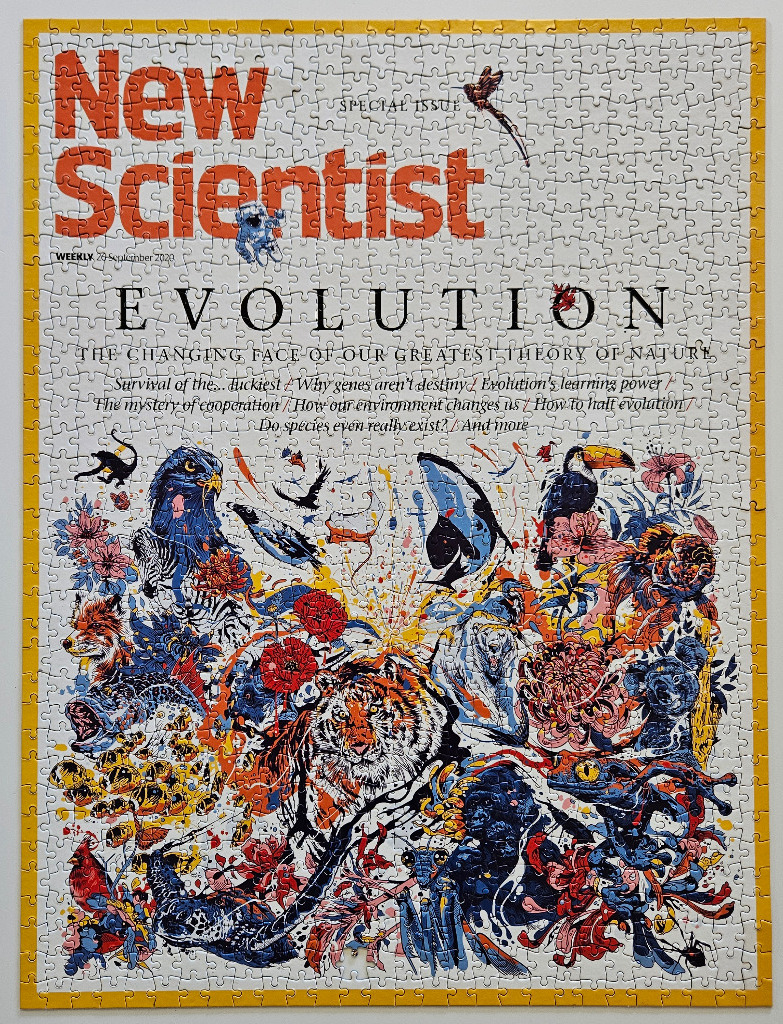
This image is a magazine cover titled "New Scientist" with the sub-heading "EVOLUTION." The top section of the cover features bold, orange typography against a light background, accompanied by small icons of an astronaut and a dragonfly. Below the main title, the text "The changing face of our greatest theory of nature" is printed, followed by a list of article headlines in smaller font, such as "Survival of the... luckiest" and "Why genes aren't destiny."
The lower portion of the image displays an intricate and chaotic collage of wildlife and botanical elements. A central tiger face stares forward, surrounded by a dense array of other creatures including an eagle, a toucan, a koala, a fox, and various insects. These figures are intertwined with large, stylized floral blooms, particularly red and pink chrysanthemums, creating a sense of natural complexity and movement.
The artwork uses a vibrant and somewhat splattered illustrative style, with deep blues, bright oranges, and splashes of yellow contrasting against the off-white background. The composition feels like a dense, organic tapestry where the animals and plants bleed into one another through artistic line work and expressive colour strokes. The overall mood is intellectual yet wild, reflecting the theme of biological evolution and the interconnectedness of natural life.