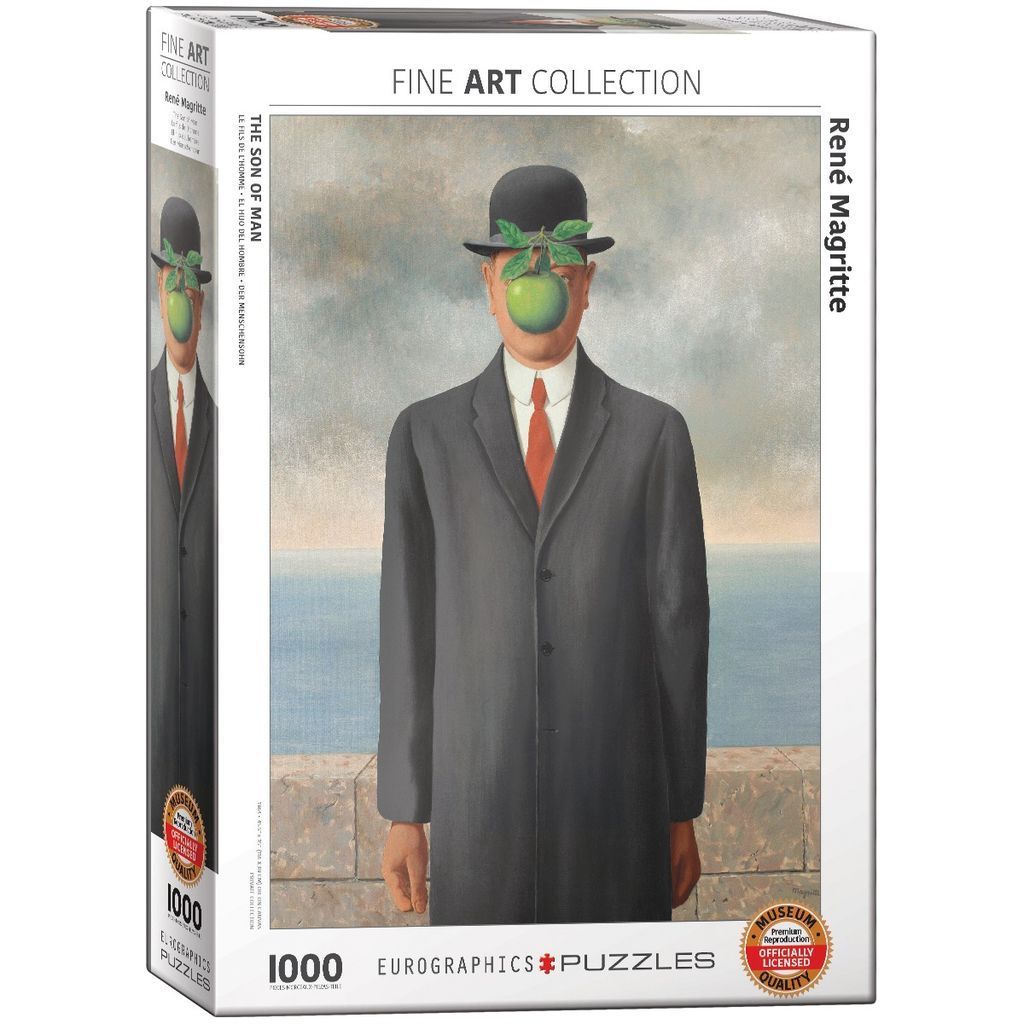
The main subject is a centered, iconic portrait of a man standing against a seascape. He wears a dark grey overcoat, a white collared shirt, and a vibrant red necktie. Upon his head sits a black bowler hat. The most striking element is a large, bright green apple floating in mid-air directly in front of his face, obscuring his features while allowing a glimpse of one of his eyes peeking out from the left side of the fruit.
The composition is strictly frontal and symmetrical. Behind the figure, a low stone wall creates a horizontal divide, separating the foreground from a calm, muted blue-grey sea. The sky above is filled with soft, overcast clouds in varying shades of grey and beige. The figure’s left arm is slightly bent, suggesting he is standing behind the wall, creating a sense of depth between the subject and the horizon.
The color palette is deliberately restrained, dominated by cool, neutral tones of grey, brown, and muted blue, which makes the vivid green of the apple and the striking red of the tie stand out as clear focal points. The lighting is diffuse and even, lacking harsh shadows, which contributes to the painting's dreamlike and surreal quality. The artwork is executed in a precise, realistic style typical of 20th-century surrealist painting, with smooth brushwork that emphasizes the uncanny nature of the subject's obscured identity.