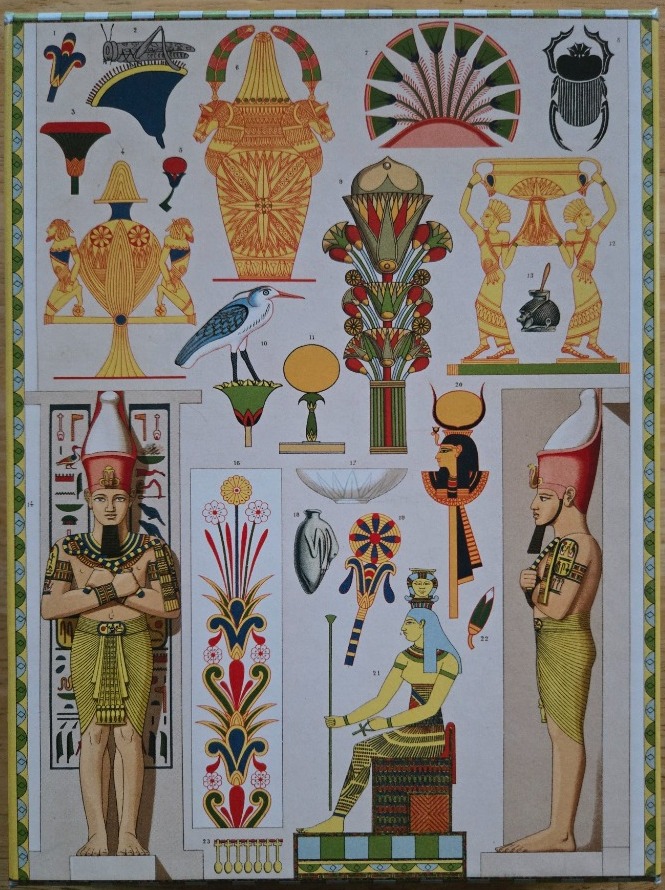
This illustration features a curated collection of Ancient Egyptian art, rendered in a classic lithographic style. The composition acts as a catalog of various cultural elements, including human figures, ornate vases, ritualistic items, and botanical symbols. Each element is numbered, suggesting a pedagogical or historical study format, set against a plain, off-white background.
On the left and right sides of the lower section stand two male figures wearing traditional pharaonic crowns and garments, flanked by hieroglyphic panels. To the right, a seated goddess wearing a sun-disk headdress holds a staff. Above these figures, the space is filled with decorative items, including a tall papyrus-inspired pillar, golden vases with intricate patterns, a scarab beetle, and a grey heron. A vibrant, vertical floral motif stands centrally in the lower half, showcasing stylized lotus blossoms and stems in symmetrical patterns.
The colour palette is restrained yet iconic, dominated by ochre golds, deep reds, sky blues, and muted greens. These colours are applied in flat, graphic sections, typical of archival historical plates from the nineteenth century. The lighting is even and shadowless, highlighting the precise, clean linework of the illustrations. The overall mood is academic and scholarly, evocative of an archaeological survey or a museum guide detailing the artistic achievements of the Nile civilization.