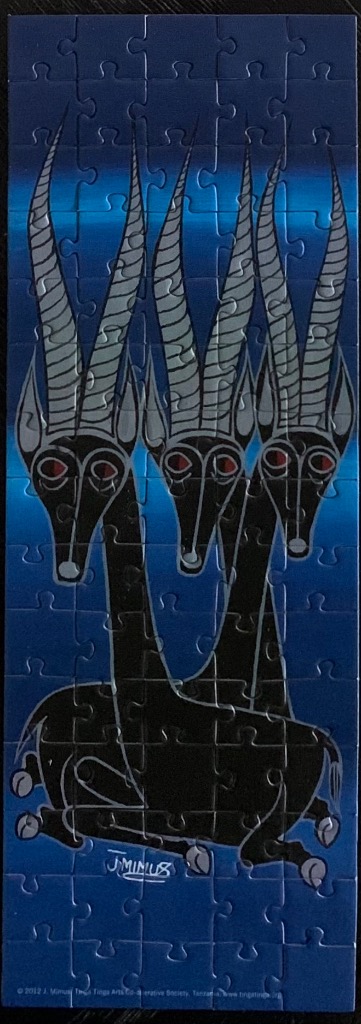
This stylized artwork features three black antelopes arranged vertically against a deep blue gradient background. The animals are depicted in a distinct folk art style, characterized by clean, bold outlines and highly decorative, simplified forms. Each antelope has a long, elegant neck, a sleek black body, and a dramatic, tall pair of spiraling, pale grey horns that dominate the upper portion of the vertical composition.
All three creatures share a similar pose, with their heads angled forward and red, almond-shaped eyes that provide a striking contrast against their dark faces. The bodies are fused at the bottom in a compact, seated position. The background transitions from a lighter, vibrant cyan-blue at the top to a darker, more saturated navy blue towards the bottom, creating a sense of depth and focus on the silhouetted subjects.
The artwork follows the principles of Tingatinga painting, known for its use of flat, opaque colours and repeating, rhythmic patterns. The lines forming the anatomy of the antelopes are crisp and graphic, emphasizing the symmetry and balance of the triple-headed figure. A white signature, "J. MINUS," is visible near the base of the antelopes, adding an identifying detail to this modern take on traditional East African artistic themes.