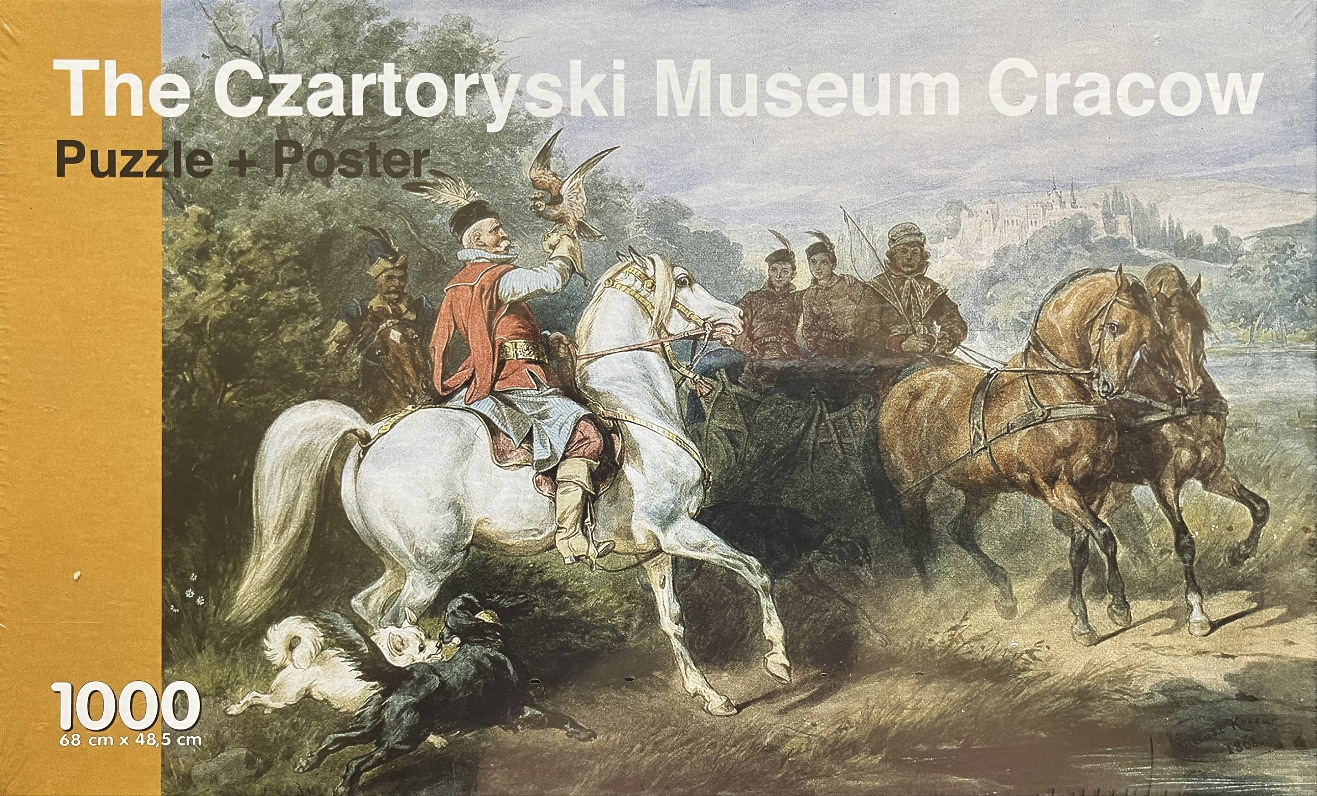
This classical painting features a nobleman as the central figure, mounted upon a pristine white horse and adorned in traditional Polish historical attire, including a vibrant red tunic and a feathered cap. He is depicted in the act of falconry, with a hunting bird perched upon his gloved hand. The foreground is alive with action as two hunting dogs, one white and one dark, play or move energetically near the hooves of the horses.
To the right, a pair of brown horses pulls a carriage, accompanied by three other men dressed in similar period-appropriate hunting garments. The composition is set within a rolling, pastoral landscape that transitions into a hazy, light-filled background featuring a distant castle silhouette on a hilltop. The scene captures the spirit of a traditional aristocratic hunt, with a wide, soft sky occupying the upper third of the canvas.
The artwork is rendered in the style of a 19th-century realist oil painting, characterized by detailed textures on the horses' coats, the intricate folds of the riders' clothing, and a naturalistic approach to the foliage and ground. The colour palette is muted and earthy, relying on soft greens, browns, and greyish-blues to convey the atmosphere of a cool, overcast day. The lighting is diffused and even, emphasizing the noble posture of the central rider and the rhythmic motion of the horses pulling their carriage across the dirt path.