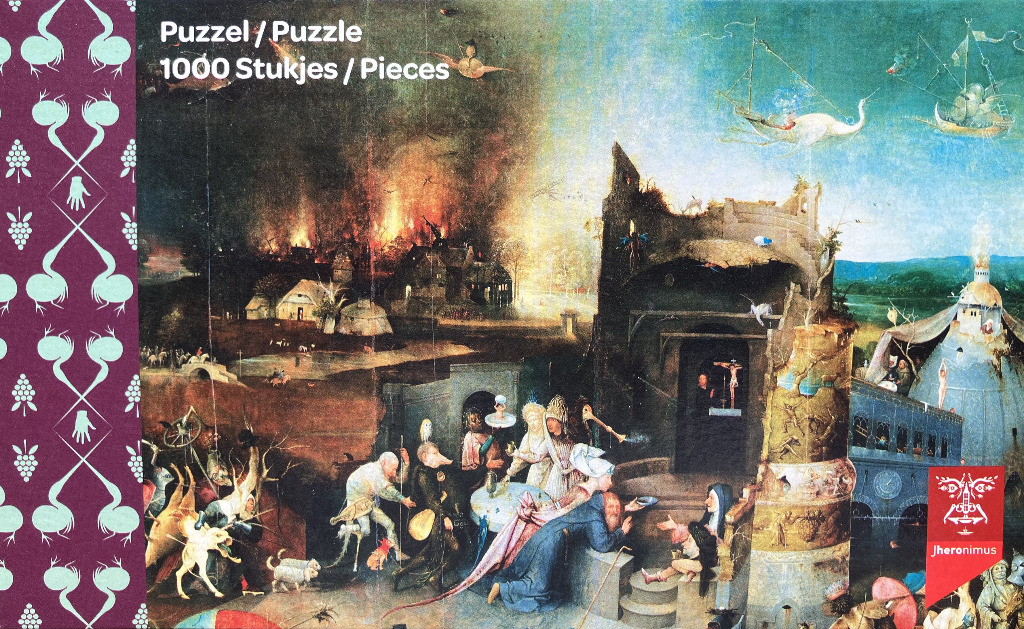
This detailed Renaissance-style painting presents a complex, surreal narrative split into distinct atmospheric zones. On the left side, a village is engulfed in fierce orange and yellow flames, with dark, smoke-filled skies casting an ominous glow over the landscape. To the right, the scene transitions into a vast, open vista featuring a ruined stone structure that serves as an architectural centerpiece. In the foreground, a group of figures in elaborate, bizarre costumes gathers around a circular table, engaging in a cryptic ritual or feast. The surrounding environment is filled with hybrid creatures, floating objects, and intricate, nonsensical details that characterize a dreamlike, apocalyptic vision.
Compositionally, the painting balances the high-contrast destruction of the burning village against the cooler, more melancholic tones of the ruin and the distant, muted green horizon. The foreground figures act as a bridge between the chaotic fire and the structured, albeit crumbling, architecture. The lighting is dramatic, shifting from the fiery intensity of the left to the soft, diffused daylight that bathes the right side of the canvas. The overall mood is one of profound existential unease, combining religious imagery with grotesque, fantastical elements that define the artist's unique, visionary approach to historical art.