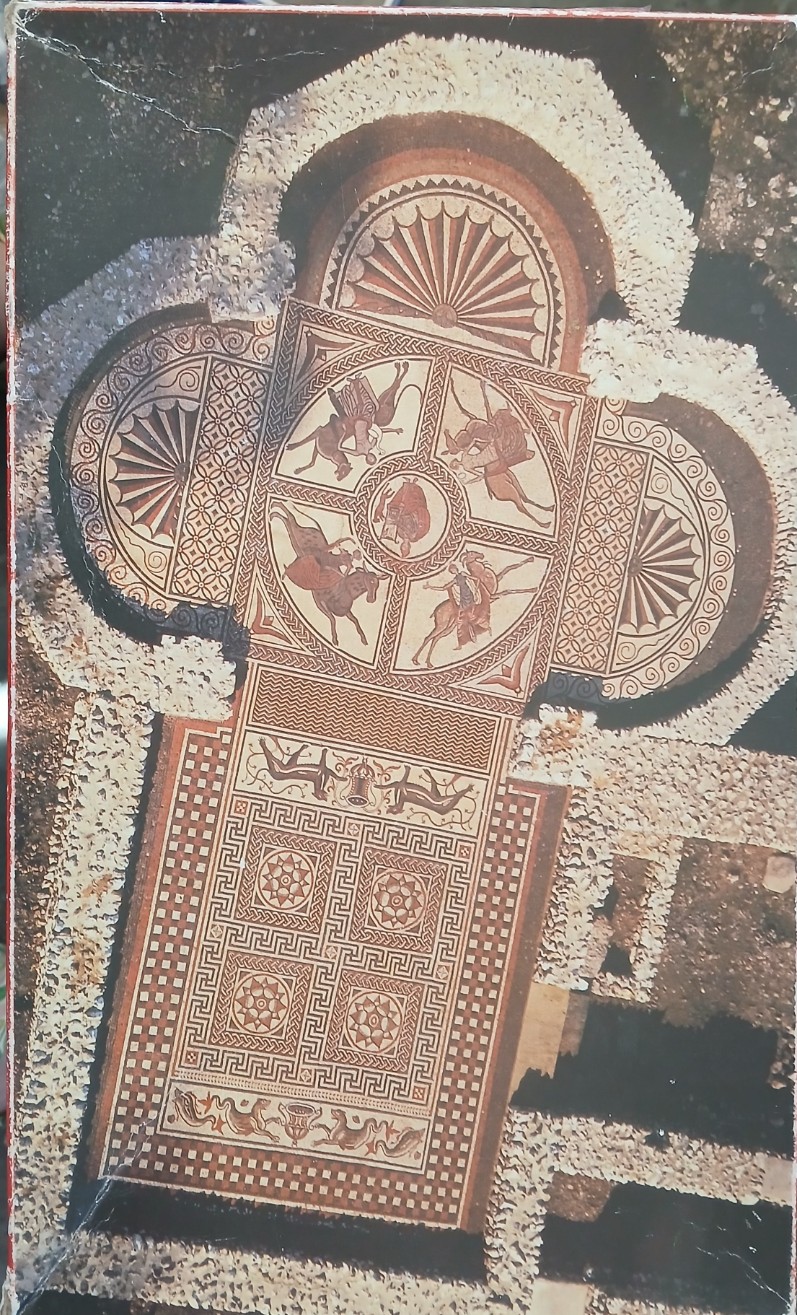
This image displays an elaborate, ancient floor mosaic, likely of Roman origin. The central motif is a cross-shaped arrangement composed of circular and rectangular panels. The upper section features four quadrants radiating from a central circle, each depicting a figure on horseback in dynamic motion. These figures are framed by stylized shell-like fan patterns in the outer rounded corners. The lower, rectangular section of the composition is dominated by a grid of geometric borders, including intricate Greek key or meander patterns, alongside squares filled with star-burst medallions.
The colour palette is earthy and subdued, characteristic of authentic stone tesserae. It relies on shades of terracotta, ochre, cream, and dark slate grey. The artwork has a tactile, weathered appearance, with the textures of the stone tiles visible throughout the design. Surrounding the pristine mosaic floor are sections of fragmented, gravelly terrain in contrasting neutral greys and whites, suggesting an archaeological excavation site or ruins.
The overall composition is symmetrical and strictly organized, reflecting the classic geometric precision of classical antiquity. The perspective is top-down, providing a clean view of the mosaic's entire layout. The contrast between the finely detailed, preserved art and the rough, decaying stone borders creates a sense of historical discovery and structural balance.