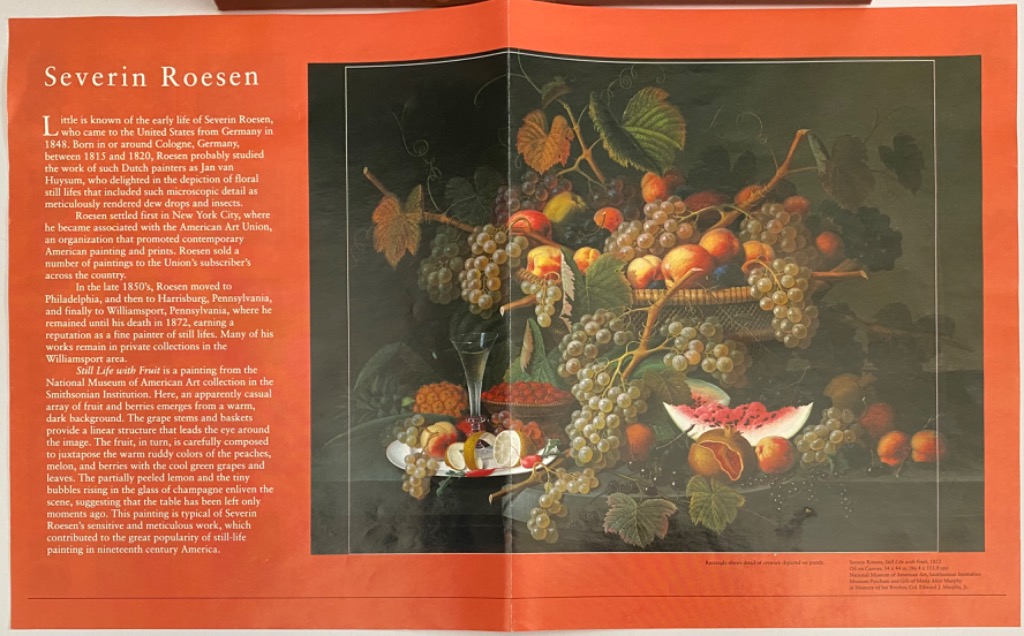
The central visual element is a detailed 19th-century oil painting of a bountiful fruit harvest resting on a stone surface. A woven basket overflows with clusters of green and purple grapes, plump peaches, and various summer fruits. A slice of watermelon reveals its vibrant red flesh, while a partially peeled lemon and a delicate glass of champagne sit in the foreground, suggesting a luxurious, interrupted meal. The composition is grounded in a dark, moody environment that allows the realistic textures of the fruit skins and dew-touched leaves to stand out with remarkable clarity.
The painting is framed within a rectangular border and set against a bright, solid orange backdrop. To the left of the image, a substantial block of text provides historical context about the artist, Severin Roesen, detailing his migration from Germany to the United States and his artistic career in Pennsylvania. The text is set in a clean, professional typeface, balancing the ornate complexity of the still-life painting.
Light in the painting is focused and theatrical, catching the edges of the fruit and the liquid in the glass to create a sense of depth and three-dimensionality. The overall mood is one of abundance and refined elegance, characteristic of the still-life tradition. The contrast between the saturated orange field and the deep, dark tones of the painting creates a strong visual hierarchy, drawing the eye immediately to the center before guiding it toward the informational text.