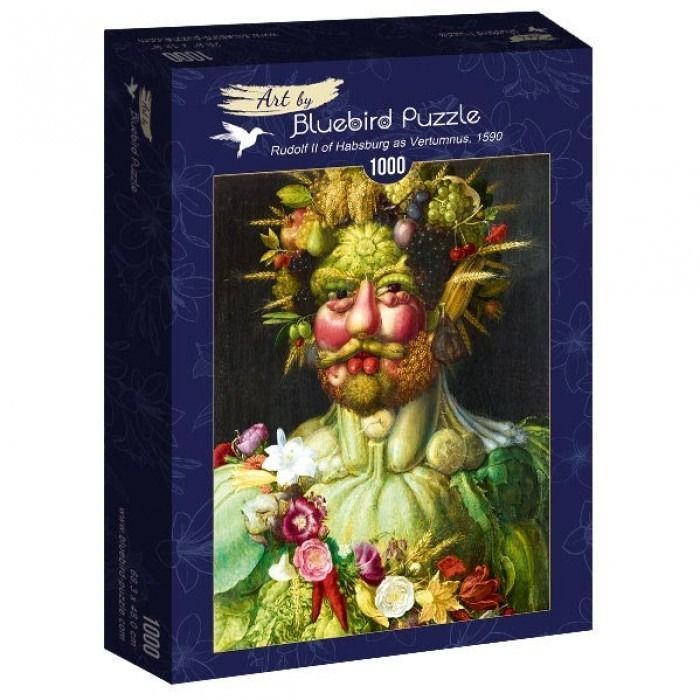
This artwork is a famous Mannerist portrait of Rudolf II of Habsburg as the Roman god Vertumnus, created by Giuseppe Arcimboldo in 1590. The subject is a human-like figure whose entire body is constructed from an assortment of harvested produce. A large, bulbous pumpkin serves as the chest, while ears of corn, wheat, and varied flowers form the shoulders and torso. The figure's face is intricately pieced together with fruits and vegetables: bright red cheeks formed by plums or cherries, a bulbous pear as the nose, and ears composed of wheat or grain husks. A thick beard and mustache are rendered with textured nuts or grains, and the hair is a bountiful arrangement of grapes, berries, vines, and leaves.
The composition is a classic portrait study, centered against a dark, moody, near-black background that makes the vibrant colors of the produce stand out. The lighting is focused and dramatic, highlighting the fleshy, rounded surfaces of the fruits and the intricate petals of the flowers. The style is classic Renaissance oil painting, marked by highly detailed, realistic textures that give each individual piece of produce a sense of volume and life. The colors are rich and earthen, dominated by deep greens, vibrant reds, warm browns, and golden yellows, creating a harvest-themed palette that feels both whimsical and profoundly symbolic.