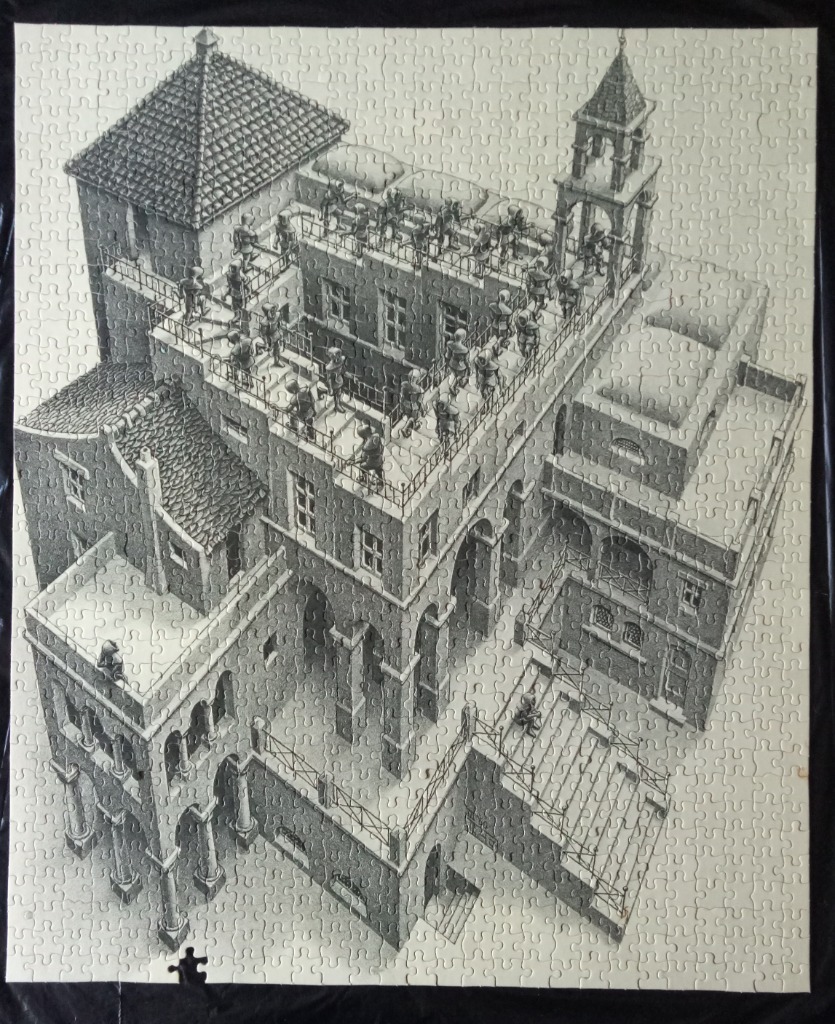
This black and white line drawing depicts a classic architectural optical illusion featuring a large, blocky monastery-like structure. The centerpiece of the image is a rectangular courtyard surrounded by a continuous staircase that loops endlessly, with tiny, stylized human figures walking in two separate processions along the top of the walls. The structure is built with intricate, classical details including arched colonnades, tiled roofs, and small windows, all presented from a high isometric perspective.
The composition is defined by its paradoxical geometry, where the stairs seem to both ascend and descend simultaneously, creating a sense of impossible movement. The walls are rendered with fine hatching and stippling to suggest texture and shadow, giving the stone surfaces depth and weight. Light appears to come from an undefined source, casting soft shadows beneath the arches and along the exterior ledges of the building.
Rendered in a highly detailed, engraving-like artistic style, the scene feels clinical and precise. The monochromatic palette relies entirely on variations of black ink lines against an off-white background. The spatial layout is purposefully disorienting, inviting the viewer to trace the path of the figures as they navigate the confusing stairwells and platforms that defy traditional physical laws of depth and height.