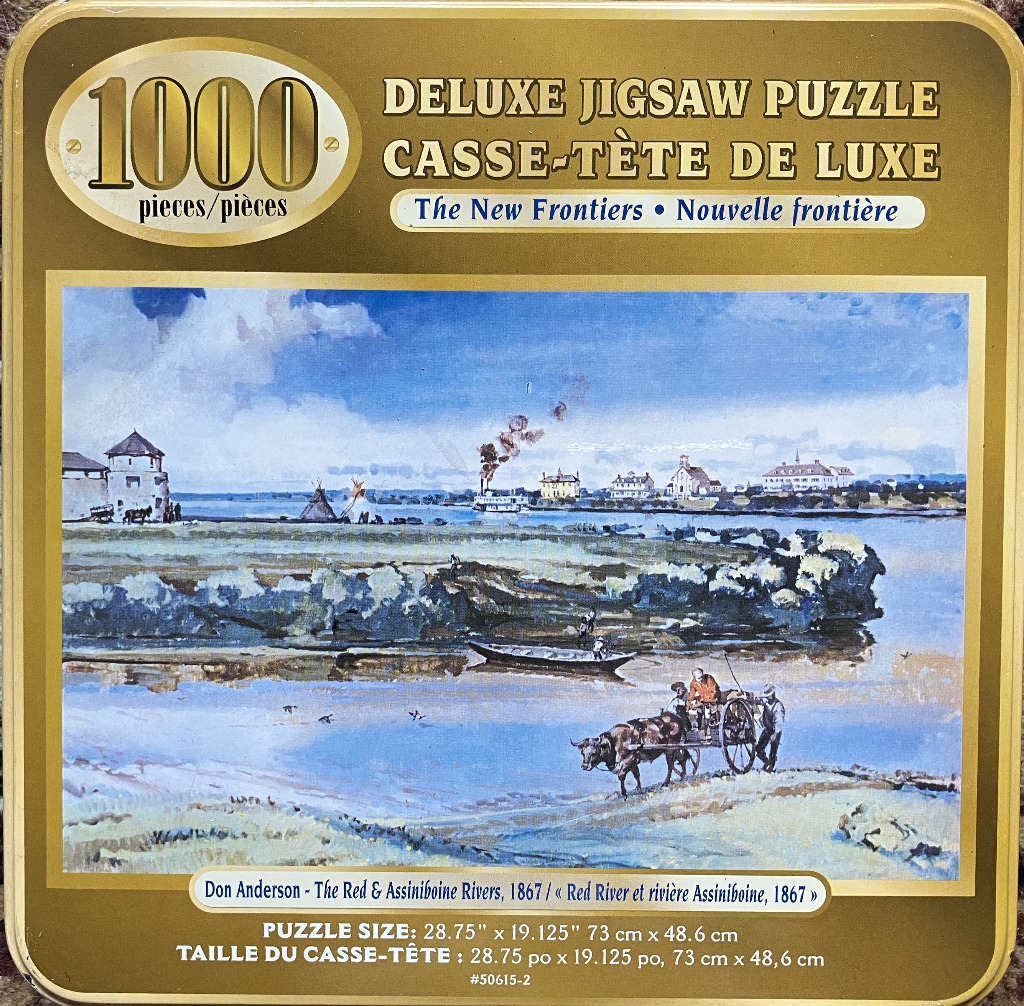
This historical landscape painting captures the junction of the Red and Assiniboine Rivers in 1867. In the immediate foreground, a two-wheeled cart pulled by a horse is being maneuvered along the riverbank by two figures, one seated and one standing. Nearby, the calm river water reflects the bright, open sky, with a small boat visible further out toward the middle ground.
The mid-ground features a dense, dark green shoreline that stretches across the width of the composition, punctuated by soft, natural earth tones. Beyond the river, the settlement is depicted with architectural landmarks including a tall, circular stone tower on the left and a collection of buildings and a church spire scattered along the horizon line. A small steamboat chugging smoke adds a sense of activity to the tranquil waterway.
The style is reminiscent of a watercolor or oil landscape with impressionistic brushwork, prioritizing a bright, clear atmosphere. The palette is dominated by cool blues in the sky and water, contrasted by the warm greens of the riverbank and the soft whites of the clouds and buildings. The light is diffused, suggesting a pleasant, temperate day in the mid-19th century. The work, titled "The Red & Assiniboine Rivers, 1867" by Don Anderson, evokes a quiet, pastoral moment in colonial Canadian history.