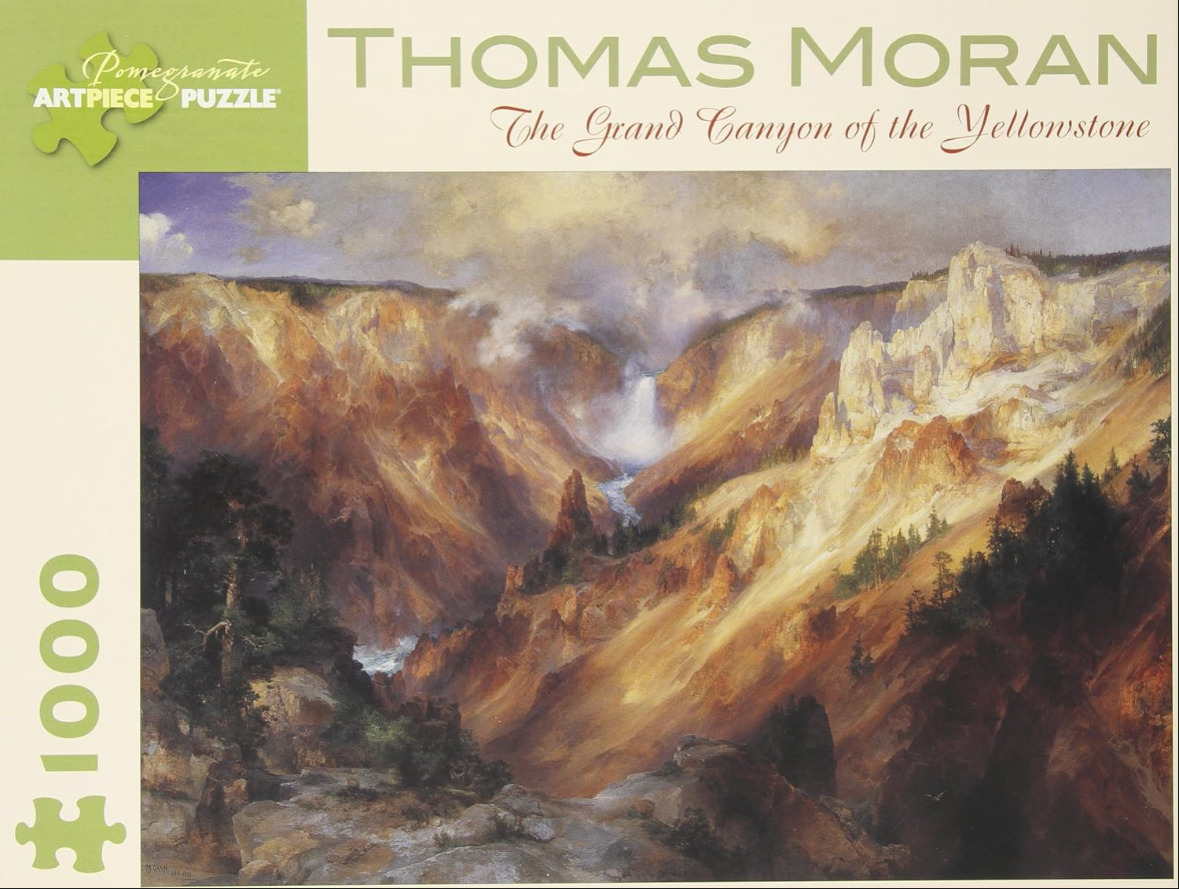
This 19th-century oil painting depicts the vast, dramatic landscape of the Grand Canyon of the Yellowstone. The scene is dominated by steep, rugged canyon walls that plunge into a deep chasm. In the middle distance, a powerful waterfall cascades down the rock face, surrounded by a misty atmospheric haze. A winding river flows through the base of the canyon, catching the light as it snakes through the shadows.
The composition uses a high vantage point, placing the viewer on a rocky overlook in the foreground, complete with a few dark, towering evergreens that provide scale and depth. The canyon walls are composed of jagged formations and sheer cliffs, with textures ranging from smooth, sun-drenched rock to deep, craggy crevices. Clusters of pine trees cling to the sides of the slopes, softening the harsh geometry of the stone.
The colour palette is rich and warm, dominated by hues of golden yellow, burnt orange, ochre, and deep earthy browns, representing the unique volcanic rock of the region. These warm tones contrast beautifully with the cool, ethereal whites and pale blues of the waterfall and the distant misty sky. The lighting suggests an early or late time of day, with bright highlights casting long shadows across the canyon, creating a sense of grandeur, majesty, and natural awe typical of the Hudson River School style.