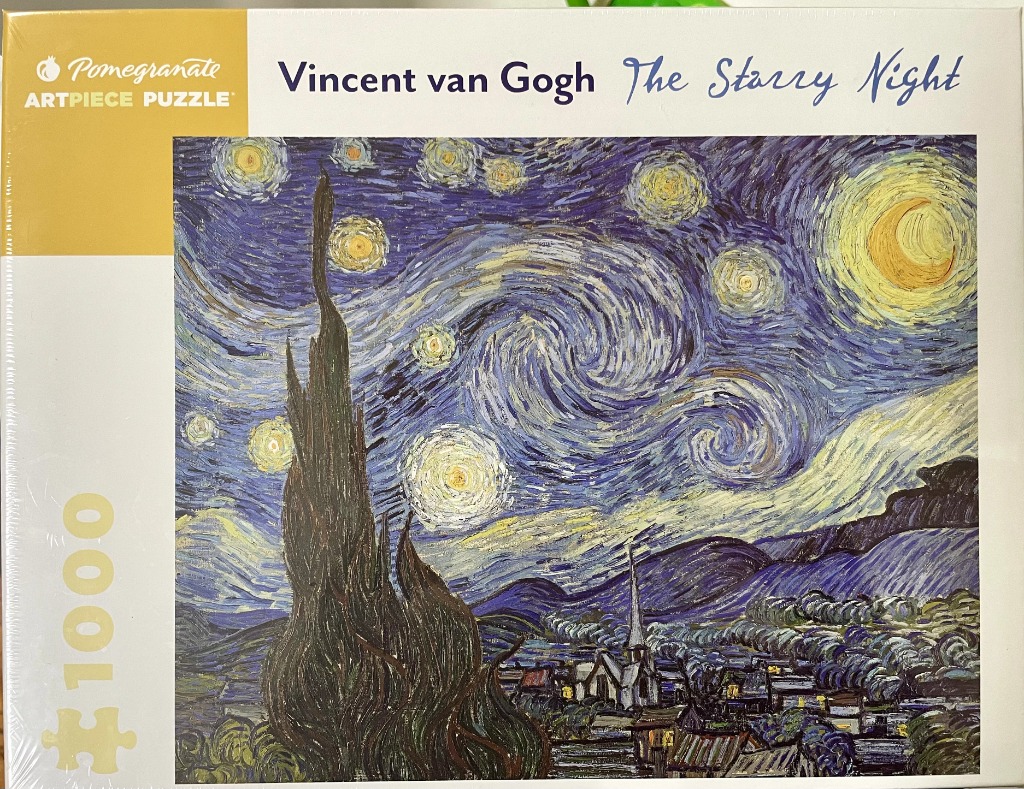
The artwork displays a nocturnal landscape dominated by a dramatic, swirling sky. A towering, dark, flame-like cypress tree rises prominently in the left foreground, reaching toward the heavens. Beneath the night sky, a quiet, sleepy village rests nestled in the valley, featuring small houses and a church steeple that reaches upward, echoing the verticality of the cypress.
Technically, the piece is defined by its iconic Post-Impressionist style, characterized by thick, rhythmic, and expressive impasto brushstrokes. The composition is balanced between the chaotic energy of the heavens and the ordered stillness of the earth below. The rolling hills in the background provide a dark, undulating horizon line that separates the cosmic activity from the human settlement.
The colour palette is heavily saturated with deep, moody blues, violets, and indigos, which contrast sharply against the luminous, radiant yellows and whites of the stars and crescent moon. This juxtaposition creates a sense of vibrating, ethereal light that seems to pulse against the night air. The overall mood is one of intense, turbulent emotion combined with a profound sense of awe and wonder, capturing a nightscape that feels alive with cosmic movement.