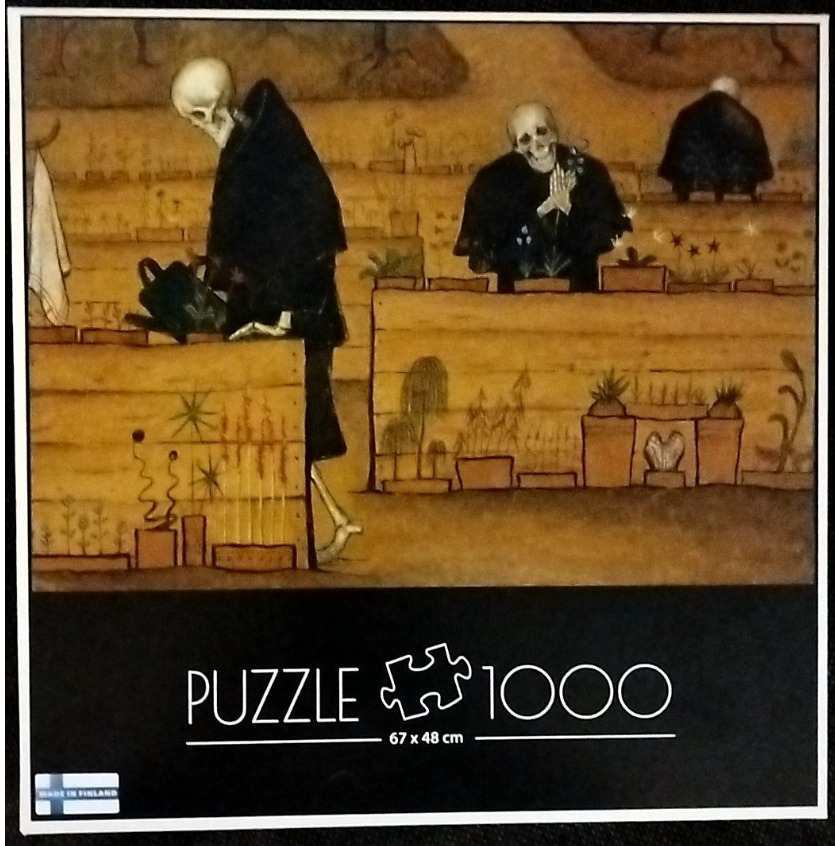
The artwork depicts three figures with skeletal heads and hands, draped in heavy black robes, working in a garden. In the foreground, one skeleton leans over a raised wooden bed, watering plants with a dark, primitive watering can. Behind this, another skeleton stands with hands clasped together as if in prayer or reflection, looking over a second planter box filled with varied, spiky flora. A third, partial figure is visible in the distance, hunched over another plot.
The setting is a muted, earthy landscape that feels both organic and desolate. The composition is structured by the geometric lines of the wooden planter boxes, which guide the eye across the frame. The background is a flat, textured expanse of golden-brown ochre, suggesting a dry or dusty field beneath a dim, hazy sky. The overall style is reminiscent of early 20th-century folk art or dark surrealist illustration, using soft, scratchy linework and a somber, monochromatic palette of blacks, browns, and muted yellows.
The mood is quiet, melancholic, and faintly macabre. The plants themselves are peculiar, featuring star-shaped protrusions, wavy stems, and stiff, prickly forms that do not resemble standard garden vegetation. The combination of the death-themed figures with the gentle, domestic act of gardening creates a surreal, dreamlike atmosphere that feels frozen in time.