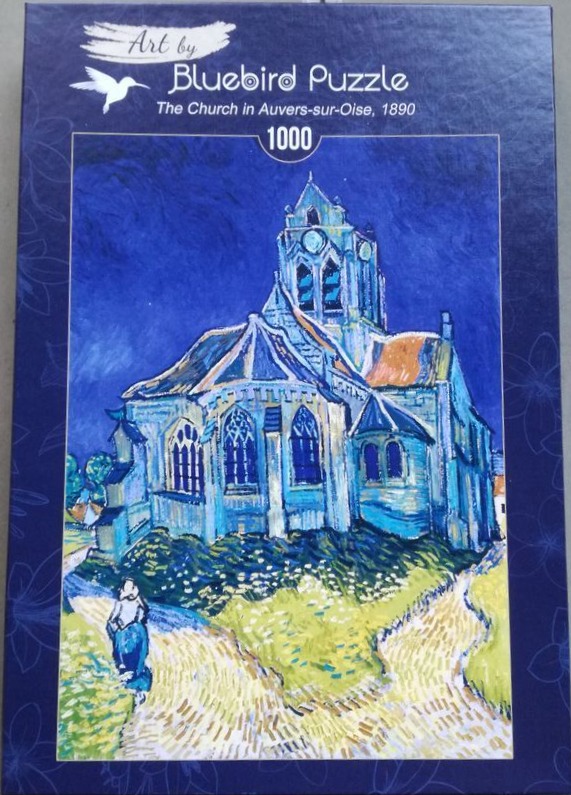
The artwork depicts the iconic post-impressionist oil painting, The Church in Auvers-sur-Oise. The central focus is an old stone church characterized by its expressive, swirling architecture and dramatic, sweeping brushstrokes. The structure appears to be leaning slightly, rendered in shades of cobalt, cerulean, and slate blue, with heavy outlines that define the pointed arches of the windows and the steep pitch of the roof.
Set against a deep, vibrant indigo night sky, the composition creates a sense of restless energy. The church is situated upon a small, grassy mound in the foreground, rendered in bright, textured strokes of yellow and pale green that suggest a sunlit or illuminated ground, providing a stark contrast to the dark, moody atmosphere above. A single, stylized figure is seen walking along a light-colored path in the lower left corner, their back turned to the viewer, providing a sense of scale and human presence in the quiet scene.
The entire piece is defined by the signature post-impressionist style, utilizing bold, visible impasto-like brushstrokes that give the image a rhythmic, undulating quality. The play of light and shadow is not realistic but rather emotional, with the deep blue tones dominating the upper portion of the frame and warmer, lighter tones grounding the bottom. The painting captures a sense of movement, as if the very stone of the building and the grass of the hill are trembling under the intensity of the artist's gaze.