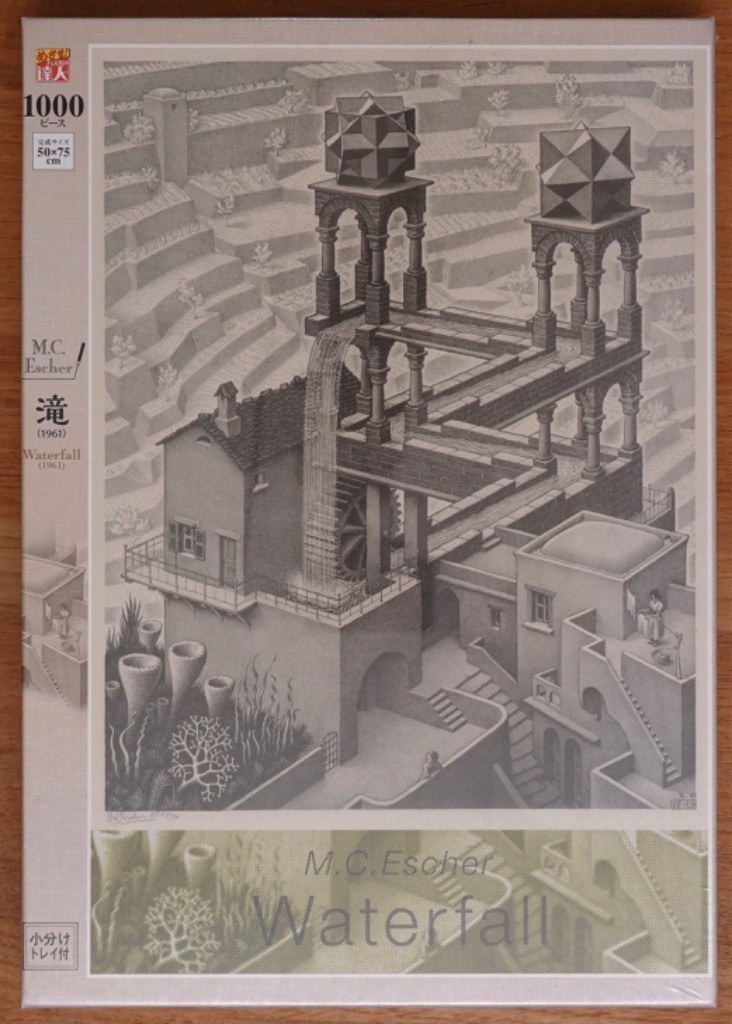
This intricate, monochromatic lithograph depicts an impossible architectural structure featuring a perpetual motion waterfall. The scene is dominated by stone-like buildings set against a backdrop of terraced hills. In the foreground, a water channel flows along a zigzag path, eventually cascading off the edge to turn a large wooden water wheel. This water then appears to climb back up the channel in an optical illusion, suggesting a continuous, self-sustaining loop.
The composition is highly geometric, characterized by sharp perspectives and repeating stone textures. Two tall, slender towers rise above the main structure, each topped with a complex geometric polyhedron. The building itself consists of arches, stairways, and balconies that intersect in ways that defy traditional spatial logic. In the bottom left, surreal, trumpet-shaped botanical forms and coral-like structures add an organic, slightly unsettling quality to the scene.
The artwork is rendered in shades of sepia and grey, utilizing fine lines and stippling to create depth, shadow, and realistic textures on the stone surfaces. The mood is quiet and contemplative, evoking a sense of sterile, dreamlike mystery. The style is classic M.C. Escher, focusing on mathematical precision, impossible geometry, and a clean, graphic aesthetic that makes the impossible appear grounded in a tangible, physical reality.