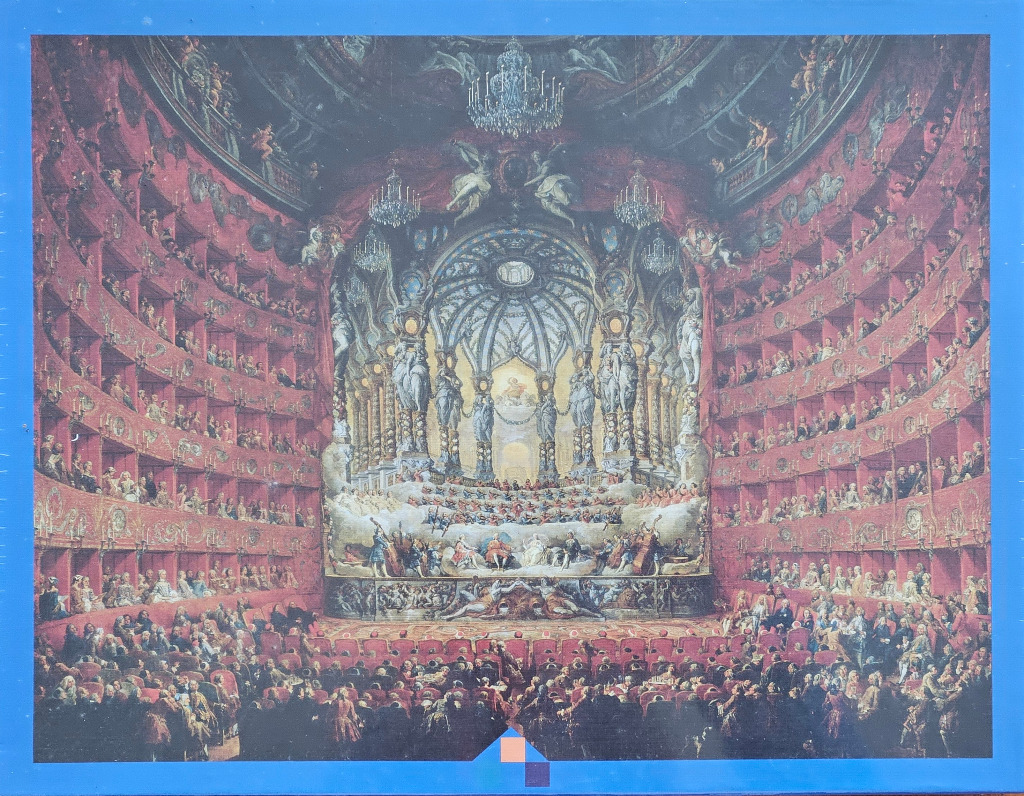
This detailed historical illustration depicts the interior of a grand, multi-tiered opera house from an 18th-century perspective. The composition is highly symmetrical, with rows of red-upholstered balconies receding into the distance on both the left and right sides. Each balcony is filled with clusters of figures in period attire, creating a sense of a packed, prestigious venue. At the center of the image is an elaborate, highly decorated stage framed by soaring classical pillars and ornate sculptures, beneath which an orchestra and performers are positioned.
The colour palette is dominated by deep, velvety reds that define the seating and architectural framework, contrasted against the pale, ethereal whites and blues of the stage set and ceiling details. Crystal chandeliers hang from the darkened, vaulted ceiling, casting a soft, diffuse glow over the entire auditorium. The light appears to originate from the stage area, drawing the viewer's eye toward the performance while maintaining the dimly lit atmosphere of the surrounding boxes.
The artwork is rendered in a formal, painterly style typical of architectural prints or engravings from the Baroque or Rococo periods. The intricate linework captures the textures of the rich velvet fabrics, the gilded embellishments of the theater’s interior, and the subtle, collective presence of the vast audience. The foreground is occupied by a dense crowd in the main seating area, their dark silhouettes emphasizing the brightly illuminated, ornate spectacle occurring on the stage.