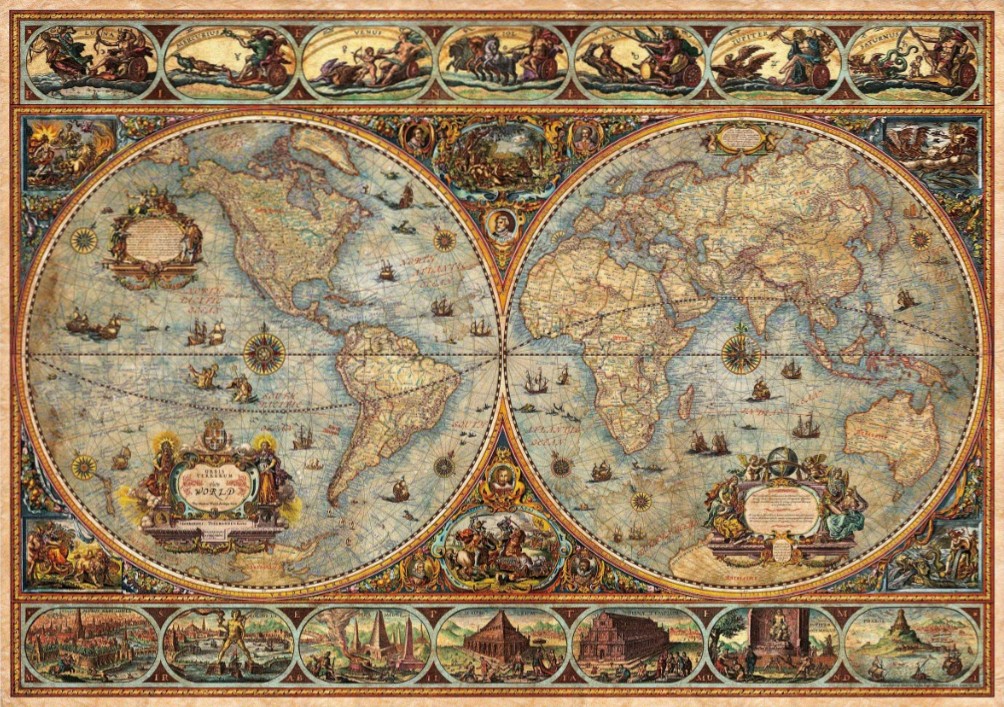
This detailed double-hemisphere world map presents a classic cartographic view of the Earth, rendered in an antique, weathered style. The map is divided into two large circles, showcasing the Americas in the left hemisphere and Europe, Africa, Asia, and Australia in the right. The landmasses are shaded in muted, sepia-toned ochres and tans, contrasted against light, parchment-like oceans etched with delicate navigational lines and compass roses. Small, detailed sailing vessels are scattered across the seas, adding a sense of historical exploration.
The map is framed by elaborate, decorative borders that encapsulate the theme of classical knowledge. A top horizontal frieze features stylized vignettes of planetary deities in chariots, each labeled with Latin names such as Luna, Mercurius, Venus, Sol, Mars, Jupiter, and Saturnus. The bottom border displays illustrations of historical wonders and architectural landmarks, ranging from statues and obelisks to grand temples and cityscapes. These vignettes are rich in warm, earthly pigments, providing a vibrant yet aged aesthetic.
Throughout the composition, intricate scrollwork, cartouches, and mythological figures frame the two hemispheres. The central areas between the circles contain detailed inserts depicting scenes of conquest and exploration. The overall mood is one of Renaissance-era discovery, blending geographical accuracy with rich artistic ornamentation. The entire image has the appearance of a hand-colored engraving from a historical atlas, with subtle variations in texture and color that suggest age and antiquity.