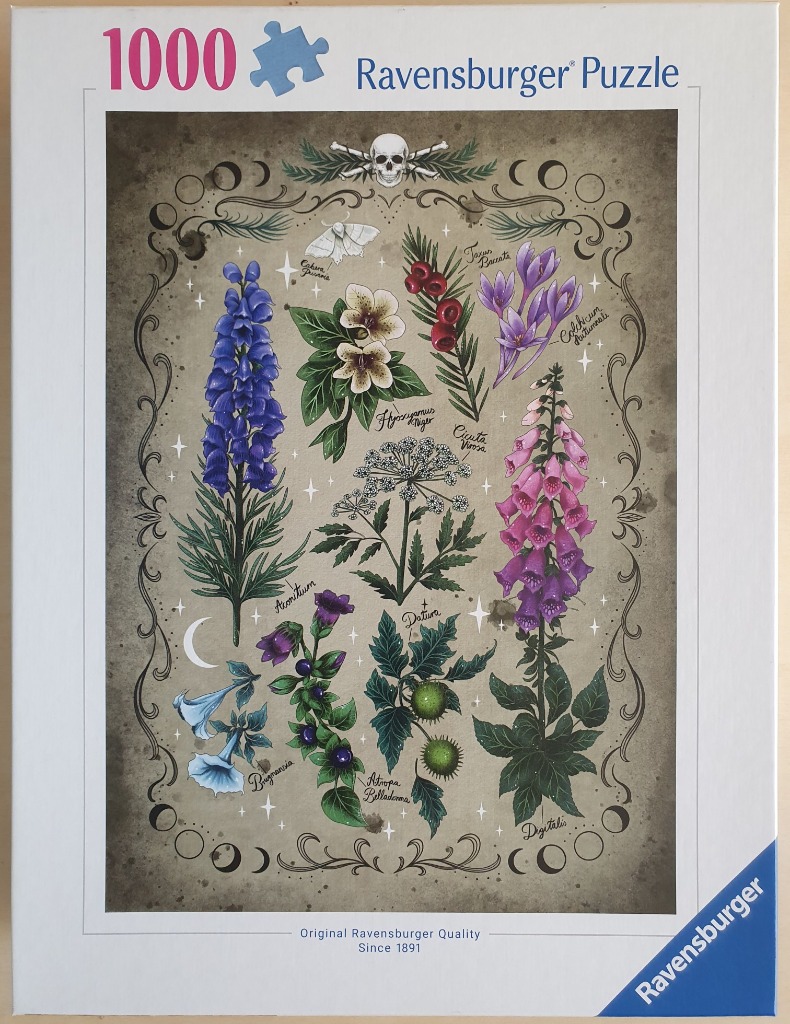
This illustration features a collection of various poisonous plants, meticulously rendered in a classic botanical style. The central arrangement includes prominent specimens such as a tall, blue-flowered Aconitum, a striking pink and purple foxglove (Digitalis), white-petaled Hyoscyamus niger, and thorny, green Datura fruits. Smaller sprigs of yew berries, purple crocus-like flowers, and delicate white hemlock blossoms are interspersed throughout. A ghostly white moth rests near the top center, and a human skull sits atop the arrangement, framed by leafy sprigs.
The artwork is set against a distressed, sepia-toned parchment background that suggests age and antiquity. The plants are organized within an ornate, decorative border featuring repeating lunar phases—new, crescent, and full moons—intertwined with elegant flourishes. Small, four-pointed starbursts are scattered across the composition, enhancing the mystical and occult-inspired theme of the piece.
Each plant is delicately annotated with its scientific Latin name in elegant, handwritten-style script. The color palette relies on muted earth tones, deep greens, and rich purples, contrasted by the stark white of the moth, the skull, and the lighter flowers. The overall aesthetic is one of a scientific field guide or an apothecary manual, blending naturalistic detail with an air of dark, gothic mystery.