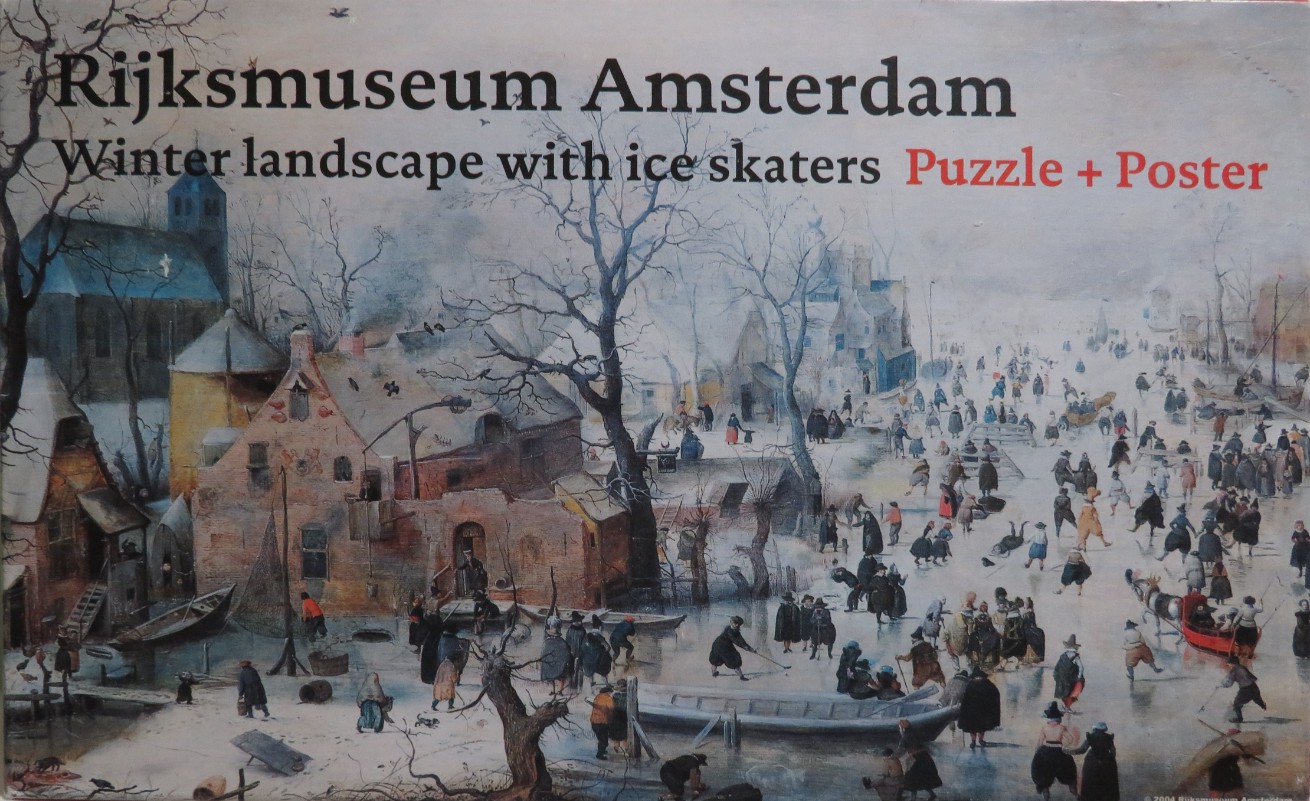
This classical oil painting depicts a vibrant 17th-century Dutch winter scene. The focal point is a frozen canal that serves as a bustling social hub, filled with numerous figures in historical attire ice skating, walking, and socializing. To the left of the ice, a cluster of traditional brick buildings and a small village church stand along the shore, their rooftops dusted with a light layer of snow.
The composition is structured with the village architecture anchored on the left, leading the eye toward the vast, open expanse of the frozen waterway that stretches into the distance on the right. The perspective is slightly elevated, allowing for a clear view of the diverse activities occurring across the ice, including individuals with wooden sleds and groups gathering near the water's edge.
The color palette is composed of muted, natural tones, dominated by cool whites, icy blues, and soft greys, which are contrasted by the warm, earthy browns and ochres of the brick buildings and the varied, darker hues of the figures' clothing. The lighting suggests an overcast, chilly winter day, creating soft shadows and a pervasive sense of seasonal stillness.
The style is characteristic of Dutch Golden Age landscape painting, featuring meticulous detail in the architecture and the individual postures of the skating figures. Leafless, spindly trees frame the scene, and faint wisps of smoke rise from cottage chimneys, adding to the authentic, historic atmosphere of the winter day.