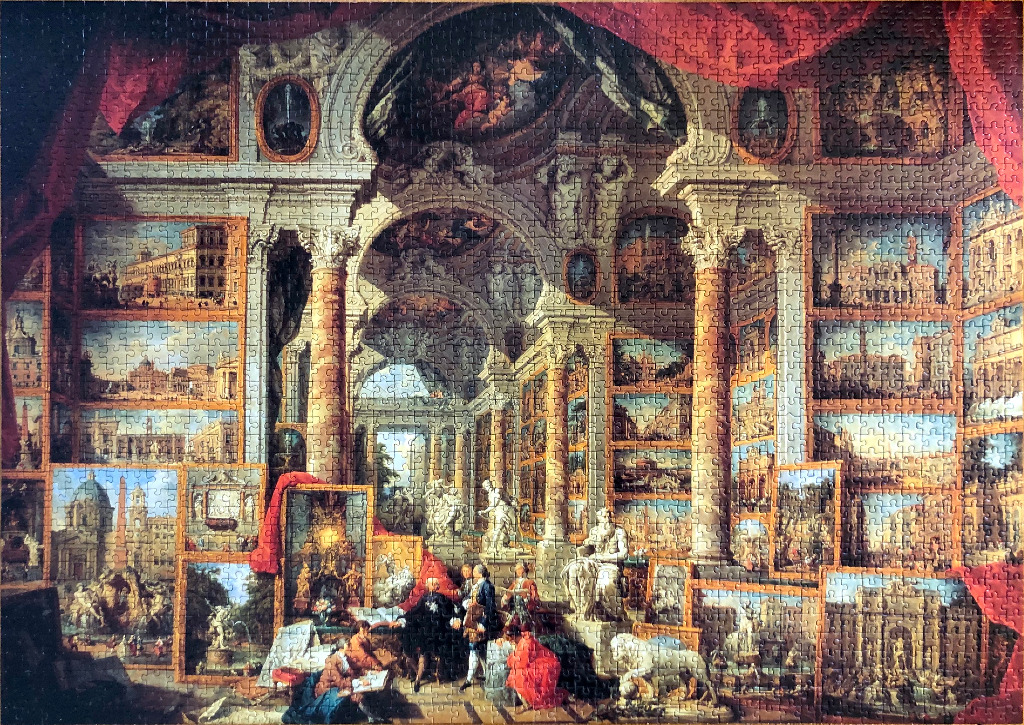
This elaborate 18th-century painting, a work known as a veduta gallery, depicts an expansive, cavernous interior hall overflowing with framed paintings of Roman landmarks. The structure of the room is defined by towering, classical-style stone columns and deep arches that draw the eye toward an open, sunlit portico in the far background. Draped in heavy, rich red fabric at the top and sides, the entire composition feels like a staged theatrical set designed to showcase a vast collection of artistic views.
Arranged across the walls and stacked upon tables are dozens of individual paintings, each featuring detailed scenes of ancient ruins, iconic fountains, churches, and civic buildings of Rome. Among these vignettes, one can distinguish famous sites such as the Colosseum and various grand plazas. In the foreground, a group of figures dressed in period attire—men in dark coats and tricorn hats—gather around a table, seemingly examining plans or sketches of the architectural works that surround them. A classical statue of a seated figure and a sculpture of a lion anchor the lower right, adding to the scholarly, antiquarian atmosphere of the scene.
The color palette is dominated by warm, earthy ochres, burnt oranges, and deep browns, contrasted by the vibrant crimson of the curtains and the cool, ethereal blue of the sky visible through the central arches. The lighting is theatrical and directional, highlighting the figures in the foreground while casting deeper shadows within the recesses of the gallery walls, creating a profound sense of depth and historical immersion.