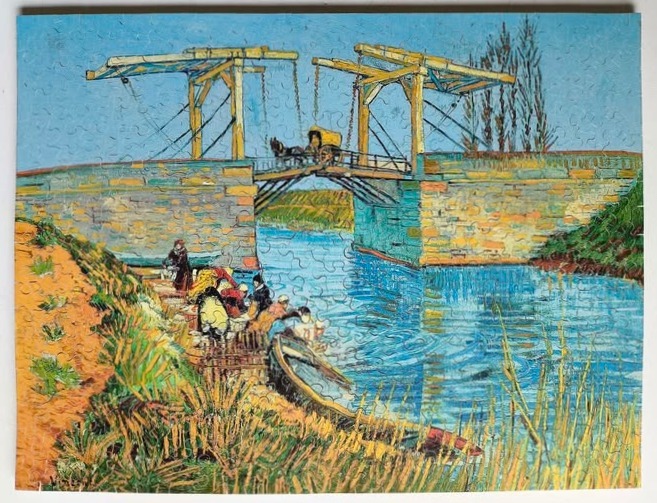
The scene depicts a picturesque wooden drawbridge spanning a narrow, tranquil canal. The bridge is constructed with tall, light-coloured timber beams and chains that dominate the upper center of the composition. A horse-drawn carriage is positioned atop the bridge, heading toward the right side of the frame, adding a sense of movement to the quiet rural landscape.
Below the bridge, the canal flows through the center of the image, reflecting the vibrant sky above. Along the left bank, a group of women are gathered at the water's edge, engaged in the task of washing laundry. A small, dark boat is moored nearby, nestled into the grassy, earthen slope. The foreground is defined by tall, textured grasses and patches of wildflowers that create a natural frame around the water.
The style is clearly post-impressionist, characterized by visible, rhythmic brushstrokes and a rich, bold palette. The sky is a vibrant, clear cerulean blue, contrasting with the warm, earthy oranges and yellows of the bank and the muted, cool tones of the water. Deep greens and browns define the structure of the bridge and the vegetation. The overall mood is peaceful and pastoral, capturing a moment of everyday life in the Dutch countryside during the late nineteenth century.